
What Is a Packaging Digital Connectivity Interface in Smart Manufacturing Systems?
A packaging digital connectivity interface is the operating language behind smart packaging lines. It connects machines, software, sensors, and quality systems so production responds as one coordinated process.
That matters more now because packaging plants are under pressure from e-commerce volume, shorter runs, SKU variation, compliance demands, and tighter waste targets.
In practical terms, the interface allows presses, die-cutters, folder-gluers, conveyors, vision systems, and MES platforms to exchange usable data in real time.
For a research-driven platform like PWFS, this topic sits at the center of modern print and converting intelligence. It links micron-level print accuracy with industrial throughput and flexible factory coordination.
Where the interface fits in a smart manufacturing line
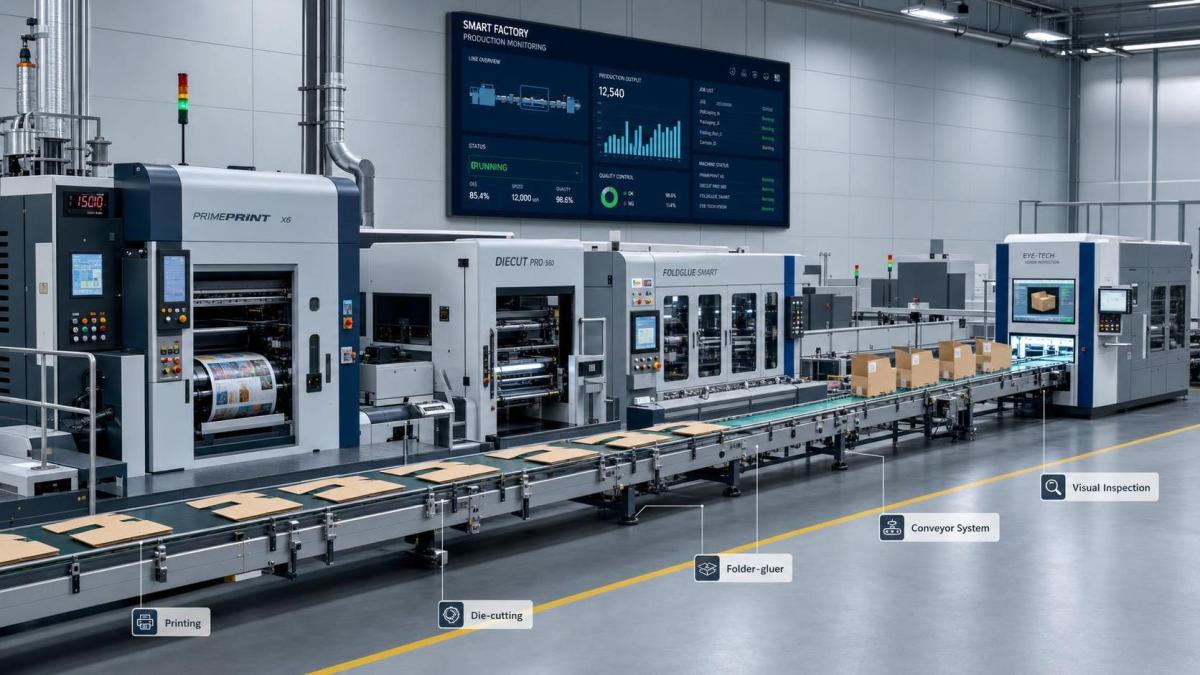
In a traditional plant, each machine often behaves like a productive island. Data may exist, but it stays trapped in separate HMIs, PLCs, spreadsheets, or vendor-specific software.
A packaging digital connectivity interface changes that condition. It creates a shared structure for job data, machine status, alarms, quality results, production counts, and material tracking.
This does not always mean one physical box or one screen. More often, it is a layered framework across edge devices, industrial protocols, middleware, APIs, and plant software.
Simple examples include recipe download to an offset press, automatic job handoff to a die-cutter, glue inspection feedback from a folder-gluer, and pallet traceability synchronized with ERP.
The result is a packaging line that can see itself better. It knows what is running, what changed, where delays started, and whether output still matches specification.
What the term really means
The phrase sounds technical, but the underlying idea is straightforward. A packaging digital connectivity interface is the bridge between physical equipment and digital decision-making.
It usually handles four things at once: communication, normalization, timing, and context. Without all four, data may move, but it may still be unusable.
Communication
Machines must exchange signals and production data through protocols such as OPC UA, MQTT, Modbus, EtherNet/IP, or vendor APIs.
Normalization
Different machines describe the same event differently. The interface translates those differences into a consistent format for reporting and control.
Timing
Smart manufacturing depends on timely signals. If a defect alert arrives too late, hundreds of cartons may already be printed, cut, folded, or glued incorrectly.
Context
A status code means little without job number, substrate, operator action, batch reference, or quality threshold. Context turns raw machine output into operational intelligence.
Why the industry is paying closer attention
Packaging production is becoming more dynamic. The old model of long, stable runs is giving way to mixed orders, faster changeovers, versioned graphics, and more documented compliance steps.
On corrugated board lines, material balance and speed coordination affect yield quickly. On offset presses, color consistency and registration stability generate high-value data.
In die-cutting and folder-gluing, small deviations can multiply at high speed. A packaging digital connectivity interface helps surface those deviations before they become scrap, rework, or shipment delays.
The same logic now extends beyond paper converting. PWFS also tracks woodworking systems, where CAD-driven CNC routing and edge banding rely on similar ideas: accurate data transfer, synchronized execution, and traceable quality.
That cross-industry overlap is important. It shows that connectivity is no longer a software add-on. It is part of how modern factories structure production itself.
What a connected packaging workflow can improve
The strongest value of a packaging digital connectivity interface is not just more data. It is better coordination between process stages that used to be managed separately.
The business effect is usually visible in fewer setup mistakes, faster root-cause analysis, more stable throughput, and cleaner evidence for audits or customer inquiries.
Typical equipment and data points involved
In packaging plants, the interface often spans more equipment than people first expect. It does not stop at major converting machines.
- Corrugated lines sharing flute profiles, board grades, speed data, and waste ratios.
- Offset presses sending job IDs, ink settings, registration values, and inspection results.
- Die-cutters reporting tool selection, pressure conditions, sheet counts, and fault events.
- Folder-gluers contributing glue application data, folding consistency, reject counts, and output rates.
- Conveyors, stackers, and pallet systems adding flow status and downstream handling visibility.
- MES, ERP, WMS, and quality software adding planning, inventory, genealogy, and compliance context.
This is why the packaging digital connectivity interface should be seen as infrastructure. It supports both machine performance and management visibility across the production chain.
Where implementation becomes difficult
The biggest obstacle is rarely the idea itself. The difficulty usually comes from mixed machine generations, vendor silos, inconsistent tag naming, and weak data governance.
A newer press may expose rich digital signals, while an older folder-gluer only offers limited outputs. Plants then build partial connectivity and assume they have full visibility.
Another issue is overcollecting data. If every signal is captured without a clear use case, the system becomes expensive, noisy, and hard to maintain.
Cybersecurity also matters. Once production assets connect more deeply to MES, cloud dashboards, or remote support tools, access control and network segmentation become operational priorities.
PWFS often frames this correctly: connectivity only creates value when it supports yield, flexibility, traceability, and automation together. A dashboard alone is not transformation.
How to assess a packaging digital connectivity interface
A useful evaluation starts with production reality, not software features. The right question is what decisions need to happen faster, more accurately, or with less manual interpretation.
Look for process continuity
Can job data move cleanly from prepress or order entry into print, converting, inspection, and shipping records without rekeying?
Check data depth
Does the interface capture only machine status, or also meaningful production variables tied to quality and material behavior?
Verify openness
Open standards and documented APIs reduce dependence on one vendor and make future line expansion more realistic.
Test actionability
A good packaging digital connectivity interface should trigger responses, not just reports. Alerts, recipe changes, hold actions, and workflow routing should be possible.
Include compliance and traceability
This is especially relevant where FSC tracking, food-contact packaging, ink migration records, or customer audit trails are part of normal operations.
What to do next with this knowledge
The practical next step is to map one real production flow from order to finished pack. Identify where data is re-entered, delayed, lost, or disconnected from machine events.
Then compare that map against the capabilities of the current packaging digital connectivity interface, or the one under consideration. Gaps usually become visible quickly.
It also helps to rank use cases by operational impact. Setup synchronization, defect traceability, downtime visibility, and quality feedback loops often deliver earlier value than broad digital ambitions.
For ongoing research, PWFS offers a useful lens because it connects packaging machinery, print precision, converting dynamics, and flexible manufacturing intelligence in one industrial context.
Understanding the packaging digital connectivity interface is ultimately about seeing how factories become more coherent. Once that becomes clear, better decisions on systems, standards, and investment priorities follow naturally.
Related News
Get weekly intelligence in your inbox.
No noise. No sponsored content. Pure intelligence.
