
How to Specify Modular Packaging Automation Systems for Changing Product Mixes
How to Specify Modular Packaging Automation Systems for Changing Product Mixes
For project managers facing volatile SKU demand, shorter runs, and tighter delivery windows, specifying modular packaging automation systems is no longer a simple equipment decision.
The right architecture must balance throughput, changeover speed, integration flexibility, and lifecycle scalability across printing, die-cutting, folding, gluing, inspection, and material handling.
This guide explains how to evaluate modular automation platforms that protect capital investment while helping packaging operations adapt quickly to changing product mixes.
Start With the Product-Mix Problem, Not the Machine List
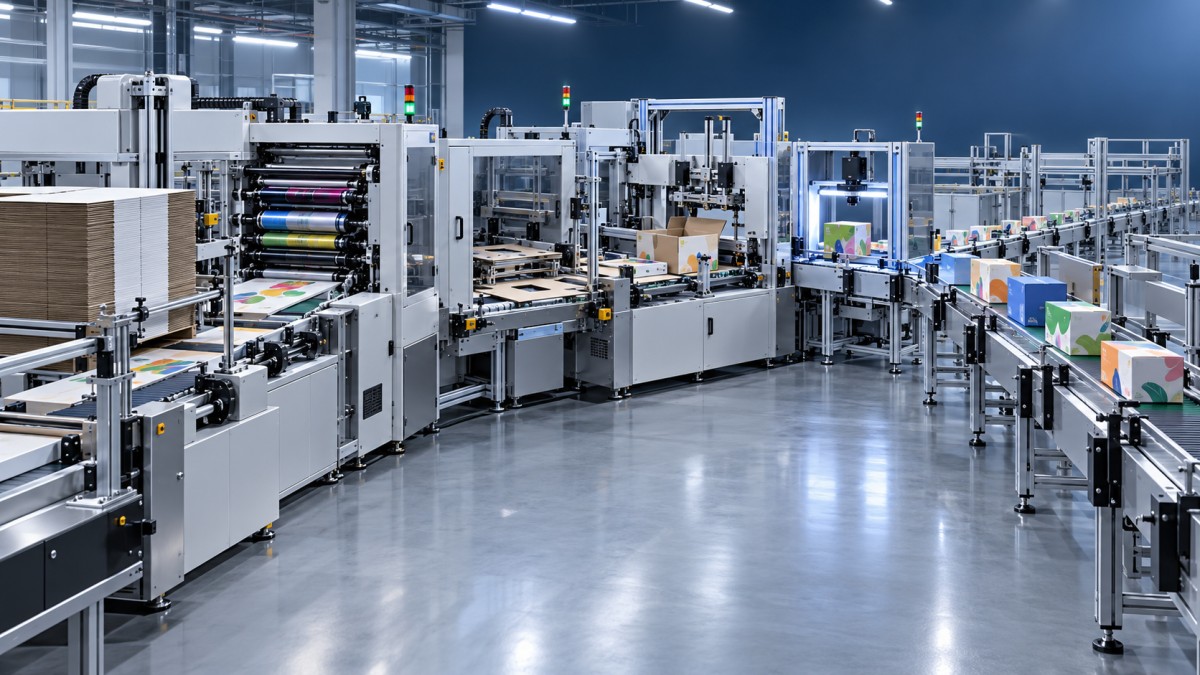
A modular packaging automation project should begin with a realistic operating profile, not a supplier catalogue or an assumed maximum speed requirement.
Project teams should map current SKUs, anticipated launches, batch sizes, substrates, pack formats, seasonal peaks, and the frequency of artwork or structural changes.
For many converters, the key challenge is not producing one carton design at high speed. It is managing frequent transitions between many profitable designs.
A line optimized only for its fastest repeat job can become expensive under changing demand, especially when setup losses consume scheduled production capacity.
Specify flexibility as a measurable business requirement. Define acceptable changeover time, minimum viable order quantity, target waste levels, and required staffing by product family.
These requirements create a practical basis for comparing modular packaging automation systems instead of relying on generic claims about smart manufacturing or flexibility.
Include both stable, high-volume products and difficult low-volume products in the specification. Suppliers should demonstrate performance across the real operating range.
Without this discipline, a project may purchase advanced equipment that performs well during acceptance testing but struggles with everyday product-mix variation.
Define Modularity in Terms of Independent Production Functions
Modularity does not simply mean equipment can be moved or purchased in sections. It means critical production functions can be added, replaced, bypassed, or upgraded.
In packaging operations, those functions may include feeding, printing, curing, die-cutting, stripping, blank inspection, folding, gluing, coding, packing, palletizing, and conveying.
A useful modular architecture separates process modules from transport modules, control modules, data interfaces, and safety systems wherever technically practical.
This separation reduces the cost and risk of future changes. It also helps engineering teams isolate a problem without stopping unrelated production functions.
For example, a converter may initially automate blank feeding, folding, gluing, and case packing, then add vision inspection or robotic palletizing later.
That expansion is only genuinely modular when space, controls, electrical capacity, safety logic, and material-flow connections were prepared during the original installation.
Ask suppliers to identify which modules are standardized, which are configurable, and which require custom engineering. The distinction matters for schedule certainty.
Custom interfaces are not automatically undesirable, but they must be visible in the project plan because they create design, commissioning, and support risks.
Set Throughput Targets Around Effective Output, Not Nameplate Speed
Nameplate speed remains useful, but project decisions should focus on effective output: sellable packs produced per shift after setups, stoppages, waste, and quality losses.
A system running at 70 percent of a lower nominal speed may create more usable capacity than a faster line requiring long adjustments.
Calculate overall equipment effectiveness by product family rather than using one blended factory average. Different formats often create radically different operating losses.
For each representative SKU, estimate loading time, format changes, ink or adhesive preparation, tooling changes, first-off approval, inspection rejects, and planned maintenance.
Then compare the required annual output against available operating hours. This reveals whether the constraint is machine speed, labor availability, tooling, or changeover discipline.
Modular packaging automation systems are particularly valuable when future volume is uncertain but product variety is predictably increasing. Capacity can be expanded in stages.
Staged investment should still be supported by a full capacity model. Buying only the first module without a validated expansion path can create expensive bottlenecks.
Specify performance acceptance criteria using actual substrates, artwork, dielines, adhesives, and pack geometries. Generic factory demonstration samples rarely represent production complexity.
Make Changeover Performance a Contractual Requirement
Changeover speed is frequently the deciding factor for mixed-SKU packaging operations, yet it is often described vaguely during supplier discussions and proposals.
Define changeover from the final good pack of one SKU to the first approved good pack of the next SKU.
That definition should include physical adjustment, tooling replacement, recipe selection, material replenishment, cleaning, calibration, quality approval, and restart stabilization.
Separate internal tasks, which require the line to stop, from external tasks that operators can prepare while the previous order is running.
A strong specification asks suppliers to show how tooling carts, digital recipes, automatic positioning, barcode verification, and guided setup reduce internal changeover work.
For die-cutting and folder-gluing applications, identify every component changed between product families, including carriers, belts, guides, folding rails, glue patterns, and sensors.
Automated adjustment is valuable only when it is repeatable. A servo-driven setup sequence that still requires extensive manual correction may not improve actual availability.
Request time-stamped evidence from comparable installations. Demonstrations should include an ordinary operator performing a product change, rather than only supplier specialists.
Choose Interfaces That Preserve Future Integration Options
Modularity depends heavily on interfaces. Mechanical connections, electrical standards, control protocols, safety zones, and data structures should be specified before equipment is ordered.
For physical flow, define product orientation, elevation, transfer speed, spacing, accumulation requirements, and permitted product-contact materials at each module boundary.
For controls, document ownership of line start-stop logic, emergency-stop architecture, fault recovery, recipe management, performance reporting, and upstream-downstream interlocks.
Project managers should avoid ambiguous phrases such as “supplier will integrate.” Assign every interface to a named party with deliverables, test responsibilities, and dates.
Open industrial communication standards can reduce future integration friction, but compatibility must be verified at the tag, alarm, recipe, and historian level.
Ask whether future modules can exchange production orders and status data with the existing MES, ERP, warehouse system, or quality management platform.
Data integration should support operational decisions, not create another dashboard. Prioritize job status, downtime causes, waste, quality exceptions, and consumable usage.
Where printing, converting, and packing modules originate from different suppliers, establish a single line-level data model before detailed engineering begins.
Protect Quality During Product Changes and Short Runs
Short runs increase the risk that setup variation, material substitution, or operator error will reach customers before production stabilizes.
The specification should define quality-control points based on product risk. Food, pharmaceutical, cosmetic, tobacco, and premium retail packaging require different verification methods.
Typical controls include barcode verification, print inspection, color measurement, glue detection, vision-based blank inspection, dimensional checking, and pack-count confirmation.
Determine which inspections must be continuous and which can be sampling-based. Continuous inspection costs more, but may prevent costly recalls or customer rejections.
For printed packaging, include registration tolerances, color targets, defect definitions, inspection resolution, reject handling, and traceability requirements within the acceptance criteria.
For folded cartons, verify glue placement and bond integrity across challenging materials, coatings, temperatures, and production speeds rather than only ideal trial conditions.
Quality modules should be designed to share job recipes with the main line. Manual entry of inspection limits creates avoidable setup errors.
Also specify how rejected material is segregated, counted, reported, and reconciled. Reliable waste data is essential for understanding true line profitability.
Evaluate Material Handling as Part of the Automation System
Packaging lines often lose capacity because material handling receives less engineering attention than printing, die-cutting, or folding-gluing equipment.
Feeding, buffering, conveying, turning, stacking, case packing, and palletizing must accommodate the same product-mix variability as the core converting process.
Inadequate accumulation can force high-speed modules to stop repeatedly when a downstream station experiences a minor interruption or product change.
Excessive accumulation, however, may damage printed surfaces, distort blanks, mix jobs, or consume valuable floor space. Buffer design requires product-specific analysis.
Specify minimum and maximum buffer capacity, acceptable product contact points, jam-clearing access, job-segregation rules, and restart behavior after an interruption.
Robotic packing and palletizing may provide flexibility when carton dimensions change frequently, but end-effectors and software recipes must support the intended range.
Ask for documented cycle-time calculations that include pattern changes, label application, empty pallet supply, stretch wrapping, and full-pallet removal.
A modular approach can allow manual end-of-line handling initially, provided floor layout and controls allow later automation without rebuilding the complete line.
Plan the Layout for Expansion, Maintenance, and Safe Operation
Floor space is not merely a footprint question. A successful layout must support current output, future modules, operator access, tooling storage, maintenance, and safe material flow.
Reserve expansion zones beside or downstream of the initial equipment. These zones require more than empty space because utilities and access routes matter.
Confirm power capacity, compressed air, vacuum, extraction, network drops, fire protection, drainage, floor loading, and environmental controls for anticipated future modules.
Maintenance access should be reviewed with actual tasks in mind, including roller replacement, belt changes, glue-system cleaning, sensor alignment, and electrical troubleshooting.
Do not accept a layout that relies on removing adjacent modules to service a critical component. Such arrangements turn routine maintenance into a shutdown event.
Safety design must remain coherent as modules are added. Guarding, access doors, light curtains, safety scanners, and emergency-stop zones need a documented expansion strategy.
Engage operators, maintenance technicians, quality personnel, and material handlers during layout review. Their practical observations often expose hidden operating constraints early.
Use a digital layout or simulation where possible to test truck movement, pallet staging, operator circulation, changeover access, and congestion during peak periods.
Compare Lifecycle Cost Instead of Initial Equipment Price
The lowest purchase price rarely identifies the lowest-risk project. Modular packaging automation systems should be assessed through total cost of ownership over their planned life.
Include capital cost, installation, civil works, utilities, tooling, software licenses, training, spare parts, maintenance labor, energy, consumables, and expected upgrades.
Then quantify business effects such as reduced setup labor, higher sellable output, lower waste, fewer quality claims, faster launch capability, and lower dependence on scarce skills.
Project teams should model several demand scenarios: stable volume, rising SKU count, sudden customer growth, declining runs, and a major format change.
The preferred platform is often not the least expensive under the base case. It is the option that limits downside risk across plausible operating futures.
Pay attention to supplier licensing structures. Recurring fees for recipes, remote support, vision algorithms, production data, or software upgrades can materially affect lifecycle economics.
Also evaluate spare-parts availability, remote diagnostics, regional service coverage, and published obsolescence policies. Flexibility is weakened when critical support is unavailable.
A clear lifecycle model gives project sponsors a defensible capital request and helps prevent specifications from being reduced to a simple price comparison.
Use a Structured Supplier Evaluation and Acceptance Process
Supplier selection should use a weighted evaluation matrix tied directly to operating requirements, rather than relying on presentation quality or isolated reference visits.
Weight criteria according to business impact. For changing product mixes, changeover performance, recipe management, integration capability, and service support may outweigh maximum speed.
Require suppliers to respond against identical product families, throughput assumptions, utility constraints, interface boundaries, and acceptance-test conditions.
Reference visits are most valuable when the visited plant has a similar SKU profile, staffing model, substrate range, and production discipline.
During due diligence, ask users about unplanned downtime, difficult formats, software support, actual changeover times, and the quality of post-installation commissioning.
Factory acceptance testing should verify core modules before shipment, including safety functions, recipe handling, controls communication, and representative product processing.
Site acceptance testing should extend beyond mechanical installation. It should demonstrate sustained performance with production materials and realistic operators over agreed shifts.
Define final handover criteria for documentation, training, spare parts, source-code access where applicable, preventive-maintenance plans, and resolution of outstanding defects.
Build an Implementation Plan That Protects Production
Even the strongest equipment specification can fail commercially when implementation disrupts customer deliveries, creates unclear ownership, or underestimates commissioning time.
Develop a project governance structure covering executive sponsorship, project leadership, engineering coordination, operations readiness, quality approval, procurement, and supplier management.
Create an integrated schedule that includes facility preparation, design reviews, long-lead components, factory testing, installation, training, ramp-up, and contingency capacity.
Where production cannot stop, consider phased installation, temporary bypass routes, weekend cutovers, or parallel operation during validation of the new modular system.
Train teams using the actual job recipes and changeover procedures they will use after launch. Generic machine training rarely prepares operators for mixed-SKU reality.
Track ramp-up using a small set of visible indicators: approved output, changeover duration, waste, first-pass quality, downtime causes, and operator intervention rates.
Review these indicators daily during commissioning. Early data allows the team to correct interfaces, recipes, training gaps, and maintenance issues before they become normalized.
Keep a formal lessons-learned record for the next module. Modular investment works best when each phase improves the organization’s ability to deploy the following phase.
Conclusion: Specify for Adaptability With Measurable Discipline
For project managers, the central question is not whether automation is flexible in principle. It is whether flexibility is engineered, tested, and commercially justified.
Effective modular packaging automation systems combine independent process modules, rapid changeovers, clear interfaces, dependable quality controls, scalable material handling, and disciplined data integration.
The best specification translates changing product-mix demands into measurable requirements for output, setup time, waste, quality, expansion, support, and lifecycle cost.
When those requirements are established before supplier selection, packaging operations can add capability progressively while protecting delivery performance, capital investment, and long-term manufacturing resilience.
Related News
Get weekly intelligence in your inbox.
No noise. No sponsored content. Pure intelligence.
