
Supplier Capability Assessment Report: Key Criteria for Evaluating Vendors
A supplier capability assessment report should establish whether a vendor can deliver the required equipment, performance, documentation, and support—not simply whether its quotation is attractive. The strongest reports separate verified evidence from supplier claims, identify risks against the intended application, and explain which issues must be resolved before an order is placed.
That distinction matters when a proposed press promises high throughput but the expected sheet stock has not been tested, or when a woodworking machine meets the cutting specification but local service coverage remains unclear. Either gap can affect commissioning, production planning, and the real cost of ownership. A useful assessment makes those gaps visible while there is still time to compare alternatives or negotiate protections.
Define the requirement before evaluating the supplier
Start with the intended production task rather than the vendor’s standard brochure. Record the materials, product dimensions, output requirements, available utilities, site constraints, and interfaces with existing equipment. Include both normal operating conditions and the demanding jobs that the machine must handle reliably.
For a corrugated board line, relevant conditions may include board grades, paper characteristics, target widths, production mix, and available steam capacity. For an offset press, identify substrate range, print quality expectations, changeover frequency, and inspection requirements. A CNC router assessment might focus on panel materials, part geometry, tooling, dust extraction, and the transfer of job files from design or production software.
Separate requirements into three groups: mandatory conditions, scored preferences, and items that can be addressed through an agreed action plan. This prevents a strong price or an impressive factory tour from compensating for an unmet safety or process requirement. It also gives every vendor the same basis for its response.
Define the scope of supply at the same time. A quoted machine may exclude installation, material handling, software integration, tooling, training, or commissioning supplies. Without a common scope, apparent differences in price and capability can reflect omissions rather than genuine advantages.
Criteria that reveal whether a vendor can deliver
Production capacity and delivery control
Assess capacity against the actual order, not just the supplier’s total factory size. Ask which operations are performed in-house, which are subcontracted, and where final assembly and testing will occur. For a complex line, request a proposed schedule covering design approval, long-lead components, assembly, factory testing, shipment, installation, and acceptance.
Look for evidence that the schedule has been connected to available resources and external dependencies. A vendor may have sufficient assembly space but depend on a single source for a critical drive or control component. Ask how it tracks that dependency, when substitutions require approval, and what notification is provided if a milestone is at risk.
Capacity claims are stronger when supported by a current production plan, a sample milestone report, and a discussion with the people responsible for execution. An impressive list of installed machines does not by itself show that the team has capacity for the proposed delivery window.
Technical fit and process performance
Compare the proposed configuration with the application, including the limitations behind advertised performance. Ask the vendor to state the material, product geometry, settings, staffing, and operating conditions associated with each claimed output or quality level. Maximum mechanical speed is not automatically the same as sustained saleable output.
For a folder-gluer, examine the range of box styles and materials, setup procedures, glue application, inspection provisions, and reject handling. For a die-cutter, consider material range, registration, tooling requirements, waste removal, and access for changeovers. For an edge bander, check the compatible panel and edging materials, adhesive system, joint expectations, cleaning routines, and environmental controls.
Request drawings, sample outputs, test records, or a demonstration relevant to the proposed work. A demonstration using an easy material or simplified job can establish that the equipment operates, but it may not prove performance on the buyer’s production mix. Record any difference between demonstration conditions and the intended application as an open verification item.
Quality management and traceability
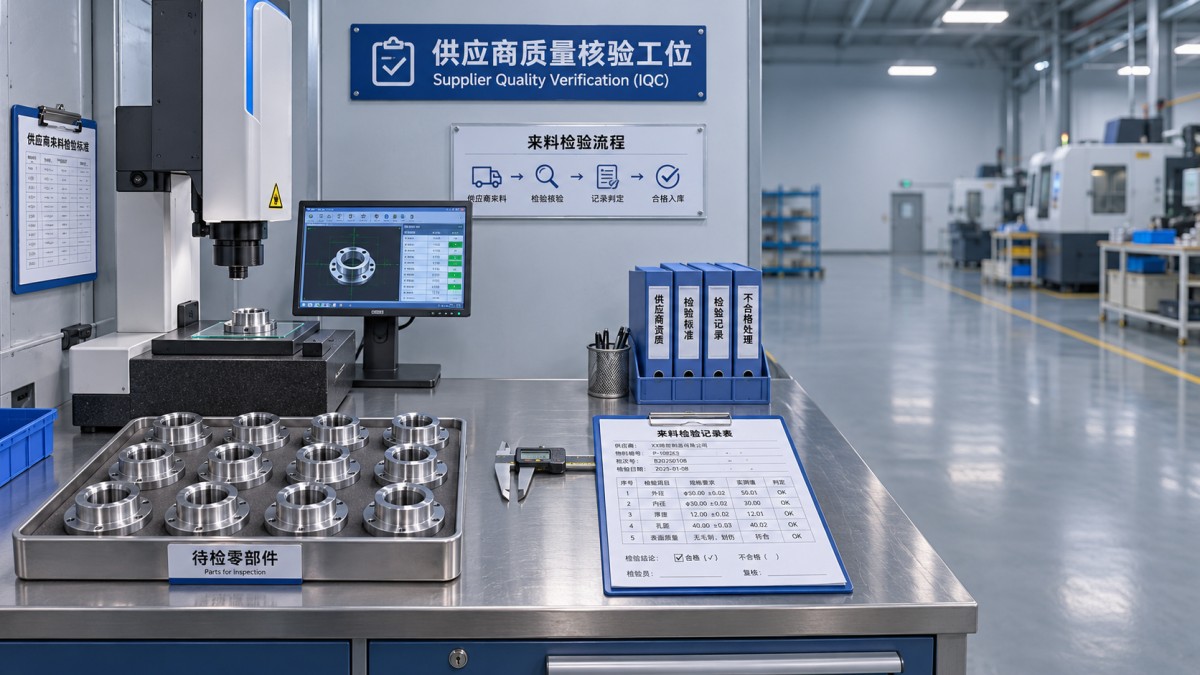
Evaluate how the vendor controls quality throughout the build, not only whether it has a written quality policy. Ask for sample inspection plans, incoming-component checks, calibration controls, nonconformance records, and final test procedures. Remove sensitive information where necessary, but retain enough detail to see how a defect is identified, assigned, corrected, and closed.
Traceability should match the risk. For a critical control component, the report might document how its identity, software version, inspection status, and replacement history can be established. For purchased assemblies, determine whether the equipment supplier remains responsible for coordinating corrective action with its own subcontractors.
A certification can support the assessment when it is relevant, current, and within the scope of the supplying site. Verify what the certificate covers; do not treat it as proof that a particular machine will meet a particular production requirement.
Compliance and safe integration
Identify the destination, intended use, and applicable requirements before accepting a general statement that the equipment is “compliant.” Request a list of the standards and legal requirements the supplier proposes to meet, along with the documents, declarations, and supporting information it will provide. The applicable obligations depend on the equipment and jurisdiction and should be confirmed for the specific purchase.
Review practical integration issues as well: guarding, emergency stops, access for maintenance, electrical interfaces, extraction, noise information, and the responsibilities of each party when machines are connected into a line. A supplier’s documentation should make clear which safeguards are included and which site conditions or protective measures remain the buyer’s responsibility.
Where printed packaging has traceability or product-contact requirements, establish the exact scope of the claim. Equipment capability, ink or adhesive suitability, and finished-packaging compliance are not interchangeable. Request the appropriate evidence from each responsible party rather than assuming that a machine supplier can substantiate the whole process.
Service, parts, and software support
After-sales capability affects production long after commissioning. Ask where service personnel are based, which languages they support, what remote diagnostic access requires, and how requests are escalated. Distinguish a promised response time from a repair time: restoring production may depend on diagnosis, travel, parts availability, and site access.
Request a recommended spare-parts list with part identifiers, storage conditions where relevant, replenishment arrangements, and the procedure for obtaining obsolete or substituted components. For controls and software, clarify backup and restore procedures, access rights, update responsibilities, license conditions, and support for interfaces with existing systems.
Training should be assessed by role. Operators, maintenance technicians, and programmers may need different materials and practical exercises. Confirm the language, duration, location, and deliverables of the proposed training, along with whether follow-up support is included.
Build an evidence-based comparison
Use a consistent scoring method only after mandatory requirements have been screened. A simple scale can distinguish an unsupported claim from a demonstrated capability. The example below is a decision aid, not a substitute for technical review.
Assign weights before reviewing final scores, using the operational consequences of failure as the guide. A line that must run multiple substrate types may warrant greater emphasis on demonstrated process flexibility than a machine dedicated to one stable product. A remote installation may justify more weight for parts availability and service access.
Keep mandatory failures outside the weighted total. Otherwise, an attractive commercial offer can mathematically conceal an unacceptable gap in safety, required output, or integration. Also avoid treating missing evidence as proof of failure: mark the claim as unverified, set a deadline, and decide whether the remaining uncertainty is acceptable.
Verify claims at the point where they matter
Use document review to narrow the questions for a site visit or remote audit. During the review, follow a real process through the supplier’s records: for example, trace a component from receipt to inspection and assembly, or follow a nonconformance through corrective action. Ask to speak with the functions responsible for engineering, production, quality, and service rather than relying solely on the sales presentation.
For performance-sensitive purchases, agree on a factory acceptance test before the machine is built. The test plan should identify the machine configuration, representative materials, product specifications, measurement method, sampling approach, pass criteria, and the person responsible for recording results. State how stoppages, setup time, rejected output, and deviations will be treated; otherwise, two parties can interpret the same demonstration differently.
Factory testing has limits. Site utilities, upstream and downstream equipment, operator skill, and actual material variation can change results. Define a separate site acceptance process where needed, including the conditions the buyer must provide and the procedure for resolving failed or incomplete tests. Do not assume that factory acceptance replaces site validation.
When a visit or test is not feasible, use a proportionate alternative: review unedited demonstration records, inspect sample outputs, interview service personnel, or require a contractual verification milestone. Record the limitation explicitly. A remote review may reduce uncertainty, but it should not be reported as an on-site inspection.
Turn findings into a purchasing decision
The report should make the decision traceable. For each material finding, identify the requirement, supplier response, evidence reviewed, assessment, risk, and owner of the next action. Record document versions and review dates so that a later specification change does not leave the decision resting on obsolete evidence.
Differentiate a capability gap from a commercial gap. A supplier that cannot demonstrate the required material range needs technical verification or a different configuration. A supplier that can meet the requirement but excludes tooling or installation needs a scope and price clarification. Combining both issues under a vague “needs improvement” rating makes corrective action difficult to manage.
Close the report with a clear disposition for each vendor: approved for the defined scope, conditionally approved subject to named actions, or not approved against specified requirements. Conditional approval should include an owner, due date, required evidence, and consequence if the condition is not met. Transfer critical commitments—such as acceptance criteria, documentation, training, service arrangements, and approved configuration—into the purchase documents rather than leaving them only in the assessment file.
Reassess when the risk changes materially, such as after a major design revision, a change in manufacturing site, a critical subcontractor substitution, or repeated service problems. The purpose is not to repeat the entire evaluation automatically; it is to verify that the evidence supporting the original decision still applies to the equipment and support being supplied.
Related News
Get weekly intelligence in your inbox.
No noise. No sponsored content. Pure intelligence.
