
How to Choose Packaging Machinery for Personal Care Products by Format and Output
Choosing by product format is more reliable than choosing by machine name
A common mistake in sourcing packaging machinery for personal care is to begin with a machine category: filler, labeler, cartoner, case packer. That is how suppliers organize their portfolios, but it is not how a line behaves in production. Personal care lines are shaped first by format, then by viscosity, dosing method, decoration requirements, changeover frequency, and only after that by target output. A shampoo in a PET bottle, a face cream in a laminated tube, and a sheet mask in a sachet may all belong to the same brand family, yet they create very different mechanical demands.
That is why the practical question is not “Which packaging machine is best?” but “Which machine architecture fits this product format at this output level without creating chronic stoppages, rework, or wasted labor?” For procurement teams, that shift matters. It changes the discussion from brochure features to line balance, OEE stability, spare parts strategy, and validation risk.
In personal care, packaging is rarely just a container closure job. It also carries branding quality, leak prevention, hygiene expectations, traceability, and often retail presentation. A line that looks fast on paper but struggles with cap torque consistency, label alignment, tube sealing integrity, or carton squareness will erode value very quickly.
The format decides the line logic
The easiest way to assess packaging machinery for personal care is to group products by how they are physically handled. That sounds obvious, but many buying decisions still mix together primary packaging and secondary packaging as if output on one machine automatically translates to output across the line. It does not.
Bottles usually call for container unscrambling, filling, capping, label application, coding, and then either shrink bundling, tray packing, or cartoning. Tubes introduce orientation, tail sealing, and often more sensitivity to product viscosity and residual air. Sachets and pouches move into form-fill-seal logic, where film behavior, sealing window, and cut accuracy become central. Jars for creams and balms often look simple, but wide-mouth containers create their own issues around dosing cleanliness, liner placement, induction sealing, and tamper evidence.
This is the reason experienced buyers evaluate not only the filling unit but the full sequence of handling events. A line can be limited by something far downstream from the filler, especially when premium presentation is involved. Cosmetic cartons, for instance, may require leaflet insertion, batch coding, and strict visual quality on glued edges. In that case the cartoner or the folder-gluer quality of the packaging supply chain can become just as important as the filling station.
This table is not a full line specification. It is a reminder that “packaging machinery for personal care” is not one market segment mechanically. It is several handling environments hiding under one commercial label.
Output should be defined as sustained output, not nameplate speed
The second procurement trap is to compare machines by maximum rated speed. In personal care, advertised speed is only loosely connected to what a plant will actually sustain over a shift. The relevant number is not the fastest cycle the machine can hit during a demonstration. It is the output that can be maintained after accounting for product changeovers, cleaning, rejected packs, operator intervention, and upstream or downstream interruptions.
A high-speed bottle line can still underperform if cap feeding is unstable or if the labeler loses alignment on glossy containers. A sachet line can look efficient until frequent film splice events and seal rejects are counted. A tube line may meet output on one SKU and fall sharply on another because thicker formulas fill differently or because decorated tubes need more careful orientation. These are not minor exceptions. They are normal production realities.
When reviewing capacity proposals, ask suppliers to separate three figures: mechanical speed, demonstrated running speed on a comparable format, and expected sustained speed under routine production conditions. Not every supplier will have all three documented at the same level, but forcing that distinction improves the quality of comparison immediately.
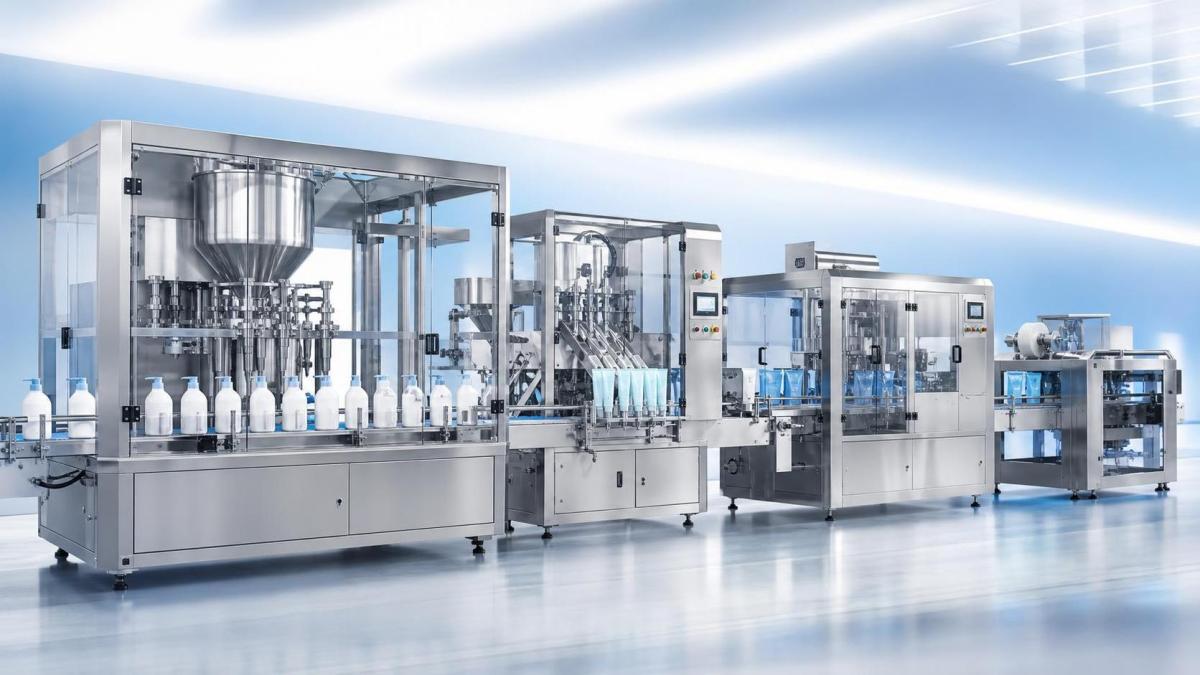
Format choice is inseparable from product behavior
Personal care products vary widely in rheology and sensitivity. Thin liquids, foaming cleansers, viscous creams, serums with particulates, alcohol-based formulations, and heat-sensitive compounds do not belong on the same shortlist by default. Filling technology has to match the way the product flows, settles, foams, or strings. Even a well-built machine becomes the wrong machine when the dosing principle is mismatched.
That matters beyond fill accuracy. Product behavior affects nozzle selection, anti-drip control, hopper design, cleaning accessibility, and the time needed for SKU changeover. In practical sourcing terms, this means procurement should not accept a packaging proposal that is detached from formulation characteristics. Engineering and quality teams need to be in the conversation early, especially if the line must handle both current and planned products.
The same caution applies to package material. Tube laminates, rigid plastics, glass, multilayer films, and decorated cartons all introduce different handling tolerances. For buyers working close to packaging converters, this is where upstream manufacturing knowledge becomes useful. Carton quality, print registration consistency, die-cut precision, and glue-line behavior affect cartoner performance more than many non-specialists expect. In other words, machinery selection and packaging material quality are coupled decisions.
Secondary packaging is often underestimated
For personal care brands, the procurement focus tends to stay on filling and sealing because those steps touch the product directly. Yet a large share of line inefficiency appears in secondary packaging. Cosmetic cartons are not ordinary transit boxes. They often involve tight aesthetic standards, delicate substrates, foil or varnish surfaces, and dimensional tolerances that influence feeding and erection.
If cartons are prone to deformation, if creases are inconsistent, or if the glue seam quality varies, even a good cartoner can become unstable. This is where the wider packaging ecosystem matters. Buyers who understand die-cutting quality, folder-gluer consistency, and print registration are usually better prepared to evaluate the true line risk. PWFS sits close to this industrial layer: corrugated lines, offset presses, die-cutters, and folder-gluers are not separate from personal care packaging performance. They are often the hidden determinants of how smoothly the final line runs.
For export-oriented or retail-sensitive products, secondary packaging also carries coding, traceability, and shelf-impact responsibilities. If the product will require serialized coding, variable data printing, leaflet insertion, or multilingual artwork changes, those tasks should be treated as line design inputs, not late-stage accessories.
What procurement teams should test before comparing prices
Price comparisons become misleading when suppliers are quoting different assumptions. A cheaper line may depend on more manual intervention, longer changeovers, narrower SKU tolerance, or less capable inspection. Those costs reappear later as labor, downtime, or waste.
A more disciplined comparison starts with a few hard questions:
- What exact formats and size ranges must the line handle today, and which are realistic additions within two to three years?
- Is the quoted output based on one flagship SKU or across the broader product mix?
- How many change parts are required, and how long is the documented changeover sequence?
- Which quality checks are in-line, and which still rely on operator sampling?
- What parts of the line are most sensitive to packaging material variation?
- What utilities, floor layout, and operator skill level does the machine assume?
These questions sound basic, but they often reveal whether a proposal is genuinely production-ready or simply commercially attractive. The same line can be either depending on the factory context.
Compliance and hygiene are not side topics
Personal care packaging does not face the exact same compliance environment as pharmaceuticals, but it still operates under quality, safety, and labeling expectations that affect machinery design and documentation. Cleanability, material contact suitability, batch traceability, coding reliability, and tamper-evidence handling should be reviewed as part of selection. If products move across regions, artwork control and packaging claims can add further requirements.
It is better to treat these as engineering constraints from the start. Retrofitting inspection, coding verification, or hygiene upgrades later is usually more expensive and can disrupt line balance. Buyers evaluating international suppliers should also look closely at technical documentation quality, spare parts responsiveness, and the clarity of validation support, because those factors affect the risk of commissioning delays.
Scalability does not always mean buying the fastest line
Future-proofing is often misunderstood as buying excess speed. In practice, a scalable personal care packaging line is one that can absorb SKU growth, decoration changes, and moderate output expansion without a complete rebuild. Sometimes that means reserving space for an automatic case packer later. Sometimes it means selecting servo-based changeover architecture, or choosing a cartoner that can tolerate more carton formats. Sometimes it means staying with a mid-speed line because labor skill, maintenance capability, or order variability would prevent a high-speed line from reaching its potential.
That is a mature decision, not a conservative one. The right packaging machinery for personal care is the line that matches the product family, the packaging supply chain, and the factory’s operating discipline. Format determines the handling logic. Sustained output matters more than brochure speed. And secondary packaging should be evaluated with the same seriousness as filling. Procurement teams that anchor their selection in those realities usually make better long-term decisions than teams that buy around headline capacity alone.
Related News
Get weekly intelligence in your inbox.
No noise. No sponsored content. Pure intelligence.
