
Industrial Printing Technology Explained: Offset, Flexo, Digital, and UV Compared
Industrial Printing Technology Explained: Offset, Flexo, Digital, and UV Compared
Industrial printing technology shapes modern packaging, retail presentation, and industrial conversion at scale.
Yet the real decision is rarely about print quality alone.
In practice, equipment choices affect throughput, waste, labor structure, compliance risk, and long-term manufacturing flexibility.
That is why industrial printing technology must be evaluated as a production system, not just a graphic process.
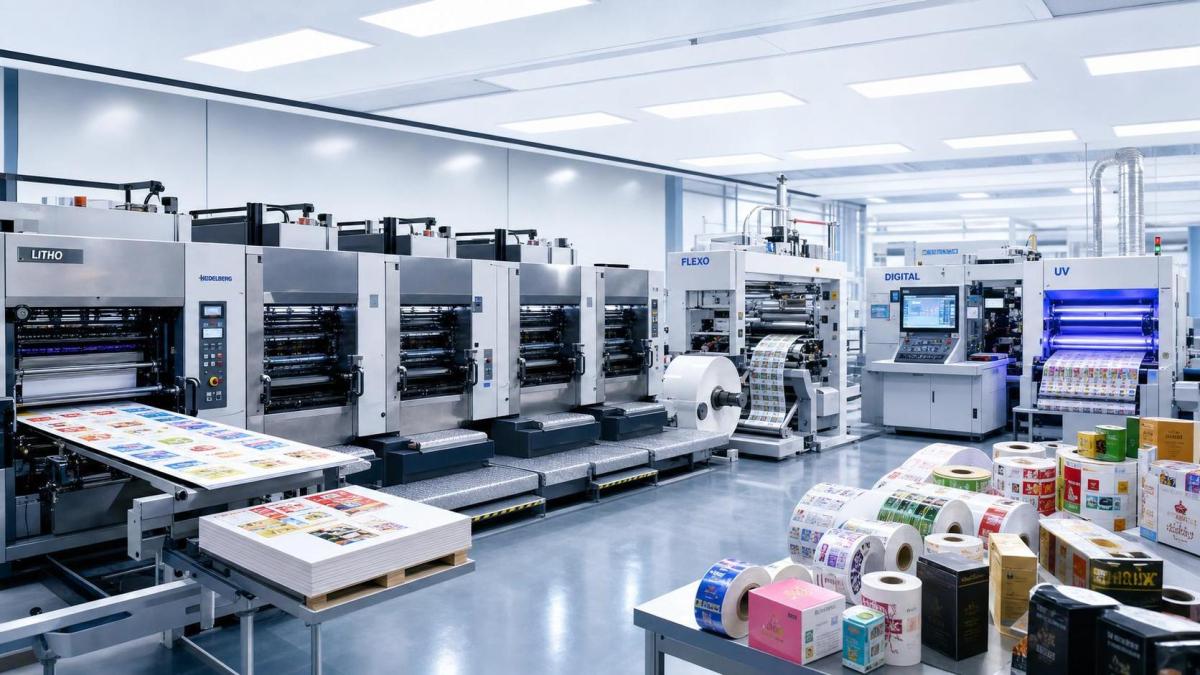
For corrugated packaging, folding cartons, labels, and specialty surfaces, four methods dominate discussion.
They are offset, flexo, digital, and UV printing.
Each one solves a different manufacturing problem.
Choosing well means matching substrate behavior, run length, color demands, and finishing flow to the right platform.
Why Industrial Printing Technology Selection Matters
Recent market changes make this comparison more urgent.
E-commerce needs stronger shipping boxes with faster artwork turnover.
Consumer brands want shorter campaigns, more versions, and better shelf impact.
Regulators also push tighter controls on migration, traceability, and waste.
This means industrial printing technology now sits closer to strategic capital planning.
A press line must fit upstream board quality and downstream die-cutting, folding, gluing, or coating.
At PWFS, this matters because print performance is linked to the whole converting chain.
Micron-level registration, board stability, and automation compatibility all influence delivered product value.
Offset Printing: Precision for Premium Cartons
Offset remains one of the most respected forms of industrial printing technology.
It transfers ink from plate to blanket, then onto the substrate.
That indirect transfer supports excellent detail and smooth tonal gradation.
For folding cartons, cosmetics, pharmaceuticals, and branded retail packaging, offset still leads in image refinement.
Where offset performs best
- High-volume jobs with stable artwork
- Fine text, gradients, and demanding color consistency
- Premium cartonboard and laminated packaging formats
- Applications requiring repeatable brand color control
Its main strength is print elegance at industrial speed.
Its tradeoff is setup intensity.
Plate making, wash-ups, and makeready waste can raise the cost of short runs.
So, when comparing industrial printing technology options, offset usually wins on quality, not agility.
Flexo Printing: The Workhorse for Corrugated and Labels
Flexo is often the most practical industrial printing technology for transport packaging and high-speed converting.
It uses flexible relief plates and fast-drying inks.
That makes it ideal for corrugated board, flexible packaging, and label stock.
In large box plants, flexo integrates naturally with die-cutting and folder-gluer operations.
Why flexo stays competitive
- Handles rougher and more absorbent substrates well
- Supports fast inline production
- Works efficiently for shipping boxes and display packaging
- Adapts well to water-based ink systems
Modern flexo has improved a lot in graphics quality.
Better plates, anilox technology, and servo control narrowed the historical gap with offset.
Still, very fine photographic work may remain harder on low-grade corrugated surfaces.
In real factory conditions, flexo wins when throughput and substrate tolerance matter more than luxury-grade image depth.
Digital Printing: Short Runs, Versioning, and Fast Changeovers
Digital has changed how industrial printing technology is evaluated.
Because there are no plates, setup time drops sharply.
This makes digital attractive for short runs, language variations, personalization, and demand-driven production.
It also supports faster response to SKU expansion.
Best-fit digital scenarios
- Short production batches
- Seasonal or regional packaging updates
- Prototyping before mass production
- Variable data and traceability coding
The biggest advantage is responsiveness.
The biggest caution is unit cost at scale.
For long, repetitive jobs, click costs and throughput limits can reduce competitiveness.
So digital industrial printing technology is strongest when changeover speed creates direct business value.
UV Printing: Surface Flexibility and Instant Curing
UV printing is less a separate market than a powerful process choice inside industrial printing technology.
It uses ultraviolet energy to cure ink almost instantly.
That creates sharp dots, strong surface effects, and broad material compatibility.
UV can be paired with offset, flexo, or digital systems depending on the application.
When UV offers clear value
- Printing on non-absorbent materials
- High-gloss, tactile, or decorative finishes
- Fast post-print handling and converting
- Industrial products needing durable surface performance
However, UV introduces its own evaluation points.
Ink migration, odor, lamp systems, energy use, and substrate heat sensitivity all need review.
For food-contact related packaging, compliance screening becomes especially important.
Direct Comparison: Speed, Cost, Color, and Flexibility
A useful industrial printing technology comparison should go beyond general impressions.
It should connect performance to production reality.
From a cost perspective, run length is still the key divider.
From a quality perspective, substrate condition matters almost as much as the press itself.
From an automation perspective, inline inspection and MES connectivity now influence purchase decisions more than before.
What Technical Evaluation Should Check First
The best industrial printing technology is the one that fits the plant, not the brochure.
A solid review should start with measurable production conditions.
- Define the real run-length mix, not the idealized average.
- Map substrate types, surface quality, moisture variation, and thickness range.
- Check required color tolerance, barcodes, and compliance constraints.
- Review integration with die-cutting, folder-gluers, coating, and inspection.
- Calculate waste during setup, job switching, and reprints.
- Assess operator dependency and maintenance skill requirements.
This is where deeper intelligence becomes useful.
At PWFS, print analysis is connected to board lines, die-cutters, folder-gluers, and downstream production economics.
That broader view helps prevent isolated equipment decisions.
Final Take: Match the Process to the Production Mission
Industrial printing technology should always be matched to output goals.
Offset is strongest for premium consistency.
Flexo is the productivity champion for corrugated and continuous converting.
Digital leads when speed of change matters more than pure volume economics.
UV expands what surfaces and effects are commercially possible.
In actual investment planning, the right answer is often a hybrid strategy.
Use industrial printing technology where it delivers the highest operational return, not where marketing language sounds strongest.
Start with substrate, run length, compliance, and finishing flow.
Then validate the line against real plant data.
That approach leads to better output, lower waste, and stronger long-term manufacturing resilience.
Related News
Get weekly intelligence in your inbox.
No noise. No sponsored content. Pure intelligence.
