
How to Choose a High Speed Folder Gluer for Carton Output, Accuracy, and Labor Cost?
How to Choose a High Speed Folder Gluer for Carton Output, Accuracy, and Labor Cost?
Choosing a high speed folder gluer is not just about maximum speed. It directly affects carton output, folding accuracy, and labor cost across the whole converting line.
A faster machine can still become an expensive bottleneck. That happens when setup takes too long, box quality drifts, or operators spend hours correcting feeding and folding problems.
For a real investment decision, the better question is simple. Which high speed folder gluer delivers stable cartons per shift, not just impressive speed on a brochure?
Start with the Real Production Goal
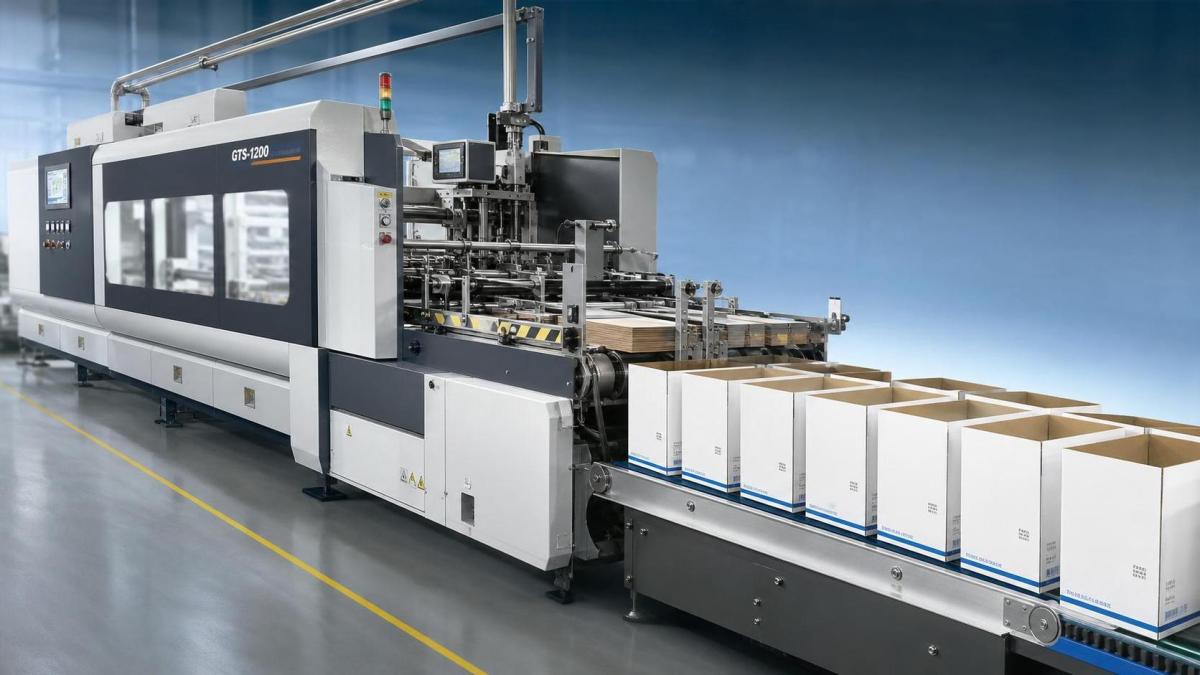
Before comparing brands, define what success means on your floor. Output, accuracy, and labor cost are connected, so the machine must fit your carton mix and order pattern.
A plant running long orders of straight-line cartons needs something different from a converter handling frequent SKU changes, crash-lock boxes, or pharmaceutical cartons.
In practical terms, define five baseline numbers before talking to suppliers:
- Average and peak carton output per hour
- Main box styles and board grades
- Typical setup frequency per shift
- Current reject rate and rework cost
- Operators required per machine and per shift
This gives a cleaner basis for comparing any high speed folder gluer. Otherwise, vendor claims about top speed can hide weak performance in normal production conditions.
Why Rated Speed Does Not Equal Real Carton Output
The first trap is confusing mechanical speed with sellable output. A high speed folder gluer rated at 400 meters per minute may still underperform a slower machine in daily use.
Real carton output depends on feeding stability, alignment consistency, glue application, transfer control, and packing efficiency at the delivery section.
Ask suppliers for production data under realistic conditions. That means actual box sizes, actual board weights, and actual order change frequency.
Useful questions include:
- What is sustained speed over an eight-hour shift?
- How many minutes are needed for a repeat setup?
- How much output is lost during blank jams or glue cleaning?
- What reject rate appears at top speed versus normal speed?
A strong high speed folder gluer should deliver predictable output, not occasional peaks. Predictability matters more for planning labor, delivery dates, and downstream packing capacity.
Folding Accuracy Is a Profit Issue, Not Just a Quality Issue
Accuracy often gets discussed after speed, but it should be near the top of any selection checklist. Poor folding accuracy quickly turns into waste, complaints, and hidden labor.
This is even more obvious in cartons for cosmetics, medicine, electronics, and premium retail packaging. Small folding errors can ruin appearance, barcode readability, and filling-line compatibility.
When evaluating a high speed folder gluer, inspect the systems that protect alignment:
- Feeder control for warped or uneven blanks
- Section-by-section belt adjustability
- Precise folding rail stability at higher speeds
- Squaring capability before compression
- Glue placement consistency across different carton lengths
Request sample runs using your own blanks. A showroom test with ideal material tells very little about how the machine handles your board, print varnish, creasing quality, and humidity conditions.
Look Closely at Setup Time and Changeover Design
From a purchasing perspective, setup is where many investment models become too optimistic. A high speed folder gluer with long changeovers can lose more hours than it saves.
Short-run and mixed-order production make this even more important. Faster setup protects output without pushing the machine at unstable speeds.
Compare these features carefully:
- Motorized adjustment versus manual handwheel setup
- Recipe storage for repeat orders
- Quick-lock mechanisms for folding sections
- Accessible glue system cleaning points
- Human-machine interface clarity and error prompts
In real business operations, saving ten minutes per changeover can outweigh a higher top speed. Over a month, that difference directly changes available machine hours.
Automation Level Directly Changes Labor Cost
Labor cost is no longer just about headcount. It also includes skill dependency, training time, overtime risk, and quality variation between operators.
A modern high speed folder gluer should reduce manual intervention in feeding, alignment correction, inspection, counting, and discharge handling.
The most valuable automation features usually include:
- Automatic pre-feeding or continuous feeding support
- Servo-driven section adjustments
- Glue monitoring and low-glue alerts
- Inline inspection for missing flaps or misfolds
- Automatic counting, stacking, and batching
The right automation package depends on order complexity. For stable long runs, simple reliability may win. For mixed production, smarter automation often delivers better labor economics.
Do Not Ignore Material Range and Box Flexibility
Another common mistake is choosing a high speed folder gluer around today’s best-selling box only. Markets change, and packaging portfolios rarely stay fixed.
A machine with a narrow operating range may look efficient now, yet limit future orders in e-commerce, healthcare packaging, food sleeves, or promotional cartons.
Check the real flexibility of the machine across:
- Paperboard and micro-flute ranges
- Straight-line, lock-bottom, and multi-corner boxes
- Minimum and maximum blank sizes
- Special substrates with coatings or varnishes
- Future integration with inspection or packing modules
This is where a broader equipment strategy matters. A high speed folder gluer should support not only current volume, but also future margin opportunities.
Compare Total Cost of Ownership, Not Purchase Price Alone
Price is visible. Ownership cost is usually where the real decision should happen. Two machines with similar quotations can perform very differently over five years.
A practical comparison should include the following cost areas:
If a high speed folder gluer costs more upfront but reduces one operator, cuts setup waste, and adds stable output, its ROI can be much stronger.
Supplier Support Is Part of Machine Performance
Machine quality and supplier quality are closely linked. Even the best high speed folder gluer becomes risky if installation, training, and service response are weak.
Assess the supplier on practical points:
- Local service coverage and response time
- Spare parts availability in your region
- Operator and maintenance training depth
- Remote troubleshooting capability
- Documented references in similar carton applications
A supplier who understands your packaging segment will usually give more reliable advice on line balance, tooling, glue compatibility, and process tuning.
A Simple Decision Framework for Final Selection
To compare options fairly, score each high speed folder gluer across the same business factors. Keep the method simple enough to defend internally.
- Define must-have box styles and material range.
- Measure expected saleable output, not rated speed.
- Test folding accuracy with your actual blanks.
- Calculate labor impact with realistic staffing.
- Estimate yearly downtime and maintenance exposure.
- Compare five-year ownership cost and payback period.
- Check supplier support with customer references.
In the end, the right high speed folder gluer is the one that keeps cartons moving with stable quality and fewer hands on the line.
That usually means balancing speed, accuracy, automation, and service support instead of chasing the highest number on a specification sheet.
Use this framework during supplier discussions, sample tests, and ROI reviews. It will make the final investment decision clearer, more practical, and easier to defend.
Related News
Get weekly intelligence in your inbox.
No noise. No sponsored content. Pure intelligence.
