Industrial Cutting Solutions for Composite Materials: Which Process Fits Your Tolerance Needs?
Industrial Cutting Solutions for Composite Materials: Which Process Fits Your Tolerance Needs?
Choosing among industrial cutting solutions for composite materials is rarely about speed alone.
The real question is whether a process can hold tolerance, protect edge quality, and stay efficient at scale.
That balance becomes harder when materials combine fibers, resins, metals, foams, or layered structures.
A method that looks productive on paper may still fail in assembly, bonding, sealing, or cosmetic inspection.
This is why industrial cutting solutions must be matched to the actual tolerance window, not just the machine brochure.
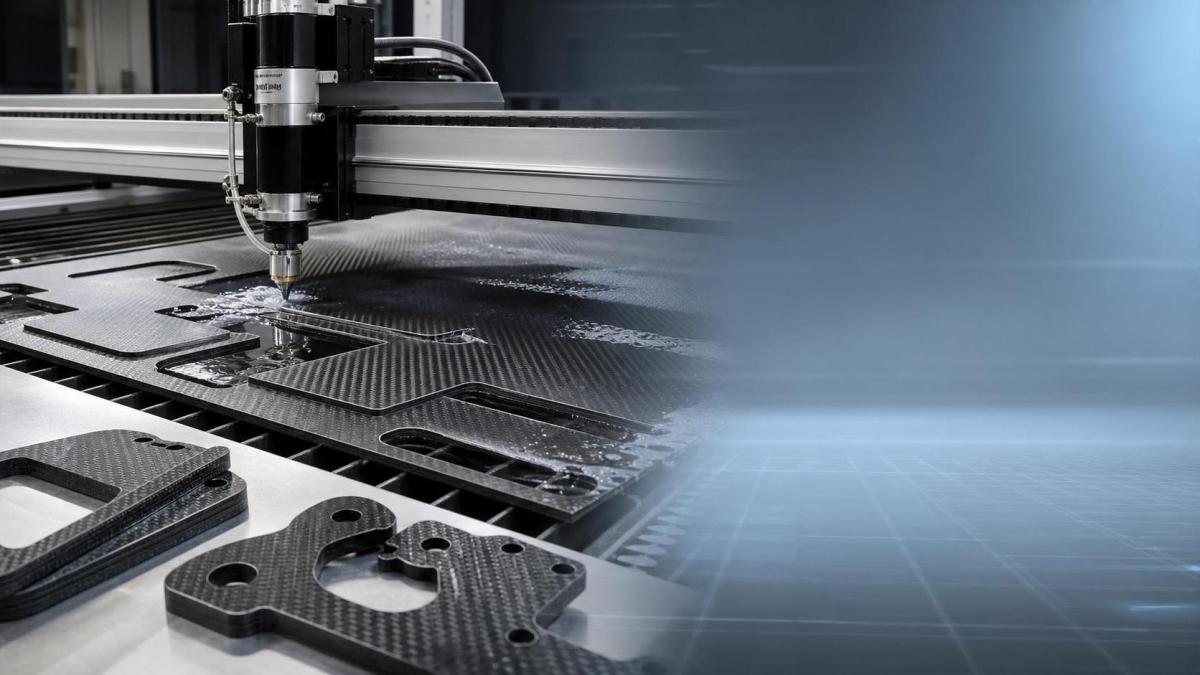
From a technical review perspective, process choice affects scrap, fixture design, secondary finishing, and total operating cost.
It also shapes how stable production remains when part geometry, volume, or material batches begin to vary.
Below is a practical comparison of major industrial cutting solutions used for modern composite materials.
Why Composite Materials Change the Cutting Decision
Composite materials do not behave like uniform steel, paperboard, or solid wood.
Their internal structure can include woven fibers, brittle matrices, adhesive films, honeycomb cores, or thermoplastic skins.
That mix creates uneven cutting resistance across a single part.
As a result, industrial cutting solutions must control heat, vibration, tool pressure, and chip evacuation more carefully.
Tolerance loss often starts with hidden factors rather than obvious machine inaccuracy.
- Fiber pull-out can enlarge edges beyond nominal dimensions.
- Delamination can weaken structural performance after cutting.
- Heat-affected zones can change resin properties or edge appearance.
- Stack thickness variation can shift the real cut path.
- Part spring-back can distort post-cut measurements.
In practical terms, tolerance is never only a number on a drawing.
It is tied to edge condition, hole roundness, burr level, kerf consistency, and downstream fit.
Comparing the Main Industrial Cutting Solutions
CNC Routing
CNC routing remains one of the most flexible industrial cutting solutions for rigid composites.
It works well for glass fiber panels, carbon laminates, sandwich boards, and engineered sheet structures.
Its biggest advantage is geometric freedom.
Profiles, pockets, drilled features, and beveled edges can be handled in one setup.
- Best for medium to tight tolerances with complex contours.
- Strong process control through spindle speed, feed, and tool geometry.
- Risk centers on tool wear, fuzzing, and laminate breakout.
When tolerance targets become stricter, tool management matters more than machine horsepower.
Waterjet Cutting
Waterjet is often selected when heat must be minimized.
For many composite materials, that is a decisive benefit.
This process avoids burning resins and reduces thermal distortion.
It is also useful for thicker laminates and mixed-material stacks.
- Best for heat-sensitive composites and thicker sections.
- Good edge quality with low thermal damage.
- Watch for taper, moisture sensitivity, and slower throughput.
If your parts later receive adhesive bonding, waterjet cleanliness and drying control must be validated early.
Laser Cutting
Laser systems deliver speed, narrow kerf, and strong automation potential.
For selected composite skins, films, and thinner laminates, laser-based industrial cutting solutions can be highly efficient.
Still, thermal input is the central limitation.
Some matrices char, discolor, or release unwanted fumes.
- Best for fast nesting and thin composite structures.
- Excellent for repeatability in automated cells.
- Less ideal where thermal damage or emissions are critical.
In other words, laser tolerance may look excellent dimensionally while failing cosmetic or material standards.
Knife and Oscillating Blade Cutting
For foam-core composites, flexible laminates, and softer layered sheets, digital knife systems remain practical industrial cutting solutions.
They are clean, quiet, and efficient for prototypes or short production runs.
However, tolerance is closely tied to material support and blade deflection.
They are rarely the best choice for rigid, abrasive, high-strength laminates.
How to Match Process Capability to Tolerance Needs
A useful mistake to avoid is treating all tolerances as equal.
Some dimensions drive structural fit, while others mainly affect appearance or trimming allowance.
The smartest industrial cutting solutions are selected around critical-to-function features.
Ask These Four Questions First
- Which features carry the tightest functional tolerance?
- What edge condition is acceptable after cutting?
- How sensitive is the material to heat, moisture, or vibration?
- Will the part need drilling, bonding, coating, or sealing later?
These answers usually narrow the process choice faster than speed comparisons do.
Tolerance by Application Context
This is where industrial cutting solutions become a standards issue, not just an equipment issue.
Capability must be verified against repeatable inspection rules.
Key Risks That Distort Tolerance in Real Production
A process can pass trials and still drift later.
That usually happens because operating conditions change faster than control plans do.
- Tool wear shifts kerf width and edge finish over time.
- Material lot variation changes cutting resistance.
- Vacuum hold-down inconsistency affects dimensional stability.
- Improper nesting can amplify heat or vibration zones.
- Dust and debris can alter part seating during measurement.
More importantly, these risks do not show up equally across all industrial cutting solutions.
Each process has its own failure signature, and that signature should guide validation planning.
A Practical Evaluation Framework
When comparing industrial cutting solutions, use a structured matrix instead of relying on vendor demonstrations alone.
The most useful evaluation combines dimensional data with production behavior.
- Measure first-piece and last-piece tolerance in the same run.
- Inspect edges for chipping, burning, fuzzing, and layer separation.
- Track cycle time with realistic loading and unloading conditions.
- Calculate consumables cost, not only machine rate.
- Review dust, fume, and wastewater controls for compliance impact.
For organizations balancing packaging, engineered panels, and customized fabrication, this wider view is essential.
It aligns equipment choice with yield, traceability, and stable industrial performance.
Final Takeaway
The best industrial cutting solutions for composite materials are not universally the fastest or the most advanced.
They are the ones that fit your tolerance priorities, material behavior, and downstream process window.
CNC routing offers versatility, waterjet protects heat-sensitive structures, laser supports high-speed thin-sheet production, and knife cutting fits softer layered materials.
In real operations, the winning decision usually comes from testing edge quality and tolerance stability together.
If you are reviewing industrial cutting solutions now, start with the most critical feature, define the acceptable defect modes, and validate capability under actual production conditions.
That approach keeps the process practical, measurable, and far more likely to hold up after installation.
Related News
Get weekly intelligence in your inbox.
No noise. No sponsored content. Pure intelligence.
