
Industrial Packaging Automation Line: Key Modules, Line Balancing, and Integration Points Explained
Industrial Packaging Automation Line: Core Architecture and Why It Matters
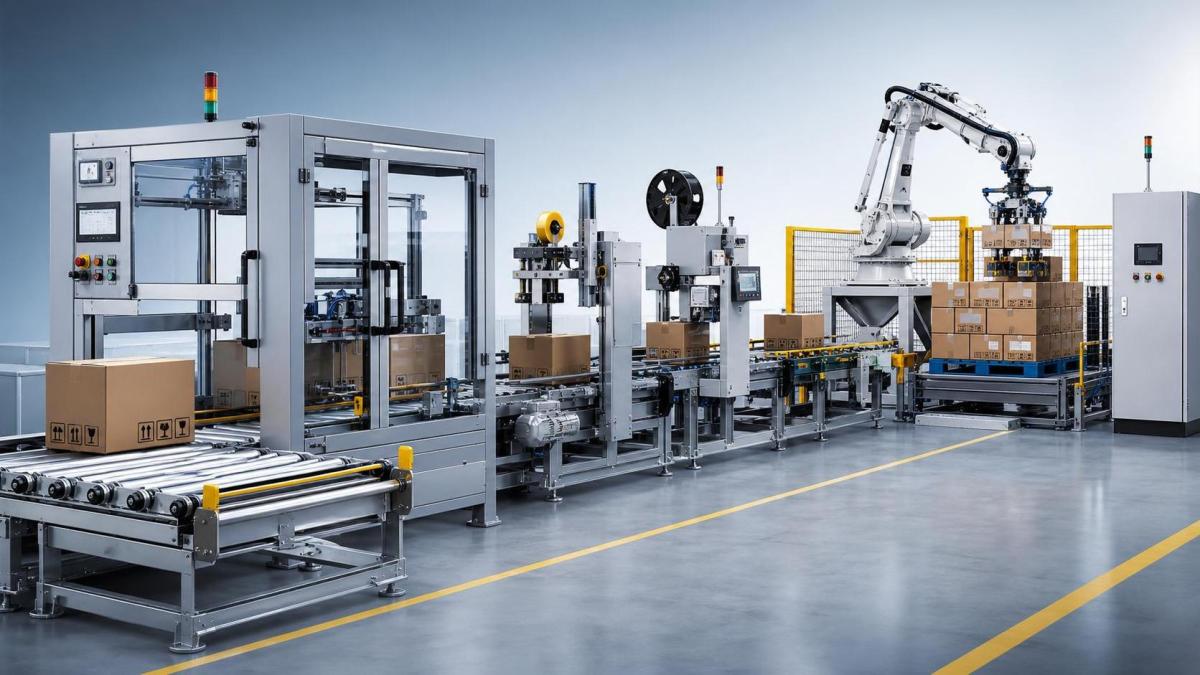
An industrial packaging automation line succeeds or fails at the interfaces between machines, controls, and data. Hardware alone does not guarantee throughput.
In practice, the strongest lines are designed as connected systems. Each module must match the next machine’s speed, buffer logic, and operating rhythm.
This is especially important in corrugated packaging, printed cartons, and mixed-SKU shipping environments. Small integration errors can turn into chronic bottlenecks.
For that reason, industrial packaging automation line planning should begin with material flow, target output, downtime assumptions, and changeover frequency.
The most common objective is not just maximum speed. It is stable, repeatable output with acceptable labor, quality, energy, and maintenance cost.
That changes the decision logic. A line that peaks at high speed may still underperform if its control architecture creates frequent stops.
Key Modules in an Industrial Packaging Automation Line
Most industrial packaging automation line layouts include a familiar set of modules. The exact order depends on product form, pack pattern, and downstream logistics rules.
1. Infeed and Product Distribution
The infeed zone sets the pace for everything downstream. It receives products from converting, printing, filling, or assembly equipment.
Typical devices include metering conveyors, timing screws, lane dividers, servo pushers, and accumulation buffers. These components protect flow stability.
2. Primary and Secondary Packing Modules
Depending on the application, the line may include case erectors, wraparound packers, top-load case packers, or robotic pick-and-place cells.
For folding carton and corrugated operations, this stage must also account for blank quality, adhesive cure time, and carton squareness.
3. Closing, Sealing, and Labeling
Once packed, units move through tape sealers, hot-melt systems, strappers, print-and-apply labelers, or vision-based code verification stations.
This stage often looks simple, but it creates many hidden stoppages. Label misreads, glue faults, and seal variation can trigger line-wide interruptions.
4. Palletizing and End-of-Line Handling
The final module usually includes palletizers, slip sheet dispensers, stretch wrappers, pallet labelers, and outbound transfer conveyors.
If pallet patterns vary by SKU or customer, recipe management becomes critical. Without it, changeovers slow down the entire industrial packaging automation line.
Line Balancing: The Real Source of Throughput
Line balancing is where many projects win or lose. A fast machine in the wrong place can reduce total performance instead of raising it.
In an industrial packaging automation line, every station needs a defined design rate, sustained rate, and recovery rate after minor stops.
The design rate is the advertised maximum. The sustained rate is what the equipment can run for hours without quality drift.
The recovery rate matters because real lines stop. Restart behavior determines whether short interruptions remain local or cascade across the system.
A practical balancing model should include these variables:
- Nominal units per minute for each module
- Planned and unplanned downtime assumptions
- Buffer size between constraint points
- SKU mix and changeover duration
- Reject rate and rework path capacity
- Operator intervention frequency
The bottleneck is not always the slowest machine. It is the module that most often limits sustained flow under actual production conditions.
In high-mix plants, case packing or palletizing often becomes the real constraint. In long-run plants, sealing or labeling may be the weaker point.
This is why buffer design matters. Controlled accumulation can absorb small disruptions and protect upstream asset utilization.
Still, excess buffering is not free. It increases footprint, control complexity, and product traceability risk if lot separation is poorly managed.
Integration Points That Deserve Early Attention
The hardest part of an industrial packaging automation line is rarely one machine. It is the handshake between mechanical, electrical, software, and operational layers.
Mechanical Interfaces
Machine height, transfer width, pitch, orientation, and guarding layout must align before site installation. Small mismatches cause expensive rework.
Controls and PLC Coordination
Each vendor may have its own PLC philosophy. Start-stop logic, permissives, fault reset sequences, and mode transitions must be defined line-wide.
If that work is left until commissioning, integration delays become almost certain. The industrial packaging automation line then spends weeks chasing preventable alarms.
MES, ERP, and Recipe Data
The production line should not depend on manual data entry for every SKU. That approach slows changeovers and increases labeling errors.
A better model links the industrial packaging automation line to MES or ERP for order download, recipe control, lot tracking, and performance reporting.
Vision, Traceability, and Quality Gates
Inspection cameras, barcode readers, and reject devices should be treated as line controls, not optional accessories. They influence flow logic and buffer design.
When traceability is critical, every reject event needs a defined response. Otherwise, one missing code can compromise pallet-level compliance.
How to Specify an Industrial Packaging Automation Line More Effectively
Better specifications usually lead to shorter commissioning. They also reduce change orders, disputed scope, and unrealistic vendor promises.
A useful specification package should define more than target speed. It should describe how the industrial packaging automation line must behave under normal variation.
- State the SKU range, dimensions, materials, and pack formats.
- Define the required OEE assumptions and acceptance test method.
- Document utility conditions, including air, power, steam, and temperature limits.
- Specify data exchange points with MES, ERP, WMS, and label systems.
- Require alarm categories, event logging, and downtime code standards.
- Set expectations for operator access, maintenance clearance, and spare parts.
Factory acceptance testing should simulate realistic products and speed ramps. A short dry run does not prove performance.
Site acceptance should then verify not only output, but also restart behavior, reject handling, and upstream-downstream synchronization.
Common Risks and Practical Countermeasures
Several problems appear again and again across industrial packaging automation line projects. Most are visible early if teams ask the right questions.
- Oversized speed claims: Validate sustained throughput with actual product mixes.
- Weak data integration: Freeze interface definitions before software development starts.
- Underestimated changeovers: Test recipes, guides, and operator tasks during FAT.
- Poor reject management: Design clear quarantine, rework, and traceability paths.
- Maintenance blind spots: Reserve access space for sensors, glue systems, and wear parts.
- Single-vendor assumptions: Assign one party to own line-level coordination.
From a project perspective, ownership clarity matters as much as technology. Complex lines fail when interfaces belong to everyone and therefore to no one.
That is also why many advanced manufacturers now treat digital reporting as part of machine performance, not an afterthought.
Final Takeaway for Line Planning
A high-performance industrial packaging automation line is built on three things: correct modules, realistic line balancing, and disciplined integration management.
When those three elements align, throughput becomes more predictable, OEE improves, and future expansion is easier to justify.
For facilities linked to corrugated board lines, offset presses, folder-gluers, die-cutters, or customized logistics packaging, this systems view is now essential.
The next practical step is simple: map the current process, identify the true constraint, and review every interface before approving equipment scope.
Related News
Get weekly intelligence in your inbox.
No noise. No sponsored content. Pure intelligence.
