
Laser Edge Banding Technology Cost Breakdown: Equipment, Energy, Adhesive, and Maintenance
Approving a laser edgebanding investment takes more than comparing machine quotations. The real laser edge banding technology cost sits across equipment structure, energy demand, edge material choice, downtime exposure, and maintenance discipline.
That matters more now because panel furniture production is under pressure from short lead times, customized orders, cleaner finishing expectations, and tighter margin control. In that environment, a smooth joint is only part of the value story.
For platforms such as PWFS, which track the industrial systems shaping packaging and living spaces, edge banding is not an isolated machine topic. It connects digital woodworking, material efficiency, automation maturity, and long-term factory economics.
Where the cost picture really begins
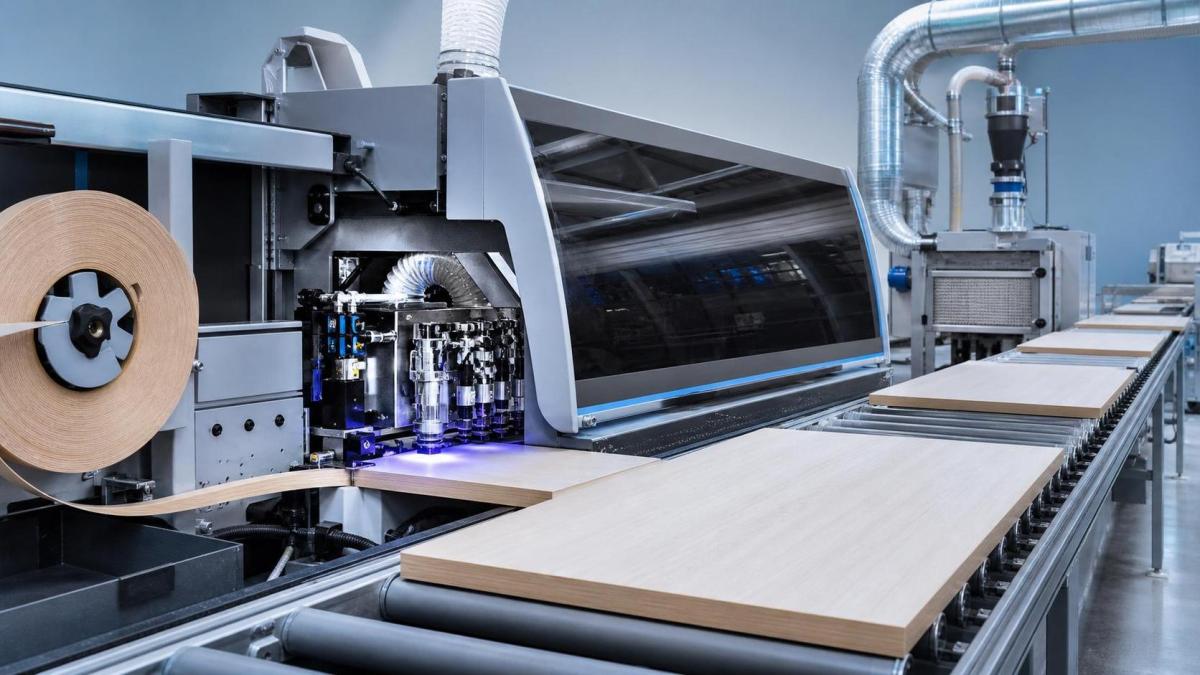
Laser edge banding uses a laser unit to activate a functional layer on the edge band, creating a near-seamless bond without the glue pot used in conventional hot-melt systems.
On paper, that sounds like a simple shift in bonding method. In practice, it changes the full operating model, from consumables and cleaning routines to energy peaks and spare-part planning.
This is why laser edge banding technology cost should be treated as a total process cost, not a machine purchase line. The visible price is only the first gate.
Why the topic keeps gaining attention
Seam quality has become a commercial issue, not just a technical preference. Kitchen, bath, retail, and premium wardrobe projects increasingly expect joints that resist moisture, heat, and visible glue lines.
At the same time, panel processing lines are becoming more digital. CNC routers, MES connectivity, barcode workflows, and automated sorting raise expectations for stable downstream finishing.
Laser systems fit that direction well, but they also introduce a different cost logic. Better appearance can be easy to see; better economics require closer calculation.
Equipment cost is more than the main machine
The equipment portion of laser edge banding technology cost usually includes the edgebander base machine, laser source, safety enclosure, extraction adaptation, control integration, and commissioning support.
A high-speed line may also need upstream and downstream handling upgrades. Return conveyors, buffering, scanning, and sorting often determine whether the laser unit delivers its designed output.
Factories that already run automated nesting or batch-size-one production should pay attention here. A laser edgebander performs best when the surrounding line is equally disciplined.
Typical equipment cost drivers
- Laser power level and heating technology
- Feed speed and panel thickness range
- Automation level for setup and changeover
- Compatibility with EVA, PUR, and laser-ready bands
- Digital interfaces with ERP, MES, or scanner systems
- Installation complexity and operator training scope
Lower entry pricing can look attractive, but under-configured systems often push costs into later retrofits, unstable throughput, or material limitations. That is usually where approval assumptions drift off target.
Energy cost needs a process view, not a utility line
Energy is one of the most misunderstood parts of laser edge banding technology cost. A laser source draws meaningful power, yet the comparison should include what disappears with glue-pot heating and glue management.
Conventional hot-melt systems consume energy before production starts and during idle periods. They also generate cleaning cycles, warm-up losses, and adhesive waste that do not always appear in direct power reports.
Laser units shift some of that cost into controlled energy-on-demand behavior. The actual result depends on shift patterns, batch stability, feed rate, and stop-start frequency.
In many cases, the decision is not whether laser uses power. It does. The better question is whether the total cost per finished meter improves after waste, labor, cleaning, and rejects are included.
Adhesive cost changes form rather than disappearing
A common misunderstanding is that laser means no adhesive-related spending. In reality, the adhesive function moves into the coextruded or specially prepared layer on the edge band.
That means laser edge banding technology cost still depends on material sourcing, edge band specification, décor matching, minimum order volume, and supplier consistency.
The pricing difference between standard edge banding and laser-ready banding can be significant, especially for low-volume colors, unusual textures, or frequently changing collections.
What should be compared in adhesive-related spending
- Cost per meter of laser-compatible edging
- Inventory complexity across colors and finishes
- Waste from damaged or obsolete rolls
- Savings from removing glue-pot cleaning and purge losses
- Reduced defect risk from inconsistent glue application
This is often where premium programs justify laser fastest. Stable, repeatable, moisture-resistant joints can offset higher edging material cost when rework and claims are expensive.
Maintenance cost is tied to uptime discipline
Maintenance is not always lower with laser. It is different. Glue contamination drops, but optics, calibration, sensors, transport components, and cooling systems become more important.
A factory used to mechanical troubleshooting may need stronger preventive routines for laser modules and control systems. If that capability is missing, downtime becomes the hidden premium.
PWFS regularly tracks how advanced finishing equipment behaves inside broader automated lines. The pattern is consistent: the more integrated the cell, the more expensive unplanned stoppages become.
Maintenance items that deserve budget visibility
- Laser source service interval and expected lifetime
- Optics cleaning and alignment checks
- Cooling unit inspection and replacement parts
- Software updates and remote diagnostics support
- Training refresh for operators and maintenance teams
Service contracts deserve close reading. Response times, spare-part availability, and local technical coverage can have more economic impact than a small discount at purchase stage.
How to judge business value in real production
The strongest case for laser edge banding technology cost usually appears in high-output, quality-sensitive, and variation-heavy environments. Not every line will recover the premium at the same speed.
Projects with premium cabinet finishes, bathroom furniture, laboratory interiors, and exposed-edge retail fixtures often benefit from better seam appearance and stronger moisture performance.
Facilities focused on simple commodity panels may see a slower payback, especially if current EVA or PUR processes are already stable and labor costs are modest.
A practical way to evaluate the investment
A sound review starts with cost per finished panel or cost per edged meter, not a list of isolated expenses. That baseline keeps the comparison tied to output.
Then separate direct, indirect, and risk-linked costs. Direct costs include machine price, power, and laser-ready edging. Indirect costs include training, utilities adaptation, and spare parts.
Risk-linked costs include reject rates, service delays, inventory obsolescence, and production interruptions during ramp-up. These items often decide whether the forecast is realistic.
Useful checkpoints before approval
- Map current edging cost per meter by product family
- Request production data under real shift conditions
- Check local supply of laser-compatible edge materials
- Model downtime impact for one day and one week
- Review service coverage, remote support, and critical spares
- Test finished quality on the panel decors that matter most
The best next step is not a broad assumption about advanced technology. It is a structured comparison between current process economics and the full laser edge banding technology cost under actual production conditions.
When that comparison includes equipment scope, energy behavior, edge material strategy, maintenance readiness, and uptime risk, the approval decision becomes clearer and far more defensible.
Related News
Get weekly intelligence in your inbox.
No noise. No sponsored content. Pure intelligence.
