
How to Vet Supplier and Solution References for Sourcing Industrial Equipment
Why do supplier and solution references for sourcing matter so early?
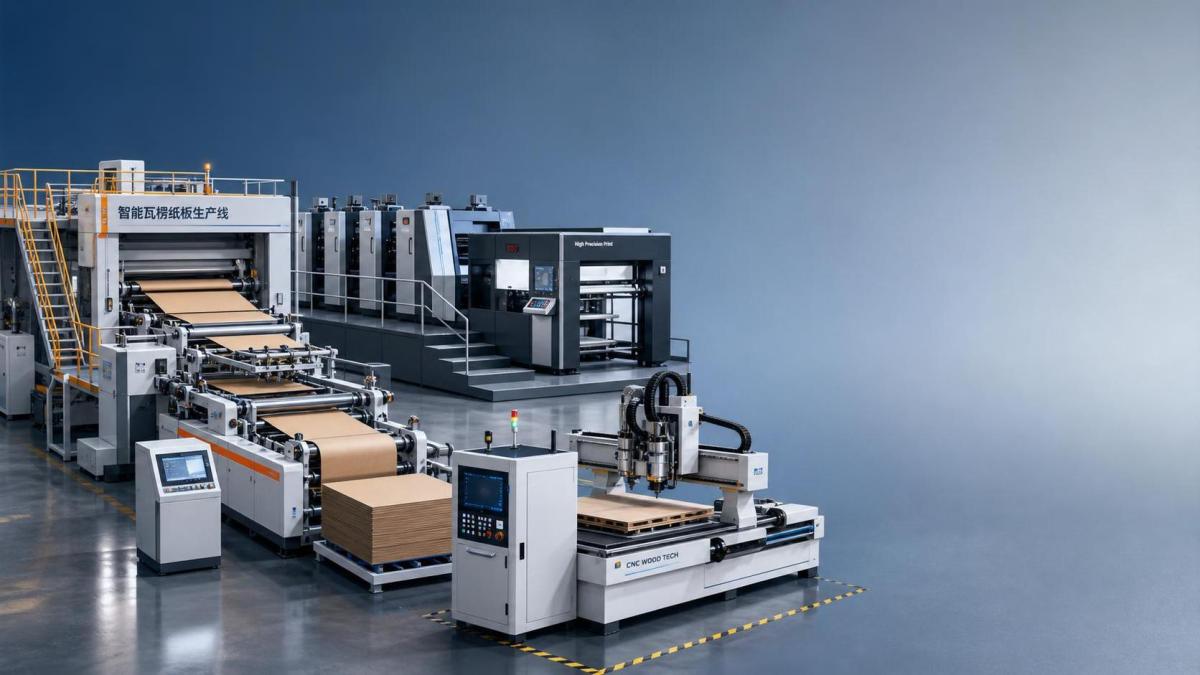
Industrial equipment sourcing usually fails before installation, not after it. The gap often starts with weak reference checking and rushed supplier comparison.
That is why supplier and solution references for sourcing deserve attention at the shortlisting stage, especially for high-value systems with long commissioning cycles.
A polished proposal can describe speed, precision, and automation. References show whether those promises hold under steam, vibration, labor shifts, and actual order pressure.
This is especially true across corrugated board lines, offset presses, die-cutting systems, folder-gluers, CNC routers, and edge banders, where operating stability matters as much as nameplate capacity.
In practical terms, good supplier and solution references for sourcing answer four hidden questions: Was the line delivered on time, did it run at target quality, was compliance handled cleanly, and did service stay responsive after acceptance?
PWFS follows these sectors closely because packaging and furniture equipment decisions are no longer isolated machine purchases. They affect output yield, digital workflow, material waste, and expansion timing.
That broader context is important. A reference is not only proof that a machine exists. It is proof that a full solution survived commercial reality.
What makes a reference actually useful instead of just reassuring?
Many reference lists look impressive because they contain famous names, large countries, or familiar brands. That alone is not enough.
Useful supplier and solution references for sourcing should resemble the intended project in material, throughput, labor model, automation level, and compliance expectations.
For example, a carton plant making e-commerce shippers needs different proof points than a folding carton line serving cosmetics or pharmaceuticals.
The same logic applies in woodworking. A CNC cell for custom panels must be judged differently from a standard nesting router in repetitive batch production.
The quickest way to separate useful references from decorative ones is to test them against a few concrete filters:
- Comparable output: board width, sheets per hour, cutting speed, glue system, or spindle duty cycle.
- Comparable product mix: brown box, retail packaging, laminated worktops, cabinet parts, or mixed custom orders.
- Comparable integration: ERP, MES, prepress workflow, CAD/CAM, barcode tracking, or robotic handling.
- Comparable regulation: FSC traceability, food-contact migration limits, CE expectations, dust control, or emissions targets.
When references line up on those points, the conversation becomes much more valuable. You move from general credibility to implementation evidence.
Which questions should be asked when checking supplier and solution references for sourcing?
Reference calls are often wasted on polite, broad questions. A better approach is to ask about moments where projects usually strain.
In packaging and woodworking equipment, the most revealing issues appear during specification freeze, installation, ramp-up, and after-sales support.
The table below helps turn supplier and solution references for sourcing into a real decision tool.
It also helps to ask for one successful reference and one difficult project. The second case often reveals more about a supplier’s operating character.
How do references differ across corrugated, print, converting, and woodworking equipment?
Not all supplier and solution references for sourcing should be judged the same way. The critical proof changes with process physics and commercial pressure.
For corrugated board lines, focus on steam system stability, flute consistency, bonding quality, changeover efficiency, and uptime across grade changes.
For offset presses, references should confirm registration repeatability, color stability, makeready time, and the supplier’s ability to support demanding visual packaging work.
On die-cutters and folder-gluers, the real issue is not only headline speed. Ask about blank accuracy, pressure balance, cracking rates, glue failure, and operator learning curve.
For CNC woodworking routers, references become more software-sensitive. Toolpath reliability, chip evacuation, nesting efficiency, and CAD/CAM compatibility matter heavily.
Edge banders require another lens. Check adhesive performance, edge appearance, line speed under varied panel materials, and long-term maintenance around heating units.
PWFS pays close attention to these distinctions because equipment value is created by process fit. A generic reference rarely explains process fit well enough.
Where do sourcing teams usually misread references?
The most common mistake is treating a reference as a yes-or-no approval. In reality, references are comparative evidence, not certificates of perfection.
Another mistake is relying only on supplier-selected contacts. Those conversations can still help, but they rarely surface weak service coverage or cost overruns.
More careful sourcing teams compare direct references with independent signals such as spare parts lead times, local staffing, financial stability, and retrofit history.
A third problem appears when reference sites are technically impressive but commercially unrelated. High-output export plants may not reflect a smaller mixed-order environment.
There is also a timing mistake. Supplier and solution references for sourcing should not be delayed until the final negotiation round.
By then, internal preference often hardens. That makes contradictory reference evidence harder to use objectively.
A more reliable sequence is shortlist, reference validation, technical clarification, then commercial negotiation. This keeps the learning loop open while options still exist.
How much time and cost should be allocated to reference validation?
Reference checking feels inexpensive, but serious validation still needs structure. Budgeting a few calls is rarely enough for complex capital equipment.
In real projects, supplier and solution references for sourcing usually deserve a small workstream with a decision owner, a fixed question set, and a scoring method.
That effort is modest compared with downtime risk, specification drift, delayed acceptance, or underperforming automation modules.
- For standard equipment, two to three relevant references may be enough.
- For integrated lines, include at least one site visit or live remote walkthrough.
- For regulated packaging, verify compliance references separately from productivity references.
- For software-linked woodworking cells, test data flow claims with real sample files.
The point is not to extend procurement indefinitely. It is to spend time where mistakes become expensive later.
A practical closing step is to rate each supplier on technical relevance, delivery credibility, service depth, and reference transparency. That creates a cleaner final comparison.
What is the smartest next step after the references look promising?
Promising references should lead to sharper verification, not immediate confidence. The next move is to connect reference feedback with the exact project specification.
Map each reference insight to one internal checkpoint: performance target, compliance need, utility condition, staffing assumption, or digital integration requirement.
That is where supplier and solution references for sourcing become actionable. They stop being stories and start becoming decision criteria.
For projects involving packaging graphics, converting precision, or flexible furniture production, PWFS-style intelligence is most useful when it links machine physics with operating outcomes.
A reference that confirms micron-level registration, stable die pressure, or cleaner edge finishing says more than general satisfaction language ever could.
Before moving ahead, organize a short evidence pack: matched references, unresolved risks, required guarantees, and the conditions needed for acceptance.
That final discipline keeps sourcing decisions grounded in operating truth, not presentation quality. It also improves cost control because fewer surprises remain hidden inside the offer.
In the end, good supplier and solution references for sourcing do not replace technical due diligence. They make it smarter, faster, and far more relevant to what will happen on the factory floor.
Related News
Get weekly intelligence in your inbox.
No noise. No sponsored content. Pure intelligence.
