
How to Choose Flexible Packaging Solutions for Sachet Packaging by Product Type
How to Choose Flexible Packaging Solutions for Sachet Packaging by Product Type
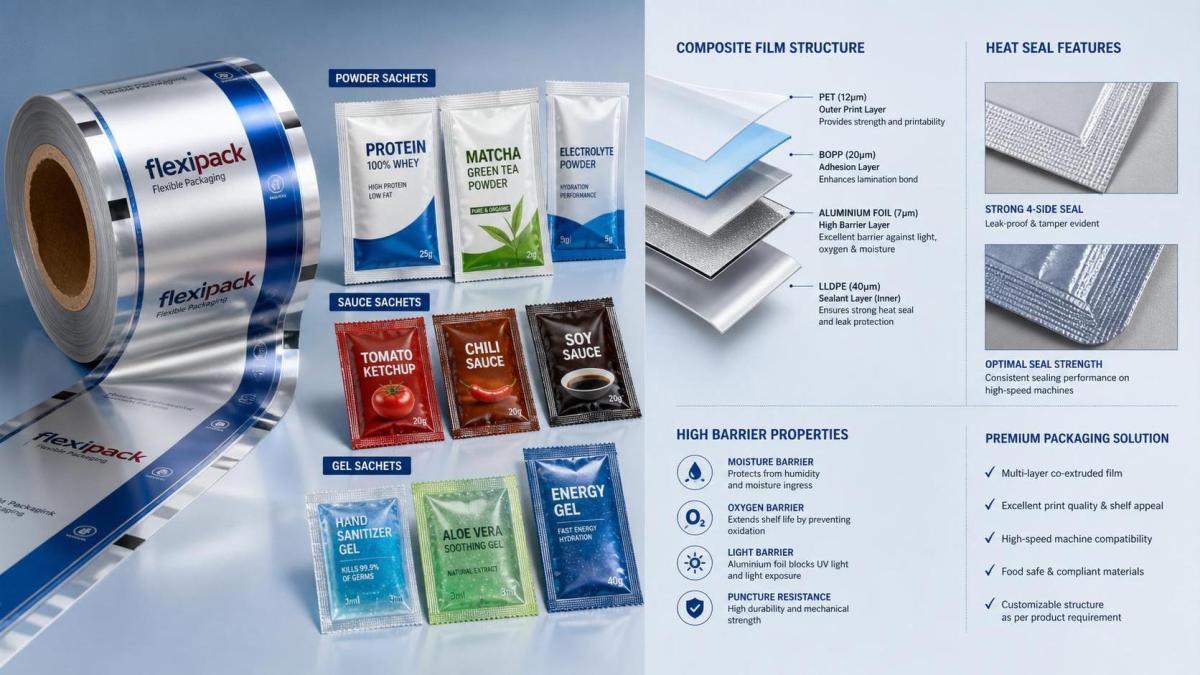
Choosing the right flexible packaging solutions for sachet packaging starts with matching material structure, barrier performance, and machine compatibility to your product type.
The real procurement challenge is balancing cost, shelf life, filling speed, sealing stability, and shelf appeal without creating hidden production risks.
This guide explains how to compare flexible packaging solutions for sachet packaging across common product categories and purchasing scenarios.
Start with Product Behavior, Not Just Material Price
Many sourcing decisions begin with film cost per kilogram. In practice, that is too narrow.
The better starting point is product behavior. Ask what the product does inside the sachet during filling, transport, storage, and use.
A dry powder behaves very differently from an oily sauce. A cosmetic sample behaves differently from a pharmaceutical gel.
That difference shapes the best flexible packaging solutions for sachet packaging far more than unit film price alone.
In most evaluations, five technical filters should come first:
- Barrier need against oxygen, moisture, light, or aroma loss
- Sealability under actual line speed and temperature window
- Chemical compatibility with the product formula
- Mechanical strength during transport and handling
- Print quality and appearance for the target market
Once these are clear, comparing suppliers becomes easier and more defensible.
How Product Type Changes Sachet Packaging Requirements
Flexible packaging solutions for sachet packaging should be selected by product family, because each family creates a different risk profile.
Powders and Granules
Examples include coffee mixes, seasoning, protein powder, detergent, and oral powder products.
These products usually need moisture protection first. Flowability and dust control also matter during high-speed filling.
Common structures include PET/PE, BOPP/CPP, or higher-barrier laminations when aroma or hygroscopic sensitivity is critical.
Watch for powder leakage at the seal area. Fine particles often contaminate the sealing zone and reduce pack integrity.
Liquids and Semi-Liquids
Sauces, serums, shampoos, and medical gels require stronger seals and puncture resistance.
Here, flexible packaging solutions for sachet packaging often rely on multilayer laminates with reliable sealant layers.
Oil content, acidity, and active ingredients must be checked against the inner layer. Migration or layer attack creates long-term failures.
If the liquid is hot-filled, material stability becomes even more important.
Sensitive Food and Nutraceutical Products
Products with fat, flavor oils, probiotics, or oxidation sensitivity need higher barrier performance.
Foil-based or metallized structures are often considered, depending on shelf-life targets and market positioning.
In this segment, the cheapest structure can become the most expensive if returns or quality claims rise.
Pharma and Personal Care Samples
These sachets usually face stricter demands around cleanliness, consistency, and regulatory documentation.
Flexible packaging solutions for sachet packaging in these categories should include traceable specifications, validation support, and stable sealing behavior.
A strong supplier is not just selling film. The supplier is reducing compliance and complaint risk.
Match Barrier Performance to Shelf-Life Reality
Barrier is one of the most misunderstood parts of sachet selection.
Some buyers over-specify barrier and lock in unnecessary cost. Others under-specify and create spoilage, odor loss, or texture change.
A practical approach is to define the true shelf-life target first, then test the minimum viable structure.
This is where data matters. Ask for OTR, WVTR, seal-strength range, and storage-condition assumptions.
Without that, flexible packaging solutions for sachet packaging are being chosen on claims, not evidence.
Do Not Ignore Machine Compatibility
A good film on paper can still fail on the line.
This is especially relevant when sachets run on older vertical form-fill-seal or high-speed horizontal filling systems.
Flexible packaging solutions for sachet packaging must fit the machine's forming behavior, sealing jaws, dwell time, and registration control.
Recent market changes make this more important. Faster lines leave less room for unstable films.
- Check COF for feeding and tracking stability
- Confirm seal initiation temperature and sealing window
- Review thickness tolerance roll by roll
- Verify print registration for small-format sachets
- Request line trials under real production speed
If a supplier cannot support line trials, the sourcing process is still incomplete.
Compare Total Cost, Not Only Unit Price
Low price per roll often hides higher operating cost.
A slightly more expensive structure may reduce waste, downtime, leakage claims, and rejected batches.
When reviewing flexible packaging solutions for sachet packaging, use a broader cost model:
- Material cost per finished sachet
- Waste rate during startup and full production
- Changeover impact and machine stoppage risk
- Shelf-life protection and complaint exposure
- Lead time consistency and reorder flexibility
This also aligns with how advanced packaging operations think.
From a broader manufacturing view, film selection affects line efficiency, print stability, and downstream quality performance together.
Questions to Ask Suppliers Before Approval
The best flexible packaging solutions for sachet packaging usually emerge from better questions, not longer quotations.
Use supplier discussions to expose technical gaps early.
- What product types already run successfully on this structure?
- What shelf-life data supports the barrier claim?
- How stable is the seal across speed and temperature variation?
- What compliance documents are available for food, pharma, or cosmetic use?
- What is the supplier's response process for roll defects or delamination?
- Can they support print quality requirements for premium sachet formats?
A credible supplier should answer with data, trial records, and clear tolerances.
A Practical Decision Framework
If several options look similar, simplify the decision.
Score flexible packaging solutions for sachet packaging against four weighted areas: product protection, line performance, compliance fit, and total cost.
Then run a short production trial before final approval.
In real sourcing work, the strongest option is rarely the one with the lowest headline quote.
It is the option that protects the product, runs cleanly, scales reliably, and supports the brand without creating avoidable operational friction.
That is the standard a sound sachet packaging decision should meet.
Related News
Get weekly intelligence in your inbox.
No noise. No sponsored content. Pure intelligence.
