
Folder Gluer Price Guide: What Affects Cost and How Buyers Should Compare Quotes
Folder Gluer Price Guide: What Affects Cost and How Buyers Should Compare Quotes
Understanding folder gluer price is rarely about finding the lowest number on a quotation sheet. For most plants, the real issue is whether the machine fits the carton mix, daily output target, labor model, glue requirements, and downstream delivery pressure. A low offer can look attractive until it exposes slow changeovers, unstable folding, limited box compatibility, or weak service support. A higher-priced line, on the other hand, may reduce waste, require fewer operators, and protect output consistency over years rather than months.
That is why procurement teams usually need to compare more than machine width and top speed. In folding and gluing, published specifications often describe possibility, not routine production reality. A line rated for high speed under ideal straight-line carton conditions may behave very differently when asked to run crash-lock bottoms, small pharmaceutical boxes, cosmetic packaging with tight tolerances, or corrugated work with frequent size changes.
Within PWFS, folder gluers are not viewed in isolation. They sit inside a broader converting chain that includes corrugated board lines, offset presses, die-cutters, and increasingly digitalized finishing workflows. That wider perspective matters because machine cost is shaped by what comes before and after folding: print registration quality, die-cutting accuracy, blank flatness, ERP or MES integration, palletizing expectations, and even export packaging compliance if the line is shipped across regions.
Why quotes for “the same” folder gluer can vary so much
Many buyers start with a simple question: why do two suppliers quote very different prices for machines that appear to share similar speed and format range? In practice, the price gap usually comes from configuration depth rather than headline specs.
A basic straight-line folder gluer built for standard folding carton work is a different procurement category from a multi-function line designed to handle crash-lock bottoms, 4/6-corner cartons, complex pharmaceutical inserts, or heavy board with demanding glue patterns. The frame, drive architecture, feeder stability, belt quality, carrier system precision, control platform, and quality inspection options all affect cost. So does the degree of automation. Manual adjustment hardware may reduce the initial quote, but if your plant changes jobs many times per shift, that cheaper machine can become expensive in labor time and lost throughput.
This is also where experienced evaluation becomes useful. PWFS follows these lines as part of the “geometric magicians” segment of modern converting equipment, where die-cut blanks are turned into 3D commercial packaging at very high speed. In this environment, mechanical precision is not a luxury feature. It directly influences whether the machine can hold fold quality and glue consistency when production conditions are less than perfect.
The main cost drivers behind folder gluer price
Machine type is the first and most visible factor. Straight-line cartons are generally the simplest application. Add crash-lock bottom capability, multi-corner modules, pre-folding, special alignment sections, inspection units, or delivery automation, and the investment level changes quickly. Buyers should ask a hard question early: what percentage of current and future work truly needs those functions?
Format and substrate range also matter. A line intended for compact folding cartons is not directly comparable to one built to handle larger corrugated or micro-flute work. Wider machines, heavier-duty transport sections, stronger drives, and different compression and delivery arrangements usually add cost. If the plant serves e-commerce transit packaging as well as retail cartons, format flexibility may be commercially valuable, but it should be priced against actual order history, not theoretical possibility.
Speed is often misunderstood. Maximum mechanical speed is easy to advertise; stable production speed on your job mix is what affects payback. A faster machine may justify a premium if the feeder, folding rails, glue application, and delivery section can maintain repeatable quality under live factory conditions. If not, procurement may end up paying for a top-speed number that operators rarely use.
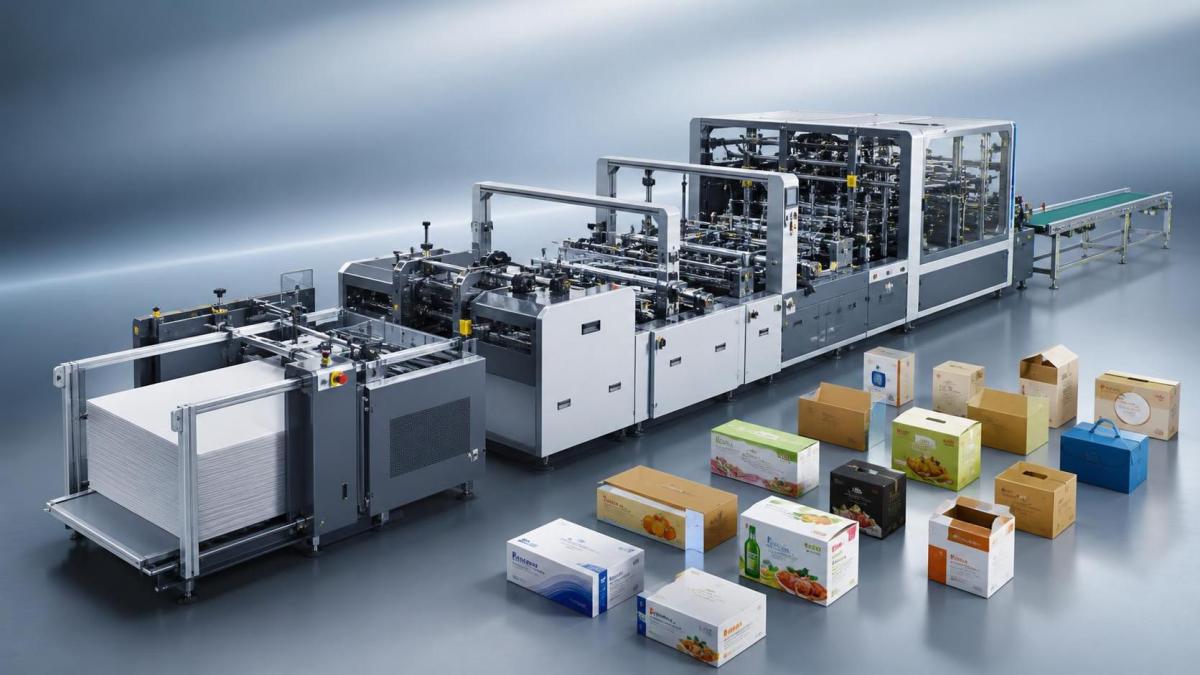
Glue system design can be another major differentiator. Cold glue, hot melt, and more specialized application setups carry different capital and operating implications. Nozzle count, pattern control, cleaning requirements, and spare-part availability all affect ownership cost. For packaging segments with stricter traceability or product safety expectations, the glue setup may also need to align with documented process controls, which can narrow acceptable supplier choices.
Automation level changes the equation more than many first-time buyers expect. Servo-driven job memory, motorized adjustment, HMI-guided setup, barcode-linked recall, and automatic quality rejection can raise the purchase price but reduce dependence on highly experienced operators. In regions where skilled labor is difficult to retain, that premium may be easier to justify than it first appears.
Then there is the less visible layer: electrical brand selection, safety standard alignment, remote diagnostics capability, software language support, line documentation, and export packing. These items rarely dominate a brochure, but they frequently explain why two quotations are not truly equal.
A cheap machine can become expensive very quietly
Procurement teams usually know to compare capex, but operating friction is where poor buying decisions often surface. If a lower-priced folder gluer needs more setup time, more operator intervention, more glue cleaning, or more trial sheets before reaching saleable output, the savings can fade quickly. That is especially true in shorter-run environments where job frequency is high and makeready losses are repeated all day.
Waste is another hidden cost. Folding cartons with tight visual standards, such as cosmetics or pharmaceuticals, do not forgive poor squareness, inconsistent glue placement, or cracked creases caused by unstable handling. In corrugated applications, bad bonding or inaccurate folding can create downstream packing and stacking problems. None of this may appear in the initial offer, but it appears later in spoilage reports, complaints, and delayed shipments.
After-sales support deserves equal attention. A lower purchase price with uncertain commissioning support, unclear spare-part lead time, or limited remote troubleshooting can be risky for plants running on tight delivery windows. This is one reason intelligence-led comparison matters. PWFS has long tracked not only machine categories but also the practical interface between mechanical design, compliance demands, and factory digitalization. In real plants, uptime support often matters as much as hardware selection.
How buyers should compare quotes without being misled
The safest approach is to normalize the quotation before comparing numbers. Ask every supplier to quote against the same production brief: carton styles, substrate range, minimum and maximum blank sizes, target output, glue type, shift pattern, operator assumption, and required utilities. If one supplier quotes a base machine and another includes pre-fold, crash-lock, inspection, and delivery accessories, the price difference says little by itself.
It also helps to separate “included,” “optional,” and “required for your jobs.” Some quotes look competitive because key modules are listed as optional extras. Others include features you may never use. The goal is not to buy the fullest configuration or the leanest one. It is to match current SKU reality and likely business direction.
One practical check is to ask suppliers which sample jobs they want to run during testing. Their answer often reveals confidence in the machine’s real comfort zone. If your business depends on short runs of demanding carton structures, the test job should reflect that. Straight-line demo cartons can hide weak points that only show up on more difficult work.
Think in total cost, not only purchase price
A better buying model is to estimate total cost across several years. That usually includes the quoted machine price, shipping and installation scope, utility requirements, tooling or accessory needs, operator training, spare parts, consumables, expected maintenance intensity, and likely labor requirement per shift. If the folder gluer will connect with upstream die-cutting and downstream packing or palletizing, integration effort should be considered too.
This is where the broader PWFS lens becomes useful. The converting line is part of a production ecosystem, not a standalone island. A folder gluer that works well with accurate die-cut blanks, stable print registration, and digital production planning can support much better overall flow than a cheaper machine inserted into a poorly matched process. In high-mix environments, the economics of uptime, setup predictability, and operator learning curve often outweigh the initial quote gap.
Buyers should also pay attention to compliance and market destination. Packaging for food contact, pharmaceuticals, or export-heavy consumer goods may require closer review of material compatibility, documentation depth, traceability expectations, or local electrical and safety requirements. These are not universal conclusions; they usually need project-specific confirmation. But they can affect machine selection and quote structure earlier than some teams expect.
Questions worth asking before the final comparison
Before choosing between quotations, it is worth slowing the process down and asking a few direct questions:
- Which of our top 20 SKUs can run without compromise, and which need extra modules or speed reduction?
- What is manual in this configuration, and what is motorized or recallable?
- What spare parts are recommended for the first year, and what are the lead times?
- How is performance acceptance defined: by mechanical speed, saleable output, or sample-specific quality criteria?
- If our mix shifts toward shorter runs or more complex boxes, what limitations appear first?
Those questions do not make procurement slower. They usually prevent expensive ambiguity later.
The bottom line
Folder gluer price is really the visible surface of a deeper decision about throughput, job flexibility, operating discipline, and support risk. Buyers comparing quotations should be careful with headline speed, cautious with unusually low offers, and very specific about what the machine must do on actual jobs. A good quote is not the one with the smallest number. It is the one that remains logical after you factor in setup time, waste exposure, labor demand, glue requirements, and service realities.
For teams narrowing down options, the most useful next step is usually not another generic brochure. It is a structured comparison built around carton types, substrate range, target output, automation expectations, and acceptance criteria. Once those are clear, folder gluer price becomes much easier to judge on commercial and technical merit.
Related News
Get weekly intelligence in your inbox.
No noise. No sponsored content. Pure intelligence.
