
How to Evaluate Digital Print Packaging Systems for Short-Run SKU Changes
How to Evaluate Digital Print Packaging Systems for Short-Run SKU Changes
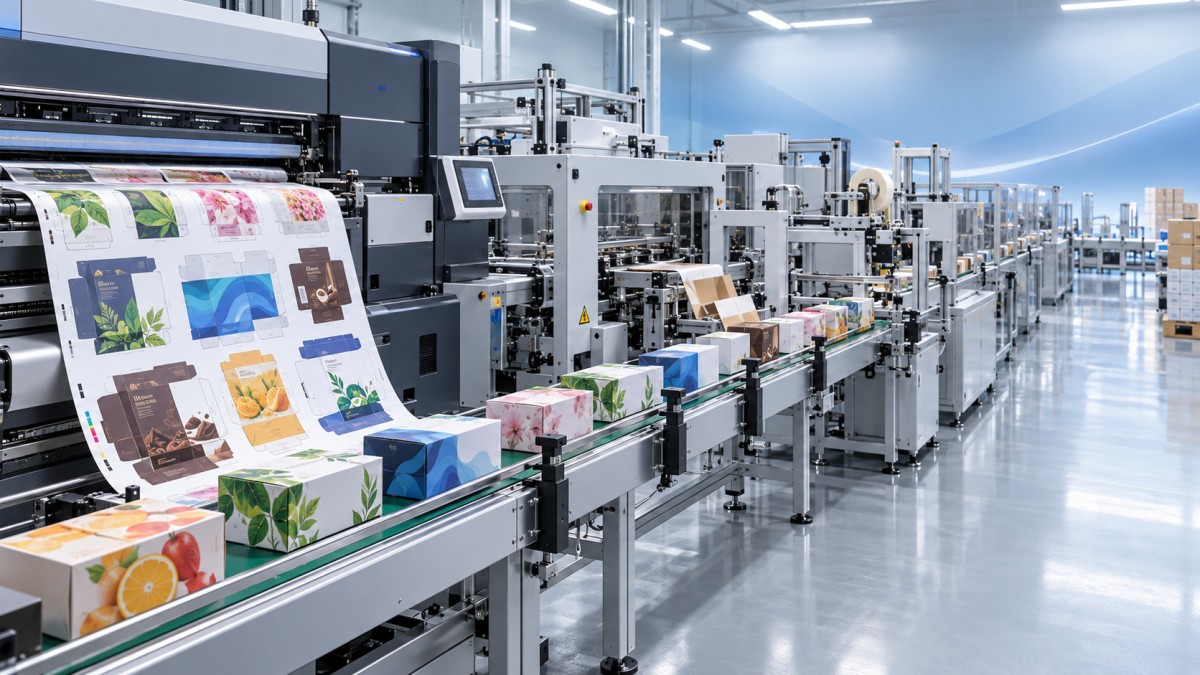
For packaging operations handling frequent product variations, a digital press is not simply a replacement for conventional print. It is part of a production system that must absorb changing artwork, variable demand, revised regulations, retailer-specific formats, localized launches, and seasonal promotions without turning every new SKU into a costly interruption.
That is why evaluating digital print packaging systems requires more than comparing rated print speed, resolution, or machine footprint. A technically impressive press can still create bottlenecks if job preparation is slow, substrates need excessive conditioning, colors drift between shifts, finishing cannot keep pace, or operators must manually rebuild files for each version. For short-run work, the useful question is not “How fast can it print?” but “How reliably can it deliver a saleable, compliant pack from the next approved file?”
The answer depends on the complete chain: prepress, digital front end, print engine, curing or drying, inspection, die-cutting, folding, gluing, packing, and production data. Technical evaluators should therefore assess the proposed system against their real SKU-change profile rather than against a generic demonstration job.
Start With the Changeover Profile, Not the Press Brochure
Short-run packaging can mean very different things. One plant may produce a modest number of repeatable versions for a single consumer brand. Another may process hundreds of jobs with changing languages, barcodes, promotions, and carton dimensions. A corrugated converter may need rapid artwork swaps on common box sizes, while a folding-carton producer may face a more demanding mix of premium graphics, specialty substrates, varnish requirements, and precise downstream converting.
Before reviewing vendors, build a representative job matrix. Include the smallest and largest planned run lengths, number of SKUs per day, artwork complexity, coverage levels, required spot colors, substrate grades, board thicknesses, finishing steps, and target delivery windows. Include awkward but common jobs: a version with heavy ink coverage, a small reprint requiring the same brand color as a previous lot, or a carton containing variable data and multiple language panels.
This turns an abstract equipment comparison into an operational test. A system that is economical for runs of several thousand sheets may not be suitable for frequent micro-orders. Conversely, a highly flexible configuration may carry an unnecessary cost structure if most work remains stable and repeatable.
Measure End-to-End Time to First Approved Sheet
For changing SKUs, time to first approved sheet often matters more than peak output. The critical interval begins when artwork is released and ends when production has a verified sheet or web that can proceed through conversion. It includes file preflight, imposition, color management, RIP processing, substrate loading, machine preparation, calibration, inspection, and approval.
Ask suppliers to separate automated time from operator time. A workflow may technically be fast while still requiring experienced staff to select profiles, correct trapping, rebuild die layouts, or manually reconcile job tickets. Those interventions become significant when a plant processes many short jobs in a shift.
The digital front end deserves particular scrutiny. It should support controlled PDF handling, version management, barcode generation where required, and repeatable imposition rules. Integration with MIS, ERP, MES, or web-to-print environments may also be relevant, but “integration available” is not enough. Confirm what data moves automatically, who owns master data, how job revisions are locked, and what happens when an approved artwork file is replaced late in the process.
A disciplined evaluation looks for a workflow where the press receives a production-ready job, rather than becoming the point at which unresolved prepress problems are discovered.
Color Consistency Is a System Capability
Brand owners rarely judge packaging by the nominal resolution of a press. They notice whether a familiar red changes across a product line, whether small type remains readable, whether gradients appear smooth, and whether a reprint matches approved inventory. Digital print packaging systems should therefore be evaluated through their color-control architecture, not through a single visually attractive sample.
Review the system’s calibration routine, profiling method, measurement tools, substrate-specific color libraries, and procedures for maintaining repeatability over time. Ask how frequently verification is performed, whether the process is automated or manual, and how the operator is alerted when output moves outside the plant’s agreed tolerance. The relevant tolerance must come from the packaging specification and customer expectation; it should not be assumed from a vendor claim.
Spot-color reproduction requires an especially practical discussion. Some applications can accept a well-managed process-color simulation. Others depend on a specific brand color, metallic effect, opaque white, fluorescent appearance, or color performance on uncoated board that may demand additional inks, a different print technology, or a hybrid workflow. Request production samples on the actual substrate family, not only on coated demonstration stock.
This is where experience from offset and digital environments should meet. Offset presses remain highly capable for longer, stable runs and demanding color programs. Digital production earns its place where setup reduction, versioning, and responsiveness offset the conventional advantage. The evaluation should establish the practical crossover point for the operation’s own mix, including preparation, waste, and finishing—not merely print cost per sheet.
Substrate Latitude Must Be Proven Under Production Conditions
Packaging is materially less forgiving than many commercial-print applications. Folding carton, label stock, flexible materials, corrugated liners, preprinted corrugated sheets, and specialty boards differ in surface energy, roughness, moisture behavior, stiffness, coating, and dimensional stability. A digital engine may handle a substrate in a controlled demonstration yet perform differently when production stock varies from lot to lot.
Define the substrate range in operational language: grammage or caliper where relevant, maximum sheet size or web width, curl tendency, coating type, recycled content, corrugation profile, print side, and pre-treatment requirements. Then ask for testing on representative materials. Inspect not just image appearance but scuff resistance, rub performance, cracking at creases, adhesion after die-cutting, and behavior during folding and gluing.
For food, pharmaceutical, cosmetic, or other regulated packaging, ink and coating suitability cannot be inferred from a general statement that a technology is “safe” or “low migration.” The relevant pack construction, curing conditions, intended use, market requirements, and barrier layers must be reviewed with appropriate technical and compliance documentation. Migration and traceability obligations are application-specific. They need to be addressed early, before a press configuration is treated as production-ready.
Do Not Evaluate Print Without Finishing
Many short-run programs fail to realize their expected agility because printing accelerates while converting remains conventional and batch-oriented. A digitally printed carton still needs accurate cutting, creasing, folding, gluing, inspection, and packing. A corrugated display still needs reliable downstream handling. If printed work waits for dies, makeready, or manual sorting, the speed advantage of digital production quickly fades.
Map the physical handoff from print to finishing. Is material transferred manually or automatically? Are job identifiers carried forward? Can the cutter or folder-gluer receive setup data from the same workflow? Does the print surface tolerate the folding and gluing process? What is the plan when a high-priority short run interrupts a longer finishing batch?
This is particularly important for operations combining digital print with die-cutters and folder-gluers. Registration marks, cut accuracy, crease quality, glue compatibility, and carton squareness are connected outcomes. A print sample alone cannot show whether the resulting pack will run satisfactorily on a customer’s filling line. Where possible, evaluate a finished, converted sample rather than an unprocessed printed sheet.
Capacity Should Be Calculated From Usable Output
Rated engine speed is useful, but it is only one input. Usable capacity is shaped by file processing, warm-up or stabilization, media loading, maintenance cycles, cleaning, calibration, color checks, rejected sheets, finishing availability, and operator coverage. Systems should be compared using a realistic production schedule built from the job matrix.
Technical evaluators should ask vendors to define which conditions apply to their published throughput: image coverage, print mode, substrate, number of colors, quality level, and duty-cycle assumptions. A clear answer is more valuable than an impressive maximum figure. It also helps reveal whether the system has enough headroom for demand spikes without forcing the plant to bypass quality controls.
Waste should be assessed beyond substrate loss. Short-run production can generate hidden waste through obsolete versions, unnecessary overproduction, failed approvals, misapplied variable data, and rework caused by finishing mismatches. Digital workflows can reduce some of these risks, but only when job control and inspection are designed into the process.
Automation Is Valuable When It Reduces Decisions
Automation is frequently described in terms of robotic loading or unattended operation. For SKU-intensive packaging, equally important automation happens in software: preflight rules, approved templates, automatic color checks, barcode validation, version control, job routing, and live production status. These functions reduce the number of individual decisions required for each job.
However, automation should not conceal exceptions. Determine how the system handles rejected files, missing data, failed inspections, substrate substitutions, and urgent artwork corrections. A well-designed workflow makes exceptions visible and traceable. An opaque workflow may simply move the risk downstream.
PWFS examines this issue across corrugated production, high-precision offset, automated die-cutting and folder-gluing, and digitally connected manufacturing systems. The recurring lesson is that flexibility is not created by a single machine. It comes from linking color registration, job data, material movement, finishing geometry, and quality evidence in a way operators can actually manage during a busy shift.
Serviceability, Data Access, and Implementation Risk
A short-run operation has limited tolerance for prolonged downtime because work is already scheduled close to delivery. Evaluate the local service model, remote diagnostic capability, spare-parts strategy, operator training scope, and maintenance tasks that must be performed by site personnel. The relevant question is not whether service exists, but whether the proposed support model matches the production window and geographic location.
Data access also deserves attention. If the system produces job history, quality records, consumable consumption, fault data, or production status, establish who can access it and whether it can be exported into the plant’s reporting environment. Such data becomes useful when diagnosing recurring defects, quoting future work, or identifying where changeovers lose time.
Implementation should be staged around controlled production trials. Start with a defined substrate set and a manageable SKU family, validate color and finishing performance, document standard operating procedures, then expand the application range. This approach is slower than declaring immediate full deployment, but it reduces the chance that a promising technology is undermined by untested assumptions.
A Decision Framework That Holds Up After Installation
The strongest choice is rarely the system with the highest headline specification. It is the one that matches the actual mix of run lengths, substrates, color expectations, regulatory demands, labor capability, and finishing constraints. For some plants, that may mean a dedicated digital line. For others, it may mean a hybrid model in which digital handles version-heavy and urgent work while offset or flexographic capacity remains focused on stable volume.
Before making a final decision, ask each supplier to demonstrate representative files on representative materials, convert the output through the intended finishing route, and explain the workflow from artwork approval to packed product. Document open points around color approval, compliance, service response, integration ownership, and cost assumptions. Those details are less dramatic than a press-speed comparison, but they determine whether digital print packaging systems genuinely make SKU changes easier to manage.
Related News
Get weekly intelligence in your inbox.
No noise. No sponsored content. Pure intelligence.
