
As energy volatility and circular-economy requirements reshape European manufacturing, corrugated board lines Europe are evolving into smarter, lower-consumption production assets for increasingly demanding packaging markets.
For decision-makers, output is no longer the only measure of a competitive line. Energy efficiency, material flexibility, recyclability, uptime, and data visibility now determine sustainable operating margins.
The central business question is straightforward: which upgrades genuinely reduce total conversion cost while keeping board quality, regulatory readiness, and customer service levels protected?
Why Energy Has Become a Board-Line Strategy Issue
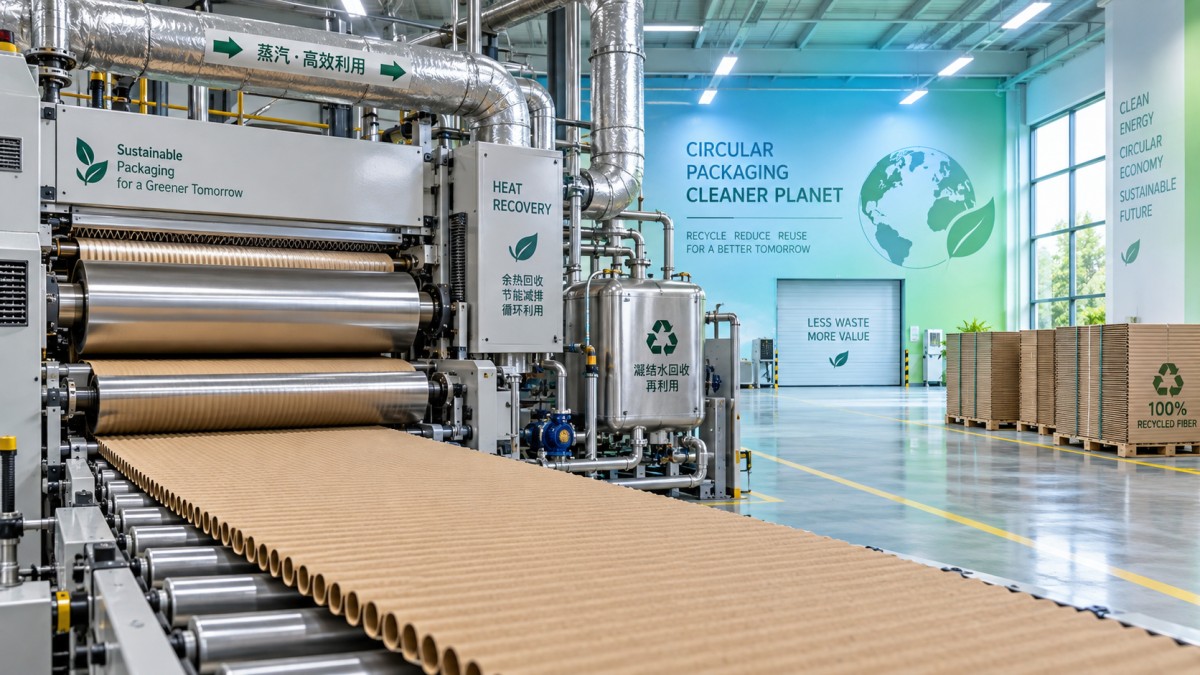
European corrugated producers face a structural challenge rather than a short-term utility-price problem. Electricity, gas, steam, paper, labor, and compliance costs are increasingly connected.
A corrugator is energy-intensive by design. It must heat, condition, glue, press, dry, cut, and transport paper at high speed without compromising flatness or bond strength.
When energy costs rise, inefficient thermal behavior becomes visible immediately. Excess steam use, uncontrolled condensate, idle heating, and poor heat transfer erode contribution margins.
At the same time, brand owners are asking converters for lighter packs, recycled fiber content, recyclable designs, documented environmental performance, and reliable delivery under shorter lead times.
These pressures mean that European corrugated board lines are increasingly evaluated as integrated manufacturing systems, not simply machines measured by meters produced per minute.
For plant owners, the strongest investment case usually combines several outcomes: lower specific energy consumption, higher usable yield, less waste, broader paper compatibility, and more predictable maintenance.
That approach matters because a line that saves energy but creates more rejects, quality claims, or lost production time may not improve total plant economics.
What Business Leaders Should Measure Before Approving Capital
The first step is establishing a reliable baseline. Many factories know monthly utility bills but cannot accurately connect energy use with product mix, operating speed, downtime, or grade changes.
Decision-makers should request energy intensity by square meter and by tonne, segmented where possible by flute type, board grade, moisture target, and production shift.
Steam consumption deserves particular attention because it influences preheating, corrugating, bonding, drying, and board conditioning across the entire production process.
A useful baseline also records starch consumption, paper waste, web breaks, startup losses, planned downtime, unplanned stoppages, and customer complaints related to board performance.
These indicators reveal whether a proposed project addresses the true bottleneck. A new control system may produce greater value than a major mechanical replacement in some plants.
Financial analysis should use total cost of ownership rather than purchase price alone. Include installation downtime, spare parts, training, service access, expected lifetime, and financing cost.
It is equally important to model downside conditions. Electricity and gas prices may fall, but recycled-paper quality variability, carbon reporting, and buyer sustainability requirements will remain.
A resilient investment should still make operational sense under different energy-price scenarios. That prevents a business case from depending entirely on one volatile market assumption.
Steam Optimization Is Usually the Highest-Value Starting Point
Steam systems remain a primary efficiency lever for corrugated board lines Europe because thermal losses can occur before steam even reaches the preheater, corrugating rolls, or hot plates.
Older installations may suffer from leaking valves, damaged insulation, oversized pressure settings, failed steam traps, poor condensate recovery, and inconsistent pressure control during speed changes.
Each issue can appear modest in isolation. Together, they increase fuel demand, make moisture harder to control, and force operators to compensate through slower speeds or manual intervention.
Modern steam-management projects typically combine pressure optimization, automated condensate handling, heat-exchanger improvements, insulated pipework, reliable trap monitoring, and process-level control logic.
The target is not simply lower steam pressure. The objective is stable, responsive thermal delivery matched to paper characteristics, machine speed, adhesive behavior, and desired finished-board moisture.
Better thermal consistency can reduce warp, improve pin adhesion, shorten startup stabilization, and lower the amount of energy wasted while operators correct quality deviations.
Plants should verify savings through measured consumption per production unit, not supplier estimates alone. Metering before and after critical steam sections supports credible investment decisions.
For facilities using onsite boilers, a review should also cover boiler load efficiency, blowdown practices, fuel flexibility, water treatment, and maintenance records affecting real heat output.
Heat Recovery Moves from Optional Upgrade to Core Infrastructure
Heat recovery is gaining importance because corrugators release usable thermal energy through exhaust air, condensate, hot surfaces, and process streams that were historically treated as unavoidable losses.
Recovered heat can support incoming-water preheating, space heating, process-air conditioning, or other site demands, depending on local layout, seasonal conditions, and available temperature levels.
The practical value depends on demand matching. A technically efficient recovery system delivers limited returns if the factory cannot consume recovered heat when it becomes available.
Decision-makers should therefore assess recovery projects alongside the wider plant energy map, including converting equipment, warehouses, offices, boiler rooms, and neighboring production processes.
Heat recovery can also strengthen decarbonization plans. Reducing fuel demand may improve emissions reporting and help facilities meet customer questionnaires or corporate climate commitments.
However, projects require careful engineering. Exhaust contamination, corrosion, condensate quality, maintenance access, pressure drop, and fire-safety requirements must be evaluated before installation.
A recovery system should not introduce new production risks. The best designs prioritize cleanability, monitoring, bypass capability, and stable process conditions over theoretical maximum capture rates.
Digital Controls Reduce Energy Waste During Real Production
Energy performance is determined during actual operating conditions, not laboratory trials. Grade changes, uneven paper moisture, order fragmentation, operator practices, and stops create much of the waste.
Advanced control platforms allow corrugator settings to respond more accurately to speed, paper weight, moisture, flute profile, adhesive requirements, and thermal conditions across the machine.
Instead of relying solely on manual adjustments, operators can use standardized recipes supported by sensors, historical production data, alarms, and defined quality tolerances.
For management teams, the benefit is repeatability. Valuable know-how becomes embedded in controlled processes rather than depending entirely on a small number of experienced operators.
Real-time dashboards should show more than line speed. They should connect energy use with waste, moisture, bond quality, machine availability, and order-level profitability.
This visibility helps teams distinguish between productive energy consumption and avoidable losses during idling, warmup, restarts, trim waste, defective board, and prolonged changeovers.
Data integration with MES, maintenance systems, and enterprise reporting can improve planning. It also creates an auditable foundation for energy-management and sustainability reporting requirements.
Cybersecurity, vendor support, data ownership, and operator usability should be included in procurement reviews. A difficult interface will not deliver expected savings on the factory floor.
Recyclable Packaging Changes the Technical Requirements of Board Production
Recyclable packaging is not a single material specification. It is a design and manufacturing objective shaped by fiber selection, coatings, adhesives, printing choices, recovery systems, and end-market requirements.
European customers increasingly prefer packaging that can enter established paper recycling streams without unnecessary plastic layers, difficult separation steps, or poorly documented material combinations.
This trend affects corrugated board producers because lightweight liners, higher recycled content, and new barrier solutions can behave differently under heat, pressure, tension, and glue application.
A board line must maintain stable flute formation and bonding despite greater variation in paper properties. Recycled fiber may bring changes in moisture, stiffness, surface quality, and strength.
That does not mean recycled material is inherently problematic. It means production settings, conditioning capacity, paper testing, and quality-control systems must become more disciplined.
Equipment suppliers are responding with improved preheating control, more precise moisture management, upgraded roll technologies, intelligent tension systems, and better adhesive application accuracy.
For buyers, compatibility claims should be tested against their actual paper portfolio. Ask for reference grades, trial data, production-speed limits, quality results, and operating requirements.
The commercially relevant question is whether the line can convert sustainable material choices into reliable board performance without creating excessive energy use or elevated reject rates.
Lightweighting Must Protect Performance, Not Just Reduce Fiber Use
Lightweighting can lower material consumption, transport emissions, and packaging cost, but it is only successful when the finished case still protects products through storage, handling, and distribution.
Lower basis weights may increase sensitivity to humidity, compression loading, converting conditions, and stacking patterns. The board specification must reflect the actual supply-chain environment.
Decision-makers should avoid treating lightweighting as a purchasing exercise alone. It requires coordinated work among paper suppliers, board producers, box converters, logistics teams, and brand owners.
Performance testing should include edge crush, burst, pin adhesion, flat crush, moisture response, printability, die-cutting behavior, and case compression under realistic conditions.
Modern corrugated board lines support this effort by providing tighter process stability. Consistent heat and moisture control make it easier to achieve target properties from less material.
Yet the best board design may vary by application. E-commerce parcels, fresh produce, industrial parts, pharmaceuticals, and retail-ready packs have different damage risks and handling demands.
A disciplined application-by-application approach reduces the chance that a sustainability initiative merely transfers cost from fiber consumption to claims, repacking, or product damage.
Maintenance and Reliability Are Energy Programs Too
Energy optimization cannot be separated from mechanical condition. Worn bearings, contaminated rolls, poorly aligned webs, leaking systems, and unreliable sensors often increase consumption while reducing output.
Preventive maintenance should focus on components that influence heat transfer, friction, pressure stability, airflow, condensate return, adhesive quality, and machine stoppages.
Predictive tools can help maintenance teams detect abnormal vibration, temperature drift, steam-trap failure, motor loading, and performance degradation before a major fault interrupts production.
The business case is broader than repair avoidance. Fewer unplanned stops reduce warmup cycles, startup waste, emergency labor, delivery risk, and lost opportunities during peak demand.
Spare-parts strategy matters as well. European operators should assess supplier response times, local service capability, critical-component availability, and the risk of control-system obsolescence.
When evaluating a new line, request clear service-level commitments and lifecycle support plans. Energy-efficient equipment loses value if availability falls below commercial requirements.
How to Build a Credible Investment Roadmap
Most factories do not need to replace every system at once. A phased roadmap can capture early savings while preserving capital for larger upgrades with proven operational justification.
Phase one often includes metering, energy audits, steam-trap maintenance, insulation repairs, control tuning, operator training, and process-standardization work with relatively limited disruption.
Phase two may add heat recovery, advanced automation, moisture measurement, condensate improvements, drive upgrades, and connected maintenance systems where the baseline supports the investment case.
Full line modernization or replacement becomes appropriate when structural limitations prevent required quality, paper flexibility, operating speed, safety, reliability, or energy performance.
Supplier selection should include factory references with comparable grades, annual volumes, energy sources, labor conditions, and customer requirements. Demonstrations alone are insufficient evidence.
Contracts should define acceptance criteria in measurable terms, including board quality, uptime targets, energy performance conditions, training scope, commissioning support, and data-access provisions.
Management should appoint a cross-functional owner for the program. Operations, engineering, maintenance, purchasing, finance, quality, and sustainability teams all influence the final return.
Without shared accountability, projects can become isolated equipment purchases. With governance, they become manufacturing improvements that support margin protection and customer retention.
What European Buyers Should Ask Equipment Partners
Before committing to a supplier, buyers should ask how the proposed configuration performs with recycled and lightweight papers, not only premium virgin-fiber demonstration materials.
They should request transparent figures for steam, electricity, compressed air, water, adhesive use, waste generation, and maintenance intervals under defined production assumptions.
Ask whether controls can export usable production and energy data into existing systems. Proprietary dashboards are less useful when information cannot support broader business reporting.
It is also prudent to ask how the equipment supports future packaging formats, barrier developments, digital traceability requirements, and changing customer specifications over its operating life.
For multinational groups, consistency across sites can be valuable. Standardized operating logic, spare parts, training frameworks, and performance reporting simplify continuous improvement programs.
For independent converters, flexibility may be more important. A line should support profitable short runs, frequent order changes, and varied grades without imposing excessive setup losses.
Conclusion: Efficiency and Circularity Must Be Designed Together
The adaptation of corrugated board lines Europe is being driven by commercial reality. Energy resilience and recyclable-packaging capability are now closely linked to operating competitiveness.
The strongest investments do not pursue sustainability as a separate technical project. They improve thermal efficiency, production stability, material yield, board performance, and reporting credibility together.
For business decision-makers, the priority is to measure current losses, identify the highest-value constraints, test supplier claims against real grades, and phase investment around measurable outcomes.
A corrugated line prepared for Europe’s next packaging cycle will use less energy per unit, handle more sustainable materials reliably, and give management clearer control over cost and risk.
