
How Much Does a Corrugated Box Production Line Cost in 2026?
How Much Does a Corrugated Box Production Line Cost in 2026?
How much does a corrugated box production line cost? In 2026, a realistic answer begins with a difficult but necessary distinction: are you buying a board-making line, a converting operation that turns purchased sheets into boxes, or an integrated plant that does both? These are often discussed as if they were the same investment. They are not.
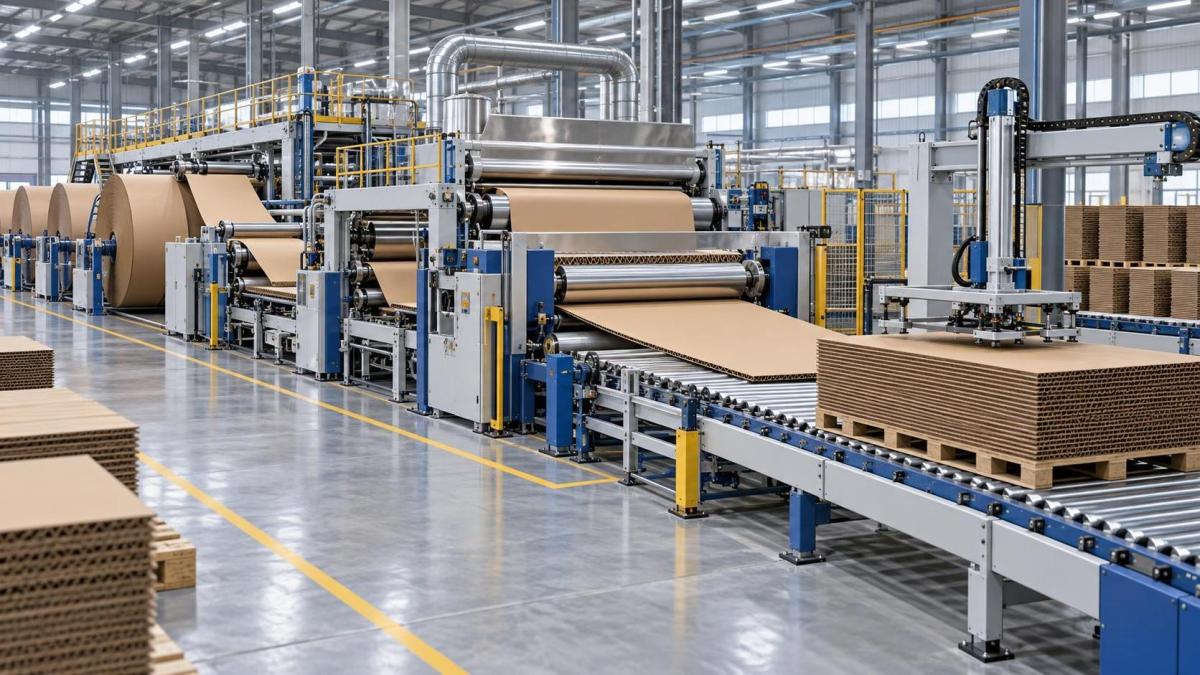
A basic converting setup can require a comparatively modest capital outlay. A full corrugated board line—with paper handling, preheaters, single facer, bridge, glue application, double backer, slitter-scorer, cut-off, stacker, steam system, electrical infrastructure and controls—can become a multi-million-dollar project before the first saleable sheet reaches the converting department.
For planning purposes, packaging manufacturers commonly encounter budget ranges from a few hundred thousand US dollars for selected entry-level or used converting equipment to several million dollars for a new, automated corrugator installation. High-output, wide-width, highly automated plants with integrated material handling, digital controls and downstream conversion can go substantially beyond that range. The useful question is not simply “What is the machine price?” It is “What level of output, board quality, uptime and operating cost does the business actually need?”
Start by Defining What “Production Line” Means
The phrase corrugated box production line covers several very different equipment packages. A plant buying corrugated sheets from an external sheet feeder may only need printing, slotting, die-cutting, folding, gluing, bundling and waste handling. A vertically integrated producer also needs to manufacture single-wall, double-wall or other board structures from kraft liner and corrugating medium rolls.
That distinction drives the budget more than almost any brochure specification. A converter can start with a flexographic printer-slotter, rotary die-cutter or flatbed die-cutter, folder-gluer and basic conveying. A board plant must also solve paper-roll logistics, steam generation, condensate recovery, glue preparation, ventilation, building layout and board storage. The corrugator itself is only one part of the capital picture.
In practice, there are three common investment paths:
- Sheet plant: purchases corrugated board and focuses capital on box conversion.
- Integrated box plant: makes board in-house and converts it into regular slotted cartons, die-cut packaging or retail-ready formats.
- Board mill or sheet supplier: prioritizes corrugator capacity, sheet quality and logistics rather than diverse box conversion.
A new entrant sometimes assumes that producing board internally must be cheaper because it removes the sheet supplier’s margin. That can be true at sufficient volume, but it is not automatic. A corrugator creates purchasing, maintenance, energy, steam and scheduling responsibilities that a sheet plant does not carry. If orders are irregular, a smaller converter buying sheets may protect cash flow better than a large machine running below its intended load.
Indicative 2026 Cost Ranges
The following ranges are broad planning references rather than supplier quotations. Country of origin, technical configuration, width, speed, automation scope, shipping terms, local electrical requirements and after-sales support can materially change the final figure. Used equipment may reduce the purchase price, but refurbishment, relocation and missing controls can erase much of the apparent saving.
These figures should not be compared without checking what is included. One proposal may cover only the mechanical equipment. Another may include installation supervision, controls, spare parts, training, steam interfaces, conveyors or warranty support. A low headline price is not necessarily low project cost.
The Cost Drivers That Matter More Than the Nameplate Price
Working width and speed
A wider machine can produce more board per hour, but width is not a free advantage. It affects the physical footprint, roll handling, heat demand, paper waste exposure and the size of downstream equipment. Likewise, a higher stated speed may look attractive, yet the relevant measure is sustained production of saleable board at the mix of grades your customers order.
A corrugator that is technically capable of high speed but repeatedly slows for unstable paper, frequent order changes, weak steam control or poor glue consistency will not deliver the economics assumed in a spreadsheet. Manufacturers should ask suppliers how performance is measured: maximum mechanical speed, practical operating speed, or verified output under defined board specifications.
Flute profiles and board grades
The board mix matters. A plant producing mostly standard shipping cartons has different needs from one making lightweight e-commerce mailers, heavy industrial packaging, high-graphic retail displays or moisture-resistant food and produce packaging. Single-wall output is simpler than a system designed to run double-wall structures or frequent flute changes.
Do not specify a line around one successful sample box. Build the requirement around the actual order mix: liner weights, flute types, sheet dimensions, compression expectations, print requirements, monthly changeovers and seasonal peaks. This is where equipment selection becomes operational engineering rather than a purchasing exercise.
Automation is paid for twice—then often pays back over time
Automatic roll stands, splicers, tension management, recipe control, board tracking, stacking, conveying and production-data systems add capital cost. They also reduce dependence on operators making repeated manual adjustments under pressure. In a high-volume plant, that can be a sensible trade. In a low-utilization facility, an overbuilt automation package can tie up capital without solving the real bottleneck.
The right level of automation depends on labor availability, shift pattern, order variability and maintenance capability. A factory with experienced technicians may accept more hands-on adjustment. A business struggling to recruit and retain skilled operators may place greater value on stable recipes, alarms, remote diagnostics and automated material movement.
Utilities and building work
Steam is central to corrugated board quality. The paper must be conditioned, the adhesive must be managed correctly, and heat has to be distributed consistently through the process. This means the boiler or steam source, piping, condensate handling, water treatment and local energy rules deserve early attention. They should not be treated as a late-stage facilities issue.
Other project costs can include floor preparation, cranage, electrical distribution, compressed air, fire protection interfaces, dust and trim extraction, internal logistics, racking and IT connectivity. A hundred-meter-class corrugator layout also affects building access, paper-roll flow and safe maintenance clearance. A machine may fit on a drawing while still creating an unworkable factory.
What Buyers Commonly Forget to Budget For
The initial equipment invoice is only part of the investment. Before signing, it is worth building a separate “outside the machine” budget. Include freight, insurance, import duties where applicable, installation labor, commissioning, operator training, initial spare parts, tooling, glue-system consumables, quality-control equipment and working capital for paper inventory.
Paper inventory deserves special attention. A corrugator does not run on one universal roll grade. Different customer specifications may require multiple liner and medium combinations. Inadequate inventory risks missed deliveries; excessive inventory ties up cash and introduces storage risks. The paper-purchasing plan should be developed alongside the equipment plan, not after the line arrives.
There is also a downstream question. Making good board is not the same as making profitable boxes. If the target market requires retail packaging, litho-laminated work or high-quality graphics, the converting and printing route needs careful thought. Offset presses can deliver demanding visual quality, while flexographic printing remains central to many transport-packaging workflows. Die-cutters and folder-gluers must match the complexity, tolerance and volume of the intended carton designs.
New, Used, or a Hybrid Line?
Used machinery can be a rational choice when the buyer has technical depth, a reliable inspection process and access to service support. Older equipment may be mechanically robust, but controls, safety systems, spare-parts availability and energy performance need close examination. A used corrugator can also conceal expensive site work because its original configuration may not suit the new plant’s paper flow or utilities.
A hybrid strategy is often more practical than an all-new or all-used decision. For example, a producer may prioritize a new single facer, controls platform, glue system or critical converting machine while using refurbished conveyors, stackers or non-critical auxiliary equipment. The decision should follow failure consequences. Spend more where downtime stops the whole plant or where poor control directly affects board quality.
A Better Way to Build the Investment Case
Instead of starting with supplier catalogues, start with twelve to eighteen months of expected orders. Group them by board grade, sheet size, box style, print requirement, lot size and delivery pattern. Then identify the production constraints: Is the problem board availability? Slow changeovers? Labor-heavy folding? Inconsistent print? Limited storage? The answer often points to a narrower, smarter investment than a full line replacement.
Request proposals using the same technical brief. Ask each supplier to define included equipment, excluded civil works, utility requirements, recommended staffing, changeover assumptions, commissioning scope, warranty terms and critical spare parts. If suppliers quote different widths, speeds or automation levels, normalize the comparison around your own saleable output requirement rather than the most impressive number on the page.
It is also wise to consider data integration early. Manufacturing execution systems, job tracking and production reporting are not decorative “Industry 4.0” additions when a plant handles many short runs or needs traceability. They can expose waste, downtime and scheduling conflicts that remain invisible in paper-based workflows. However, software only helps when recipes, maintenance discipline and operator training are in place.
The Practical Answer
In 2026, the cost of a corrugated box production line can range widely because the phrase describes everything from a compact sheet-converting operation to a highly automated board-and-box factory. A serious investment model must include equipment, utilities, installation, inventory, service capability and the cost of operating below full capacity during ramp-up.
For manufacturers evaluating corrugated board lines, offset printing, die-cutting, folder-gluing and connected production systems, the most useful discipline is to connect technical specifications with the reality of the order book. PWFS follows this broader paper-and-wood manufacturing logic: precision matters, but only when it is matched to throughput, material flow, maintenance resources and the product mix a factory can actually sell. A line that is slightly less ambitious on paper but stable in daily operation is usually the better investment.
Related News
Get weekly intelligence in your inbox.
No noise. No sponsored content. Pure intelligence.
