
Rotary or Flatbed Die Cutter: Which Is Better for Short Runs?
Should I choose a rotary or flatbed die cutter for short runs? The answer depends on more than production volume. Job complexity, substrate variation, changeover speed, tooling cost, and required cut accuracy all shape the real return on investment.
For most converters, flatbed die cutting is the safer short-run choice when jobs involve intricate structures, frequent design changes, premium cartons, thicker board, or uncertain repeat demand. Rotary die cutting can still win when short runs are repeatable, relatively simple, and integrated into a high-speed production workflow.
The practical decision is not whether one technology is universally superior. It is whether the machine, tooling, labor model, and downstream process match the commercial reality of your order mix.
Start With the Short-Run Economics, Not Machine Speed
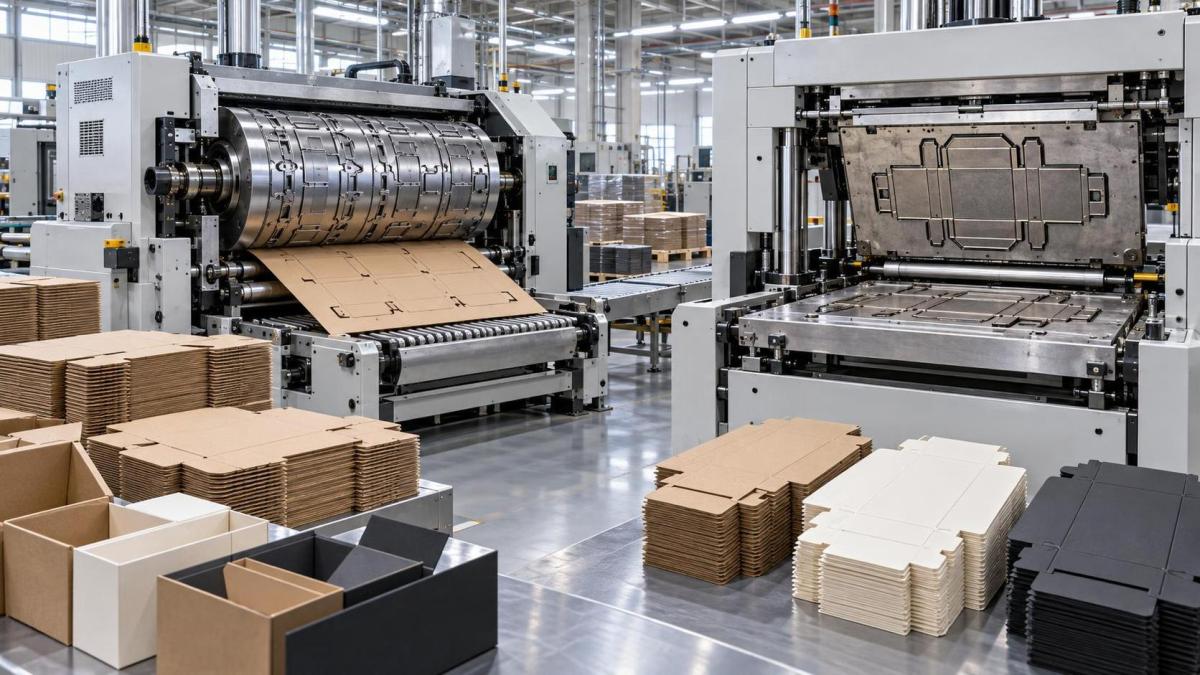
Short-run packaging production is usually defined by setup intensity rather than by total output. A job may require only several hundred or several thousand pieces, but still demand precise registration, clean stripping, and reliable creasing.
That changes the purchasing question. Instead of asking which die cutter has the highest rated speed, managers should ask which system produces saleable units with the lowest total cost per completed job.
Total job cost includes artwork preparation, die manufacture, mounting, make-ready sheets, operator time, waste, quality inspection, finishing delays, and storage of reusable tooling. These costs often outweigh theoretical running speed on short orders.
A rotary die cutter typically becomes attractive when its faster running speed can be used repeatedly across similar jobs. A flatbed die cutter usually creates value through flexibility, lower tooling exposure, and dependable handling of complex structures.
For a converter serving e-commerce brands, cosmetics, pharmaceuticals, specialty food, promotional packaging, or local product launches, frequent job variation may matter more than maximum throughput. Those markets reward responsiveness and production control.
For a plant producing repeat shipping cartons, standard display units, simple sleeves, or recurring label formats, rotary production can be commercially sound even when each individual release is relatively short.
How Rotary Die Cutting Works in a Short-Run Environment
Rotary die cutting uses a cylindrical die system that cuts, creases, perforates, or embosses material as it passes continuously through the machine. The process is naturally suited to repeatable, high-speed web or sheet production.
In packaging operations, rotary systems may be configured for corrugated board, folding carton blanks, labels, flexible materials, and inline converting. Their principal advantage is productive speed after setup has stabilized.
For short runs, the critical issue is that rotary tooling and setup are not free. A new cylinder, magnetic die, flexible die, or dedicated tooling arrangement can introduce meaningful cost and lead time.
That cost can be justified when a customer expects future repeats. It can also work when a converter has standardized sizes, common tooling dimensions, or digital workflows that minimize changeover and registration adjustments.
Rotary equipment is especially effective when the die-cutting stage is connected with printing, stripping, waste removal, folding, gluing, or inspection. Inline processing reduces handling and can protect margins on recurring work.
However, a short production run does not automatically become profitable simply because a rotary machine runs quickly. If setup consumes hours and the job runs for minutes, utilization remains poor.
Rotary systems also require close attention to material consistency. Variation in board caliper, moisture, flute profile, liner quality, adhesive behavior, or print registration can affect cutting pressure and finished quality.
Why Flatbed Die Cutters Usually Fit Complex Short Runs
Flatbed die cutting uses a steel-rule die or precision cutting tool that presses vertically against the sheet. The process is intermittent rather than continuous, but it provides strong control over complex carton geometry.
For short-run converters, flatbed equipment often offers a more forgiving operating model. It can accommodate frequent artwork changes, unusual package formats, structural prototypes, premium finishing requirements, and varied board grades.
Steel-rule dies are generally familiar to packaging teams and can be produced efficiently for many folding-carton and corrugated applications. Their economics are often easier to understand when each project has a distinct design.
The flatbed format is particularly valuable for detailed internal cuts, narrow bridges, delicate perforations, window patches, complex creasing patterns, and cartons that must fold accurately during high-speed folder-gluer processing.
Pressure is applied across the sheet in a controlled platen action. This gives operators useful flexibility when working with thick substrates, coated papers, laminated materials, microflute board, or multi-layer packaging structures.
Flatbed systems can also simplify quality troubleshooting. Operators can inspect sheet behavior, cutting consistency, stripping performance, and crease quality during make-ready without managing the additional dynamics of a rotating cylinder.
The tradeoff is lower running speed compared with a well-optimized rotary line. But on true short runs, the difference may be less important than accurate setup, reduced waste, and avoiding a costly remake.
Compare Tooling Cost and Changeover Before Comparing Output
Tooling is one of the most important decision factors for buyers asking whether to choose a rotary or flatbed die cutter for short runs. It directly affects quotation accuracy and customer pricing.
Flatbed dies are often economical for custom carton structures because steel-rule tooling can be designed around each sheet layout. They are practical where packaging formats change frequently and repeat volumes remain uncertain.
Rotary tooling can range from economical flexible dies to more expensive engraved or dedicated cylinder solutions. The right choice depends on material type, cut precision, expected repeats, and available tooling infrastructure.
A converter should calculate tooling cost across the expected customer lifecycle, not only the first production order. A higher initial rotary investment may become reasonable when the same design returns regularly.
Changeover time should be measured from the last good sheet of one job to the first approved sheet of the next. This includes die installation, registration, pressure adjustment, stripping setup, inspection, and cleaning.
Many plants underestimate changeover because they record only machine downtime. Labor used for tool preparation, die retrieval, job documentation, quality approval, and downstream setup also belongs in the calculation.
When job scheduling includes many small orders per shift, predictable changeovers usually matter more than peak machine velocity. The system with the fastest approved make-ready can produce more profitable capacity.
Cut Quality, Creasing Accuracy, and Structural Complexity
Packaging buyers rarely judge a die-cut blank by machine type. They judge whether cartons fold cleanly, graphics align correctly, product protection works, and the finished pack reaches the shelf without visible defects.
Flatbed die cutting has a strong reputation for difficult structural work because its platen action supports controlled cutting and creasing across detailed sheet layouts. This matters for luxury cartons and engineered packaging.
Fine features can expose small process weaknesses. Poor rule height, worn rubber, inaccurate stripping, uneven pressure, substrate variation, and misaligned print can turn a visually appealing package into a production problem.
Rotary die cutting can achieve excellent quality when tooling, material control, machine condition, and registration are well managed. It is highly capable for stable designs that benefit from consistent continuous processing.
For short runs, ask whether the job contains variable data, seasonal graphics, multiple language versions, promotional windows, nested components, or frequent dimensional revisions. These factors favor operational flexibility over speed.
Crease performance deserves special scrutiny. A cut blank may look acceptable before folding, yet crack, spring open, or distort on a folder gluer if crease channels and substrate behavior are not validated.
Run a representative production test whenever possible. Test the actual printed substrate, coating, lamination, humidity condition, and intended folding sequence rather than relying solely on samples made from substitute material.
Substrate Range Can Change the Answer
The substrate is often the deciding variable. A machine that performs well on standard paperboard may require extensive adjustment when handling corrugated board, heavy carton stock, metallized sheets, laminated materials, or specialty papers.
Flatbed equipment is commonly selected for broader material flexibility, especially where packaging plants process several board grades and thicknesses. Its controlled platen pressure can be helpful with demanding sheet constructions.
Rotary equipment can be highly efficient with stable substrate specifications. It is particularly compelling where material dimensions, repeat length, board type, and structural design remain consistent across a family of jobs.
Corrugated converters should evaluate flute crush risk, cut cleanliness, score integrity, and blank ejection. The best result depends on board construction, die design, anvil condition, machine setup, and material moisture balance.
Folding-carton plants should examine print-to-cut registration, crease cracking, stripping accuracy, and delivery condition. Premium graphics and coated stocks can magnify even minor production deviations.
Do not assume that a versatile specification sheet guarantees versatile operation. Request documented test results on your most difficult substrates, including materials supplied by the mills or customers you use regularly.
When Rotary Die Cutting Is the Better Short-Run Choice
Rotary die cutting can be the stronger choice for short runs when the orders are short only in quantity, not in operational complexity. Repeatability and standardization are the decisive advantages.
Choose rotary first when customers reorder the same packaging frequently, designs use common dimensions, substrates are tightly controlled, and the production line can maintain speed through printing and finishing.
It also makes sense when turnaround is critical after setup. A converter serving replenishment programs may need to produce several thousand consistent units quickly, often with limited available production windows.
Rotary systems can improve economics where dies are reused across many releases. A scheduling team that groups similar materials and repeat sizes can further reduce setup losses and stabilize output.
Consider rotary if your business has already invested in inline flexographic printing, digital inspection, automated waste handling, or integrated corrugated converting. The broader workflow may create value beyond die cutting alone.
The risk is buying rotary capacity for a business that actually sells constant customization. In that situation, repeated setup, tooling management, and job-specific adjustments can consume the efficiency promised by high speed.
When Flatbed Die Cutting Is the Better Short-Run Choice
Flatbed die cutting is usually the better fit when a plant produces many distinct jobs, manages frequent artwork revisions, and serves customers who value structural creativity, premium appearance, or low-volume customization.
It is a strong choice for folding cartons with intricate shapes, cosmetic packs, pharmaceutical inserts, specialty food packaging, promotional boxes, and short-run e-commerce packaging designed for changing campaigns.
Flatbed equipment can also support a practical prototype-to-production path. Teams can validate a carton structure, test folding behavior, and then manufacture limited quantities without committing immediately to a high-volume process.
For companies entering new markets, that flexibility reduces commercial risk. They can accept experimental designs and smaller customer orders while learning which package formats generate repeat demand.
The flatbed option is not automatically low cost. Complex stripping layouts, difficult materials, inefficient sheet layouts, and weak job preparation can still create expensive waste and long make-ready times.
Its advantage comes from matching the technology to high-mix work. When variation is unavoidable, a system designed to manage variation can protect quality, delivery reliability, and sales responsiveness.
Build a Decision Model Around Your Actual Order Mix
A reliable investment decision should use production data from recent orders rather than assumptions about future averages. Export at least six to twelve months of job history from your estimating or MES system.
Classify each job by run length, substrate, blank complexity, number of colors, repeat frequency, tooling requirement, setup hours, waste percentage, finishing steps, and customer delivery deadline.
Then identify the jobs that produce the most revenue, the highest gross margin, the most overtime, and the greatest operational disruption. These groups often point toward different equipment requirements.
Calculate cost per saleable blank instead of cost per machine hour. Include labor, tooling amortization, setup waste, energy, maintenance, quality rejects, rework, and the cost of delayed delivery.
Ask suppliers to demonstrate performance using representative files and materials. A generic speed demonstration on a simple stock sheet does not answer whether the equipment will perform on your difficult commercial jobs.
Compare the machine's integration requirements as well. A die cutter may require compatible feeders, stripping sections, blanking units, conveyors, inspection systems, and folder-gluer capacity before its full value is realized.
Finally, assess operator capability. Advanced automation reduces some manual tasks, but short-run performance still depends on disciplined job preparation, tooling maintenance, process documentation, and skilled quality judgment.
Questions to Ask Before You Request Quotations
Before contacting equipment suppliers, define what “short run” means in your plant. A 500-piece carton order, a 5,000-sheet folding-carton job, and a 20,000-box replenishment release have different economics.
Ask how long typical changeovers take on jobs comparable to yours, and request a clear definition of that timing. Confirm whether it includes die changes, registration, pressure adjustment, stripping, and approved production output.
Ask which tooling is required for your substrates and structures. Obtain realistic pricing, expected lead times, maintenance requirements, storage needs, and the expected usable life of each die type.
Request details on registration tolerance, maximum and minimum sheet sizes, supported board calipers, stripping capability, waste removal, inspection options, remote diagnostics, and compatibility with existing production equipment.
Also ask for references from converters with a similar mix of cartons, corrugated products, labels, or specialty packaging. Their operating experience can reveal costs that are absent from headline specifications.
A quotation should include training, installation, acceptance testing, spare parts, service response expectations, and software requirements. For short-run work, service delays can quickly affect customer retention and margin.
Conclusion: Match the Die Cutter to the Work You Sell
So, should I choose a rotary or flatbed die cutter for short runs? Choose flatbed when your business depends on variety, intricate structures, material flexibility, frequent revisions, and reliable low-volume execution.
Choose rotary when your short runs are repeatable, standardized, and connected to a workflow that can use continuous high-speed production. Reusable tooling and fast downstream conversion are essential to that case.
The best investment is not the machine with the highest published speed. It is the system that delivers the lowest cost per approved package while protecting quality, delivery commitments, and future flexibility.
For packaging converters, the final decision should be based on real job data, representative trials, and a full cost model. That approach turns die-cutting equipment from a capital expense into a measurable production advantage.
