What PUR Edge Banding Technology Means for European Furniture Production Lines
PUR edge banding technology in Europe is primarily a question of bond integrity, thermal control, and panel-edge stability under real production conditions. For furniture lines that process melamine-faced board, MDF, particleboard, or laminated substrates, the shift from conventional EVA hot melt to PUR changes how the edge behaves after trimming, transport, and end use. The adhesive cures through moisture, so the joint tends to resist heat re-softening better than standard hot-melt systems, but that advantage only appears when the machine setup, environment, and storage discipline are controlled tightly.
In practical line assessment, the first point is substrate condition. PUR reacts differently on dusty, highly absorbent, oily, or uneven edges. If the milling head leaves tear-out, if the panel edge is too cold, or if the board carries residual release agents from upstream processes, the adhesive layer can look acceptable at the first visual pass and still fail later at the corner or on the return side. That is why edge preparation matters as much as the glue itself. A clean, consistent machining surface gives the adhesive a stable path to wet the edge band and build a durable bond line.
Temperature management is another defining issue. PUR systems are sensitive to pot temperature, hose temperature, ambient humidity, and the time adhesive spends in the machine before shutdown. If a line is stopped too long without a proper purge or if the nozzle is left exposed to moisture, cured residue can form quickly and block application. In Europe, where many production environments run mixed batches and short changeovers, this creates a maintenance burden that is easy to underestimate. PUR is not difficult in principle, but it is less forgiving than standard hot melt when operators treat it like an ordinary glue circuit.
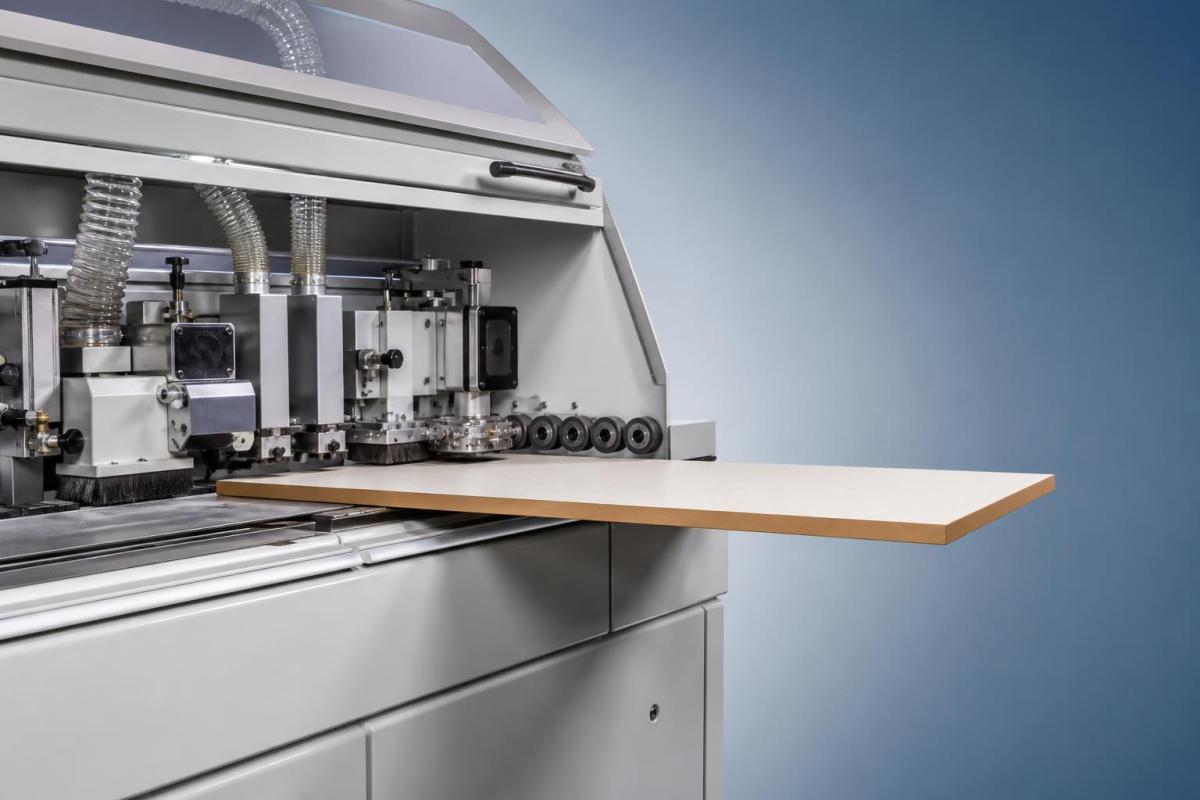
The edge banding machine itself must be assessed as a complete unit, not just by glue type. Pressure rollers, feed speed, end trimming accuracy, pre-milling quality, and corner rounding all affect the final joint. A strong adhesive line cannot compensate for a roller that applies uneven pressure or a trimming station that pulls fibers at the end cut. In many production lines, the most visible defects are not true adhesive failures; they are mechanical mismatches between glue application, pressure profile, and cutting geometry. That distinction matters because it changes where troubleshooting should begin.
PUR edge banding technology Europe also has a material logistics dimension. PUR adhesive is typically packaged and stored with more discipline than conventional melts because shelf life and moisture exposure matter. Containers should remain sealed until use, and opened material needs controlled handling to avoid premature curing. Production scheduling is therefore part of process quality. If the line runs infrequent edge-banding batches, the cost and risk of repeated purge cycles may outweigh the technical benefit. If the line runs continuous medium-to-high volume output with stable product families, the process can be easier to justify.
Application conditions deserve close attention. PUR performs well on moisture-resistant furniture components, kitchen elements, bathroom cabinets, and other panels exposed to cleaning cycles or humid interiors. It is also relevant where edge delamination would create both cosmetic and functional defects. However, the adhesive choice alone does not define moisture resistance. The edge band material, panel core, machining precision, and post-processing quality all influence whether the finished part remains stable. A waterproof claim attached to the adhesive line can be misleading if the panel edge is damaged during transport or if the band itself is not suitable for the service environment.
European production lines often face a practical tension between flexibility and process discipline. Mixed-format furniture programs, small batch orders, and changing decorative surfaces can increase the number of set-ups per shift. PUR can still fit this environment, but only when the machine control, cleaning routine, and operator training are robust enough to keep start-up waste and downtime under control. A line that looks efficient during steady-state operation may behave very differently after repeated stops, profile changes, or seasonal humidity swings.
Maintenance is usually where the hidden cost appears. Nozzle cleaning, adhesive management, roller wear, and the condition of the feed chain all influence output consistency. Cured residues can interfere with bead formation or leave streaks at the glue line. Dust extraction also remains important, because fine chips at the edge reduce adhesion and contaminate trimming and scraping stations. A technician evaluating PUR edge banding technology should inspect not only the adhesive station but the entire edge-finishing path from pre-mill to final buffing.
There is also a common mistake in interpreting surface appearance. A narrow, neat glue line is not proof of long-term bond quality. Some failures are hidden until the panel is exposed to humidity changes, repeated handling, or edge impact during installation. Corner lift, hairline separation, and micro-voids at the joint can emerge later if the process window was too loose. The more demanding the end use, the less useful short-term visual inspection becomes as a sole acceptance method.
In European furniture production, PUR edge banding is best understood as a process upgrade with clear technical advantages but real operational constraints. It tends to make sense where edge durability, moisture resistance, and refined finishing matter enough to justify tighter control over glue handling, machine cleanliness, and process stability. It is less suitable when a line cannot support disciplined maintenance or when the product mix changes so often that purge loss and setup instability become routine. The technology is strongest when it is treated as part of an integrated edge-finishing system, not as a standalone adhesive choice.
Related News
Get weekly intelligence in your inbox.
No noise. No sponsored content. Pure intelligence.
