
PUR Edge Banding Technology Price Explained: What Affects Line Cost and ROI
Understanding PUR edge banding technology price requires looking beyond the quoted machine figure. In furniture and panel processing, real investment value is shaped by glue quality, automation architecture, output stability, labor structure, and the service life of the finished edge. For operations balancing customization, faster delivery, and tighter quality expectations, the cost discussion is really about line capability and return over time.
Why PUR edge banding cost has become a strategic topic
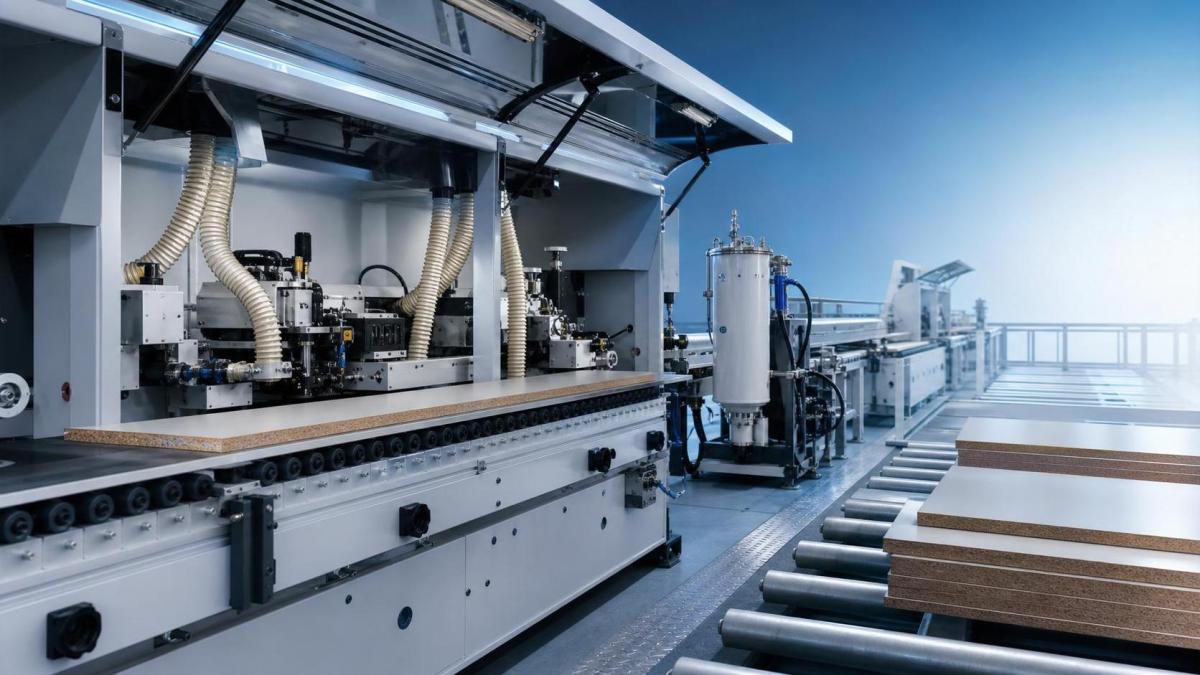
Across wood processing and interior production, edge quality now affects more than appearance. It also influences moisture resistance, emissions control, panel durability, and customer perception.
That is why PUR edge banding technology price attracts attention in the same way high-speed printing, die-cutting, and CNC routing do. It sits at the point where precision, automation, and product value meet.
PWFS follows this broader manufacturing logic closely. In packaging, registration accuracy protects brand value. In woodworking, sealed panel edges protect product quality and living standards.
For many plants, edge banding is no longer a secondary finishing step. It is a visible quality checkpoint that can either support premium positioning or expose weak process control.
What the price really includes
A line quote usually combines mechanical structure, PUR glue application, trimming units, control software, safety systems, and integration features. The number on the proposal rarely tells the whole story.
In practice, PUR edge banding technology price often reflects five layers of value: process quality, throughput, automation depth, maintenance burden, and future flexibility.
This is why two lines with similar dimensions can have very different pricing. The difference usually comes from consistency, automation, and integration rather than frame size alone.
Glue system quality is often the hidden pricing driver
PUR bonding is valued for strong adhesion, water resistance, and a fine, nearly invisible glue line. Those benefits depend heavily on how the glue unit is designed and controlled.
Moisture-reactive PUR is more demanding than basic EVA processing. It needs careful temperature control, clean delivery paths, controlled standby behavior, and reliable shutdown routines.
A lower upfront quote can become expensive if the system carbonizes glue, wastes material, or requires frequent manual cleaning. That issue directly changes the real PUR edge banding technology price.
More advanced glue units usually cost more because they protect bond strength and reduce instability. Over months of production, that can matter more than the initial delta in purchase price.
Where better glue control pays back
- Lower glue consumption per panel
- Fewer edge defects after transport or installation
- Less rework on glossy or premium decorative surfaces
- More consistent quality across long shifts
Automation level changes both line cost and ROI
Automation is one of the clearest reasons why PUR edge banding technology price varies widely. A basic configuration may handle straight production well, but flexible manufacturing asks for more.
Recipe storage, automatic thickness adjustment, servo positioning, barcode guidance, and linked infeed or return systems all add cost. They also reduce dependence on operator skill.
That matters in facilities moving toward batch size one production. When panels change frequently, manual setup time can quietly erase the savings of a cheaper line.
From a PWFS perspective, this mirrors what happens in offset and carton converting. Precision equipment earns its value when it protects uptime during complexity, not only during standard runs.
Throughput is important, but stable output matters more
Many evaluations focus on meters per minute. That metric matters, but it should not be separated from first-pass yield, setup frequency, and unplanned stoppages.
A faster line with unstable feeding or inconsistent trimming may produce more defects than usable panels. In that case, the apparent advantage distorts the real PUR edge banding technology price.
A practical ROI review should compare usable output per shift, not rated speed on a brochure. It should also include downtime linked to cleaning, glue change, and edge tape changeovers.
Stable output becomes even more valuable when downstream packaging, assembly, or installation schedules are tight. Delays created at the edging stage often ripple through the whole production plan.
Where PUR edge banding creates the most value
Not every product needs the same edge standard. The business case improves when the line serves applications where durability, appearance, and moisture resistance directly affect market value.
In these settings, the discussion around PUR edge banding technology price becomes less about equipment cost alone and more about product positioning and quality assurance.
How to evaluate ROI with fewer blind spots
A disciplined review should combine capital cost with operating consequences. Simple payback is useful, but only if the inputs reflect actual production behavior.
Key areas to test include:
- Expected annual panel volume and mix complexity
- Glue consumption per square meter
- Labor reduction through automation or line linking
- Scrap and rework cost before and after upgrade
- Maintenance intervals and spare parts access
- Energy use, compressed air demand, and footprint constraints
It is also worth checking whether the line can connect with digital production control. MES visibility, barcode flow, and recipe data can improve scheduling discipline and cost tracking.
That is especially relevant for businesses building the same kind of industrial logic PWFS tracks across paper and wood systems: fewer manual decisions, tighter process loops, and stronger yield control.
Common pricing mistakes during supplier comparison
One common error is comparing only base machine prices. Optional units, software licenses, installation scope, and training depth can shift the final number sharply.
Another mistake is underestimating commissioning quality. A line with strong hardware still needs process tuning for board materials, edge tapes, adhesives, and climate conditions.
Some buyers also assume all PUR systems behave similarly. In reality, glue preparation, nozzle cleanliness, curing consistency, and operator interface design vary more than brochures suggest.
That is why the best approach to PUR edge banding technology price is comparative and operational. Review the complete line, not a simplified equipment headline.
A practical next step for investment decisions
The most useful next move is to build a line-by-line evaluation sheet. Include bond quality targets, daily output, changeover frequency, labor assumptions, maintenance expectations, and integration needs.
Then compare several configurations against the same production data. This usually reveals whether a lower quote is genuinely economical or simply cheaper on paper.
When the analysis is grounded in actual workflow, PUR edge banding technology price becomes easier to interpret. The decision shifts from buying a machine to selecting a process platform that supports margin, quality, and future flexibility.
For businesses navigating premium furniture, customized interiors, or digitally connected panel production, that broader view is the one that usually leads to better capital discipline.
Related News
Get weekly intelligence in your inbox.
No noise. No sponsored content. Pure intelligence.
