
High-Speed Printing Presses for Carton Printing: What to Compare Before You Buy
High-Speed Printing Presses for Carton Printing: What to Compare Before You Buy
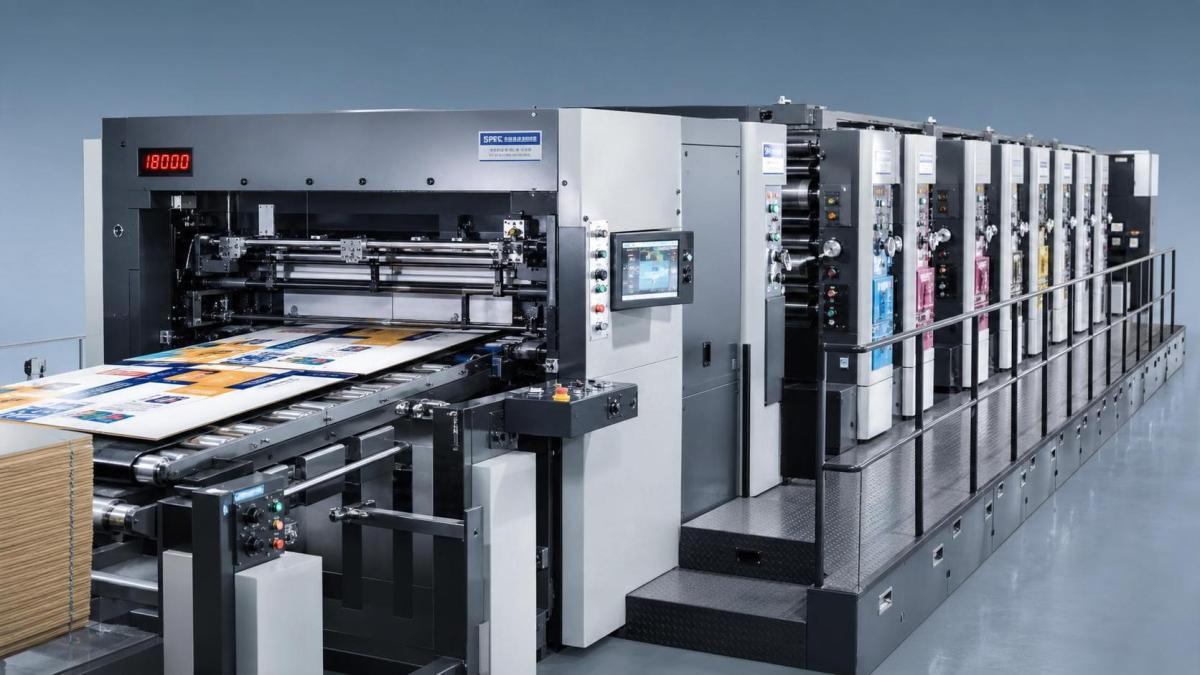
When evaluating high-speed printing presses for carton printing, rated speed is only the starting point.
A fast line that struggles with registration, board variation, or wash-up time rarely delivers real output.
That matters even more in carton converting, where graphics, flute profile, die-cutting flow, and delivery windows are tightly linked.
In practice, technical comparison should focus on stable productivity across actual jobs, not ideal factory demonstrations.
This is where high-speed printing presses for carton printing separate into very different investment profiles.
Some machines are optimized for headline throughput.
Others are designed for board consistency, rapid changeover, lower waste, and cleaner integration with downstream converting.
Before you buy, compare what happens during long runs, short runs, mixed SKU schedules, and operator shift changes.
Start with Effective Output, Not Advertised Speed
Suppliers often promote maximum sheets per hour or boards per minute.
For buyers of high-speed printing presses for carton printing, that number is incomplete.
Ask for net productive speed on your carton formats, flute types, ink coverage, and acceptable print tolerance.
A realistic comparison should include:
- running speed at approved quality
- start-up waste before sellable sheets
- speed loss during heavy solids or fine text
- performance after several hours of continuous production
- recovery time after feeder interruption or plate cleaning
This approach gives a truer picture of output per shift.
It also exposes whether one press is only fast under narrow, ideal conditions.
Registration Accuracy Drives Usable Print Quality
For carton graphics, micron-level control is not a luxury feature.
It directly affects barcode readability, color consistency, logo edges, and downstream die-cut alignment.
When comparing high-speed printing presses for carton printing, evaluate registration in motion, not just static samples.
Key questions include:
- How stable is color-to-color registration at top operating speed?
- How does the press respond to board warp, moisture variation, or caliper fluctuation?
- Is there automatic register correction with live camera feedback?
- What tolerance is guaranteed in the contract, not just shown in samples?
A press with better control logic often beats a nominally faster machine over a full month of production.
This is especially true for retail cartons, pharmaceutical packaging, and export work with strict visual standards.
Board Range and Substrate Compatibility Matter More Than Brochure Claims
Many carton plants handle more than one board grade.
That may include E-flute, B-flute, duplex board, kraft liner combinations, coated surfaces, and recycled content mixes.
So, high-speed printing presses for carton printing should be assessed against your real substrate matrix.
Look closely at feeder design, vacuum control, sheet transfer stability, and anti-marking measures.
These details determine whether the press can maintain quality on lighter, rougher, or less uniform carton stock.
In recent purchasing reviews, a stronger signal is the growing use of mixed-material job queues.
That means substrate flexibility is now a cost issue, not just a technical specification.
If a machine needs frequent mechanical adjustment between board types, labor cost and scheduling friction will rise quickly.
Automation Should Reduce Human Dependence, Not Add Interface Complexity
Automation is often presented as an easy value point.
But in high-speed printing presses for carton printing, not all automation creates usable efficiency.
Focus on functions that directly reduce setup time, operator dependency, and error frequency.
- automatic plate mounting assistance
- pre-set job recall
- closed-loop ink control
- auto wash-up sequences
- nonstop feeder and delivery systems
- integrated inspection and defect rejection
The best systems shorten the path from job release to stable output.
The weaker ones simply add more screens, more alarms, and more training burden.
Ask to see full changeover timing, including operator actions, confirmations, and cleaning steps.
This is where lifecycle productivity becomes visible.
Maintenance Logic Has a Direct Effect on Uptime
A technically advanced press can still become a poor asset if maintenance is slow, specialized, or heavily vendor-dependent.
For high-speed printing presses for carton printing, uptime depends on service architecture as much as hardware quality.
Compare the maintenance model in detail:
It is also worth checking whether the supplier offers data-backed uptime records for installed lines.
Reference calls usually reveal more than brochures do.
Evaluate Total Cost Across the Full Carton Workflow
Purchase price is visible.
Ownership cost is where major differences emerge.
When comparing high-speed printing presses for carton printing, calculate cost per approved carton, not just machine cost per hour.
A disciplined model should include:
- waste during makeready and job changeover
- ink and coating consumption at target coverage
- energy demand under production load
- operator count per shift
- planned and unplanned downtime
- service contract cost
- integration expense with prepress, die-cutting, and folder-gluing
In actual business, a press with a higher purchase price may still produce better ROI.
That usually happens when waste falls, approvals come faster, and downstream bottlenecks are reduced.
This is especially relevant for plants serving e-commerce cartons, FMCG packs, and multi-SKU retail programs.
Check Integration with the Rest of the Converting Line
A carton press is not an isolated asset.
Its value depends on how well it connects with workflow software, plate systems, inspection, die-cutting, and finishing equipment.
That is why high-speed printing presses for carton printing should be reviewed as part of a wider manufacturing system.
Useful checkpoints include JDF or MES connectivity, job data exchange, defect traceability, and production dashboard visibility.
For operations pursuing higher automation, these links support scheduling discipline and faster root-cause analysis.
PWFS has observed that the strongest equipment decisions usually come from teams comparing line behavior, not just single-machine specifications.
That broader view reduces the chance of buying a press that shifts problems downstream.
A Practical Shortlist Before Final Approval
Before final selection, use the same test logic for every supplier.
That keeps decisions grounded in evidence.
- Run live trials on your real carton substrates and artwork.
- Record net approved output, not demonstration speed.
- Measure makeready waste and repeatability after job recall.
- Review maintenance access and local support response time.
- Model total cost per approved carton across one year.
- Confirm integration fit with die-cutting and finishing flow.
- Check reference sites with similar carton product mix.
The best high-speed printing presses for carton printing are not simply the fastest.
They are the machines that sustain print quality, absorb substrate variation, support automation, and hold cost under real factory pressure.
A disciplined comparison now will protect output, margin, and flexibility long after installation.
Related News
Get weekly intelligence in your inbox.
No noise. No sponsored content. Pure intelligence.
