
High Speed Packaging Equipment Selection: 7 Key Specs That Affect Output, Changeover, and Downtime
High speed packaging equipment selection is rarely decided by maximum rated speed alone. On real production floors, output depends on how a machine holds stability, absorbs variation, and returns to target conditions after every stop, wash-up, tool change, or material shift.
That is why this topic matters across corrugated lines, offset printing, die-cutting, folder-gluing, and other converting environments tracked by PWFS. In fast-moving packaging operations, the best specification sheet is the one that predicts uptime, not the one that looks most aggressive in a sales presentation.
A useful high speed packaging equipment selection process connects machine design with actual order structure, labor capability, maintenance discipline, and digital integration. The seven specifications below are the ones that most often shape output, changeover, and downtime in practice.
Why speed claims need context
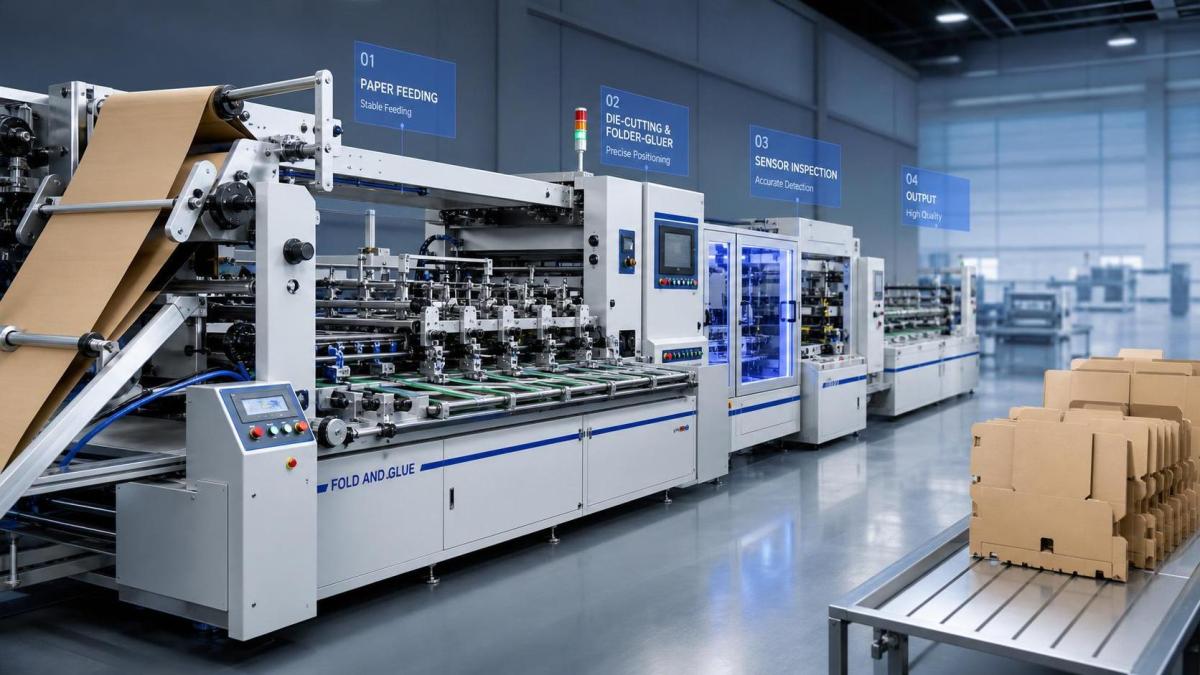
Packaging plants now face shorter runs, more SKUs, tighter compliance demands, and less tolerance for scrap. E-commerce transit packaging adds volume pressure, while premium cartons and retail-ready formats raise quality expectations.
In that environment, a machine rated for extreme speed may still underperform. If makeready is slow, feeding is unstable, or fault recovery is manual, scheduled capacity turns into waiting time.
PWFS often frames this issue through the wider paper and wood production chain. Whether handling corrugated board, printed sheets, folded cartons, or CNC-driven customized panels, the same principle applies: throughput is the result of controlled motion, repeatability, and recoverability.
The seven specifications that change the result
1. Sustained production speed under real load
The first number to test is not peak speed, but sustained speed at acceptable quality. Ask what output is achievable with common board grades, ink coverage, adhesive conditions, and typical pack configurations.
For corrugated and carton lines, this includes warp, caliper variation, and registration stability. For converting equipment, it includes glue accuracy, crease integrity, and stack quality at the discharge end.
2. Changeover architecture and recipe management
Changeover speed is one of the clearest dividing lines in high speed packaging equipment selection. Servo-assisted adjustments, stored recipes, and guided setup sequences reduce operator dependence and compress nonproductive time.
What matters is not just the fastest demonstrated changeover. The better question is whether repeat jobs return to target settings without trial-and-error, especially when multiple shifts handle the same line.
3. Feeder and material handling stability
Many lines lose efficiency before the main process section even starts. Poor sheet separation, skew, double feeds, or vacuum inconsistency create microstops that never appear in the headline specification.
Stable infeed, transfer, and delivery systems matter as much as cutting or gluing speed. This is especially true when plants handle a wide mix of substrate sizes, coatings, flute profiles, or seasonal material variation.
4. Register, positioning, and motion control accuracy
At higher speeds, small control errors multiply quickly. In offset and printed packaging lines, poor registration drives visual defects. In die-cutting and folder-gluing, it creates fit issues, glue misses, and downstream rejects.
Review servo resolution, encoder feedback, motion synchronization, and tolerance windows at operating speed. Machines that hold accuracy only in trial runs can become expensive bottlenecks under production pressure.
5. Fault detection, recovery, and diagnostic depth
Downtime is often determined by how quickly the line identifies abnormal conditions. Good systems isolate jam zones, display fault history clearly, and guide restart sequences without forcing long manual resets.
This is where modern controls, sensor logic, and human-machine interface design matter. A line that stops less frequently is valuable. A line that recovers quickly is often even more valuable.
6. Maintenance access and wear-part strategy
High speed packaging equipment selection should always include maintainability. Bearings, belts, knives, glue components, vacuum systems, and lubrication points need to be accessible without excessive disassembly.
Also check wear-part standardization. If critical consumables are difficult to source or require specialist intervention, planned maintenance can quietly become unplanned downtime.
7. Data connectivity and production visibility
A fast machine without usable data is harder to improve. Connectivity to MES, ERP, quality systems, and maintenance platforms allows teams to compare rated speed, actual speed, stoppage patterns, and order-level performance.
This is increasingly relevant in the PWFS view of flexible manufacturing. From corrugated lines to CNC woodworking cells, digital continuity supports repeatability, labor efficiency, and better investment decisions over time.
How these specs play out in common packaging scenarios
Not every specification carries the same weight in every plant. The balance depends on product mix, order frequency, quality sensitivity, and how tightly upstream and downstream processes are linked.
This is why high speed packaging equipment selection should be tied to order history and operating data. The right machine for a long-run corrugated site may be a poor fit for a carton plant dominated by rapid job turnover.
Questions that sharpen equipment evaluation
A strong evaluation process pushes vendors beyond brochure language. It turns general performance claims into measurable operating assumptions.
- What speed is sustainable on the materials and formats used most often?
- How long do full changeovers and repeat changeovers actually take?
- Which stoppages are most common, and how are they logged?
- Which adjustments are automatic, and which still depend on operator skill?
- What maintenance tasks require planned line stoppage each week?
- Can the control system export useful production and fault data?
These questions make high speed packaging equipment selection more defensible. They also help align technical review, capital approval, commissioning targets, and future OEE tracking.
A practical way to compare options
It helps to score each machine against three layers. The first is throughput under normal load. The second is flexibility during product and format change. The third is resilience when something goes wrong.
This broader view reflects the industrial logic behind PWFS coverage. Whether the asset is a high-speed die-cutter, folder-gluer, offset press, or digitally connected woodworking cell, capital value comes from stable yield and repeatable adaptation.
In practical terms, high speed packaging equipment selection should end with a documented match between expected order mix, target uptime, staffing model, maintenance resources, and system integration requirements. That creates a baseline for acceptance testing and later performance review.
Where to focus next
The next step is usually not another generic speed comparison. It is a structured review of current stoppage losses, changeover patterns, substrate variation, and the digital data already available from the line.
With that baseline, high speed packaging equipment selection becomes clearer. The decision shifts from buying maximum nominal speed to selecting the machine architecture that protects output, shortens changeovers, and limits avoidable downtime over the long run.
Related News
Get weekly intelligence in your inbox.
No noise. No sponsored content. Pure intelligence.
