
How to Choose Automatic Pharmaceutical Carton Machinery by Speed, Carton Size, and GMP Needs
How to Choose Automatic Pharmaceutical Carton Machinery by Speed, Carton Size, and GMP Needs
Choosing automatic pharmaceutical carton machinery is not only about output speed. It also depends on carton size flexibility, product fit, and strict GMP compliance.
A fast machine that cannot handle format changes smoothly often creates more downtime than value. In pharmaceutical packaging, that tradeoff becomes expensive very quickly.
For investment decisions, the goal is simple. Match the machine to real production rhythm, real carton sizes, and real validation expectations.
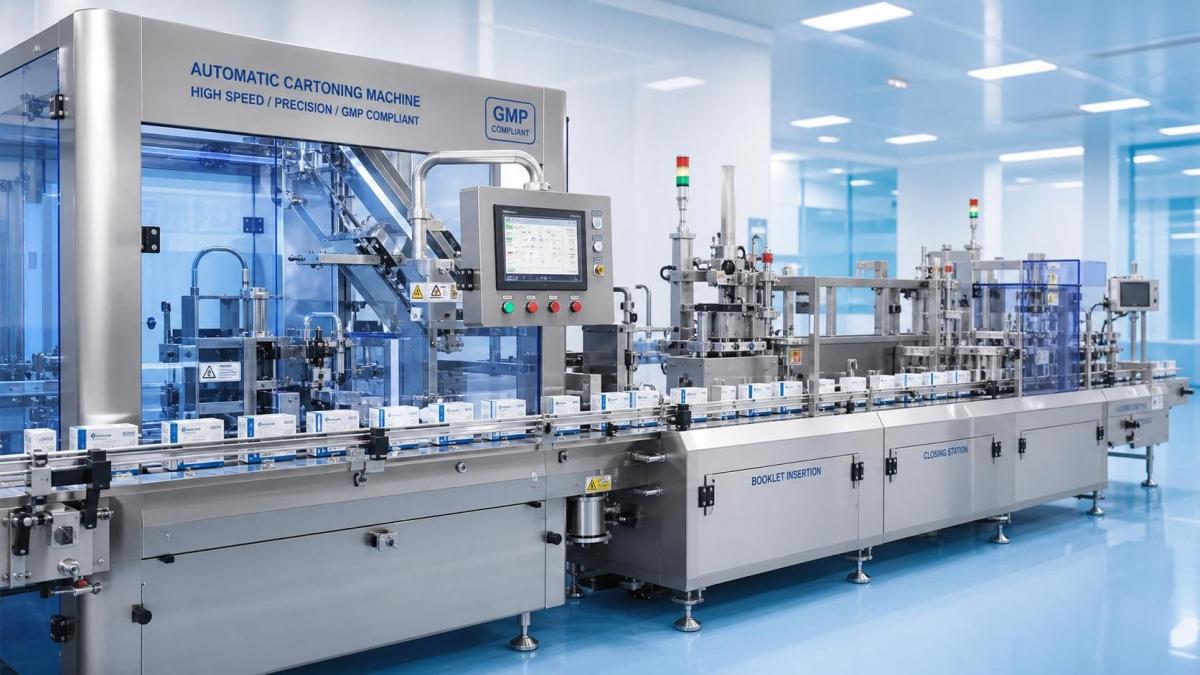
This is where automatic pharmaceutical carton machinery should be evaluated as a system, not as a speed number on a brochure.
In practice, strong selection work usually starts with three questions. How many cartons per minute are truly needed, which carton formats must run, and what GMP evidence must the supplier provide.
Start With Real Speed, Not Nameplate Speed
Speed is the first filter for automatic pharmaceutical carton machinery, but it should never be the only one.
Suppliers often highlight maximum cycles per minute. That number matters, but it is rarely the daily operating speed on mixed pharmaceutical jobs.
A better approach is to ask for three speed figures:
- maximum mechanical speed
- validated production speed
- speed during format change and restart recovery
The second number is usually the most important. It reflects what the automatic pharmaceutical carton machinery can sustain without repeated jams or rejected cartons.
From a cost perspective, stable output often beats headline output. A line running steadily at 220 cartons per minute can outperform one rated at 300 but stopping too often.
This also means upstream and downstream balance matters. Cartoner speed must fit blister machines, bottle fillers, leaflet inserters, checkweighers, and serialization modules.
When line balance is ignored, automatic pharmaceutical carton machinery becomes a bottleneck or sits waiting for product feed.
Useful speed questions during evaluation
- What speed is guaranteed for the smallest and largest cartons?
- What speed applies when leaflets are inserted?
- How does speed change with bottles, blisters, sachets, or vials?
- What OEE data can the supplier share from similar installations?
- How long does recovery take after a carton opening failure?
Check Carton Size Range and Changeover Logic
Carton size flexibility is usually where selection risks become more obvious.
Many buyers focus on current SKUs only. That works for today, but pharmaceutical packaging portfolios often expand with new doses, new pack counts, or regional labeling changes.
Good automatic pharmaceutical carton machinery should cover your active carton range and leave room for the next product wave.
Look beyond simple length, width, and height limits. Check how the machine performs at the edges of that range.
Very small cartons can reduce stability. Larger cartons may affect loading timing, glue quality, flap closing, and discharge alignment.
What to review on carton dimensions
- minimum and maximum carton dimensions
- recommended operating range, not only technical limit
- carton board quality tolerance
- leaflet folding compatibility
- support for tuck-in, glue, or tamper-evident closures
Equally important is changeover. Automatic pharmaceutical carton machinery may look flexible on paper, yet still require long manual adjustment between sizes.
In actual operations, frequent SKU switching can erase the benefit of high mechanical speed.
Ask whether the machine uses tool-less adjustment, servo positioning, stored recipes, and guided HMI changeover steps.
That combination reduces operator dependence and makes automatic pharmaceutical carton machinery more predictable across shifts.
A practical format risk check
Prepare a size matrix before supplier comparison. Include every active SKU, annual volume, batch size, leaflet type, and closure style.
Then identify which formats drive revenue and which formats create the most changeovers. That usually reveals the better equipment choice faster than brochure claims.
GMP Compliance Is a Core Buying Requirement
For pharmaceutical lines, GMP is not an extra feature. It is a baseline requirement for automatic pharmaceutical carton machinery.
The machine should support clean design, traceable operation, validation work, and repeatable maintenance.
This is where procurement decisions affect long-term regulatory reliability, not just purchase price.
Key GMP checkpoints
- stainless or suitable contact surfaces where required
- easy cleaning access and low dust retention zones
- clear separation of lubricated and product-adjacent areas
- electronic batch data and audit trail support
- IQ, OQ, FAT, and SAT documentation readiness
- compatibility with vision inspection and reject verification
More importantly, ask how GMP design has been implemented, not just whether the supplier says it is compliant.
For example, automatic pharmaceutical carton machinery should allow access for cleaning without creating difficult reassembly steps that affect setup consistency.
This matters even more on lines handling sensitive products, multilingual cartons, or serialized export packs.
Validation support often separates strong suppliers
A capable supplier should provide structured validation documents, alarm lists, software version control records, and clear spare parts traceability.
That support reduces qualification delays and makes automatic pharmaceutical carton machinery easier to approve internally.
Compare Product Compatibility and Line Integration
The best automatic pharmaceutical carton machinery fits the product as well as the carton.
Blisters, bottles, vials, syringes, pouches, and sachets behave differently during feeding and loading. Product stability affects speed, reject rate, and carton appearance.
This is why product infeed design deserves careful attention. Rotary feeding, pick-and-place, robotic loading, and bucket transfer each suit different pack styles.
A machine that handles multiple formats well can protect future flexibility, especially where new drug launches arrive in small and medium volumes.
Integration also matters. Automatic pharmaceutical carton machinery should communicate reliably with printers, coders, cameras, checkweighers, and serialization systems.
Look for these integration details
- standard communication protocol support
- reject confirmation logic
- serialization and aggregation readiness
- space for future inspection upgrades
- remote diagnostics and service access control
Use a Weighted Selection Model Before Final Approval
When multiple machines look similar, a weighted scorecard makes the decision clearer.
This keeps automatic pharmaceutical carton machinery selection tied to business priorities instead of sales presentation style.
This kind of structure helps compare automatic pharmaceutical carton machinery on total value, not only capital cost.
Common Buying Mistakes to Avoid
Several recurring mistakes show up in cartoning projects.
- Choosing automatic pharmaceutical carton machinery only by peak speed.
- Ignoring small-batch SKU change frequency.
- Assuming GMP claims without document review.
- Underestimating carton material variation across suppliers.
- Leaving serialization integration until late project stages.
- Comparing machine price without lifecycle service cost.
Avoiding these issues usually saves more money than negotiating a small upfront discount.
Make the Final Decision With Factory Evidence
Before final approval, ask for a FAT with your own products, your own cartons, and your own leaflet formats.
That is the clearest way to confirm whether automatic pharmaceutical carton machinery can deliver the promised result.
Review the test against actual acceptance criteria. Include speed stability, reject rate, changeover time, code verification, and operator usability.
In the end, the right automatic pharmaceutical carton machinery is the one that fits your product mix, carton range, and compliance model without forcing daily workarounds.
A smart purchase decision usually comes from disciplined comparison, realistic testing, and clear GMP expectations set early in the project.
Use those three anchors, and the selection process becomes much more practical, defensible, and easier to execute.
Related News
Get weekly intelligence in your inbox.
No noise. No sponsored content. Pure intelligence.
