Automatic Laser Edge Bander vs Hot-Air Systems: Which Delivers Better Edges for Cabinetry?
For cabinetry manufacturers weighing finish quality, speed, and long-term operating efficiency, choosing between an automatic laser edge bander and hot-air systems is a strategic decision. While both aim to deliver seamless, durable edges, their real-world performance differs in bonding consistency, visual perfection, maintenance, and eco-compliance. This comparison explores which technology better supports premium panel production and smarter investment decisions.
Why is edge technology now a boardroom issue for cabinetry producers?
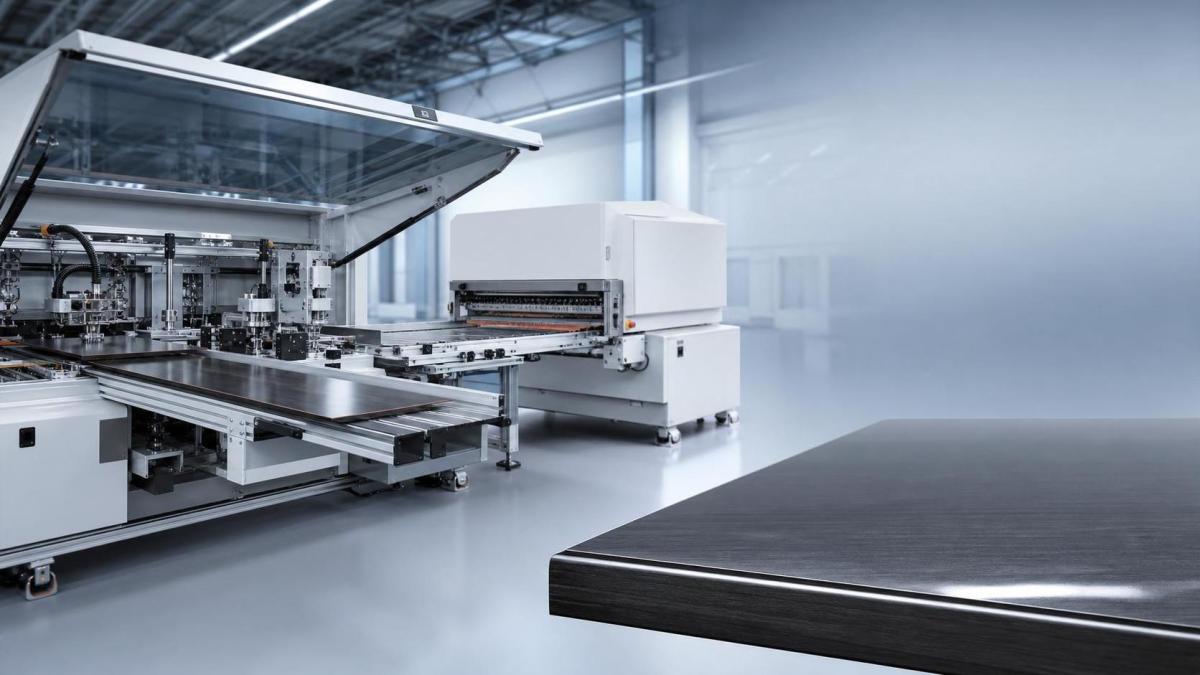
In modern panel furniture and whole-house customization, edge quality is no longer a minor finishing step. It directly influences product appearance, moisture resistance, formaldehyde sealing performance, customer complaints, and brand positioning.
For enterprise decision-makers, the choice between an automatic laser edge bander and hot-air edge banding is tied to broader manufacturing goals. These include higher first-pass yield, lower rework, shorter lead times, cleaner production, and easier integration into automated lines.
This matters even more in the environment PWFS follows closely: digitally connected factories where CNC cutting, drilling, nesting, sorting, and edge processing must work as one synchronized flow. In such factories, edge technology affects not just aesthetics, but overall production logic.
- Premium cabinetry buyers increasingly expect a near-zero glue line, especially for matte boards, dark decors, and high-gloss kitchen panels.
- Manufacturers face stricter environmental expectations around emissions, adhesive handling, cleaning waste, and shop-floor hygiene.
- Labor dependency remains a cost risk, making automated, stable, low-adjustment systems more attractive for scale production.
Automatic laser edge bander vs hot-air systems: what is the actual process difference?
The most important distinction is how the functional layer of the edge band is activated. An automatic laser edge bander uses laser energy to activate a pre-applied coextruded functional layer on the edge band, creating a fused bond without a conventional glue pot.
A hot-air system also works with laser-grade or zero-joint type edge banding tape, but instead of laser energy, it uses heated air to activate that functional layer. This can also create a visually reduced glue line, though the heat delivery method is less concentrated.
For decision-makers, this means both systems can target seamless-looking edges, but their consistency under speed, panel variation, ambient temperature change, and long production cycles may differ significantly.
The table below helps compare the automatic laser edge bander and hot-air systems from a process and production perspective relevant to cabinetry factories.
In practical terms, the automatic laser edge bander usually offers tighter control where line speed is high and visual tolerance is low. Hot-air systems can still be commercially effective, especially where output mix is varied and capital discipline is stricter.
Which delivers better edges for cabinetry in visible, wet, and high-use applications?
If “better edges” means the most invisible seam on premium cabinetry, the automatic laser edge bander often has the advantage. Its focused heating helps create a cleaner transition between panel and edge band, especially on glossy white, super-matte black, woodgrain synchronization, and handleless kitchen fronts.
If “better edges” means acceptable zero-joint appearance at a more moderate investment level, hot-air systems can be highly competitive. Many factories use them successfully for wardrobe panels, office furniture, and standard residential cabinetry.
Where the automatic laser edge bander tends to outperform
- High-gloss or dark-color panels where any seam variation becomes immediately visible under showroom lighting.
- Long production runs where stable activation and low drift are essential for repeatability.
- Applications exposed to kitchen humidity, bathroom splashes, and frequent cleaning cycles where bond uniformity matters.
Where hot-air systems remain a rational choice
- Factories moving from traditional EVA or PUR glue lines toward a cleaner seamless look without jumping directly to laser investment.
- Operations with mixed order sizes where flexibility and capital preservation matter more than top-tier visual perfection.
- Producers serving broad mid-market cabinetry lines where price pressure is constant.
For cabinet doors, exposed end panels, vanity fronts, and flagship retail displays, the visual edge quality of an automatic laser edge bander is often easier to justify. For internal carcass parts or cost-sensitive residential projects, hot-air may already meet the target finish.
What should buyers compare beyond the edge appearance?
A purchase decision should not be based on sample boards alone. Decision-makers should compare consistency, operating cost, maintenance burden, integration readiness, material compatibility, and staffing requirements.
The next table summarizes the buying criteria most relevant when evaluating an automatic laser edge bander against hot-air systems in an industrial cabinetry setting.
This comparison framework is especially useful for companies expanding from standalone woodworking equipment into connected production systems. PWFS consistently sees that the wrong edge-banding choice often creates bottlenecks far beyond the edging station itself.
How do speed, maintenance, and operating stability compare?
In a high-throughput plant, speed alone is not enough. The real metric is stable throughput over a shift, a week, and a quarter. An automatic laser edge bander is often favored because it can maintain consistent seam quality at industrial speeds with fewer variables linked to glue pot contamination or adhesive carbonization.
Hot-air systems can also be productive, but they may be more sensitive to ambient conditions, board surface variation, and edge band quality. When process windows are narrow, operators may need tighter setup control to maintain the same visual result.
Operational considerations for executives
- Evaluate not just rated feed speed, but stable speed on your actual materials, including thick ABS, acrylic, and sensitive decors.
- Review how long startup takes each day and how much adjustment is needed after stoppages or material changes.
- Ask for maintenance routines by shift, week, and month, especially for optics, heating assemblies, cleaning zones, and trimming units.
- Measure scrap and rework rates from real production, not ideal demonstration samples.
From a factory management perspective, the best system is the one that protects margin through stable repeatability. That is why many larger plants choose an automatic laser edge bander when brand image and throughput predictability carry high financial weight.
What about cost, ROI, and alternatives such as PUR edge banding?
Capital cost is where the discussion becomes more nuanced. An automatic laser edge bander generally requires a higher upfront investment than a hot-air solution. However, the total business case depends on product mix, output volume, defect cost, energy strategy, and sales positioning.
If a manufacturer sells premium kitchens, luxury wardrobes, or export cabinetry where finish inspection is strict, superior seam uniformity can support higher selling prices and lower rejection rates. In that case, the automatic laser edge bander may create ROI through quality leadership rather than through labor savings alone.
If the target market is competitive mid-range furniture, hot-air systems may provide a better balance between aesthetic improvement and cash discipline. They can be a strategic upgrade path from conventional gluing without overextending capital budgets.
Where PUR still enters the conversation
- PUR remains relevant for strong moisture resistance and certain material combinations.
- It may suit factories prioritizing bond strength and water resistance over near-invisible seam aesthetics.
- It also introduces adhesive handling, cleaning, pot-life, and maintenance considerations that zero-joint systems seek to reduce.
The real procurement question is not simply “Which machine costs less?” It is “Which edge technology delivers the required finish standard at the lowest lifecycle cost per accepted panel?”
Which standards, compliance factors, and sustainability concerns matter?
Cabinetry buyers increasingly evaluate environmental performance and interior safety alongside aesthetics. Edge sealing quality influences resistance to moisture ingress and can help reduce exposure pathways from raw panel edges, especially in engineered wood products.
While exact compliance requirements vary by export market and product category, decision-makers should review the following areas during supplier evaluation.
- Electrical and machine safety conformity relevant to destination markets.
- Material compatibility with low-emission boards and edge band products required by customer specifications.
- Dust extraction, heat management, and preventive maintenance practices for safe continuous operation.
- Production traceability if the plant is integrated with MES or digital order management.
This is where PWFS adds value. Because our intelligence scope spans packaging, printing, die-cutting, and CNC woodworking, we look at compliance as part of the whole manufacturing architecture rather than as an isolated machine feature.
FAQ: what do buyers ask before choosing an automatic laser edge bander?
Is an automatic laser edge bander always better than hot-air?
Not always. It is often better for appearance-critical, high-volume, premium cabinetry production. But if your order mix is cost-sensitive and your visual standard is mid-to-high rather than top-tier, hot-air can be the smarter commercial choice.
What is the main mistake companies make during evaluation?
They judge machines by showroom samples instead of factory conditions. Real evaluation must include your board type, edge band brand, climate, shift pattern, changeover frequency, operator skill level, and expected defect tolerance.
Which factories benefit most from laser edging?
Factories producing premium kitchens, bathroom furniture, luxury wardrobes, export cabinetry, or highly visible retail interiors gain the most. These segments place a high value on seam invisibility, repeatability, and premium finish perception.
How should procurement teams compare suppliers?
Request process validation on your materials, confirm integration options, review maintenance schedules, ask about spare parts logic, and compare defect-rate stability over time. Procurement should involve production, maintenance, quality, and finance together.
Why choose us for automatic laser edge bander decision support?
PWFS is not limited to a single machine viewpoint. We analyze panel processing the way industrial investors and factory owners need to see it: as part of a connected production ecosystem that includes CNC routing, digital job flow, finishing consistency, automation strategy, and capital efficiency.
When you are comparing an automatic laser edge bander with hot-air systems, we can help you clarify the variables that change the investment outcome instead of leaving the decision to surface-level sales claims.
- Confirm technical fit for your panel types, edge band materials, target seam quality, and output rhythm.
- Compare process routes for premium cabinetry, standard wardrobes, bathroom furniture, and export-oriented orders.
- Assess integration with CNC nesting, drilling cells, labeling, barcode tracking, and MES-driven order flow.
- Review practical topics such as delivery cycle, operator training needs, spare parts planning, and maintenance expectations.
- Discuss quotation logic, configuration options, sample validation, and compliance questions for different target markets.
If your team is planning a new line, replacing conventional gluing, or defining a premium cabinetry upgrade path, contact us for model-level selection guidance, process comparison, sample-based evaluation points, and a more grounded view of total investment risk.
Related News
Get weekly intelligence in your inbox.
No noise. No sponsored content. Pure intelligence.
