
Color Registration Control in Multi-Color Sheet-fed Presses: Key Causes of Misalignment and Fixes
Color Registration Control in Multi-Color Sheet-fed Presses: Key Causes of Misalignment and Fixes
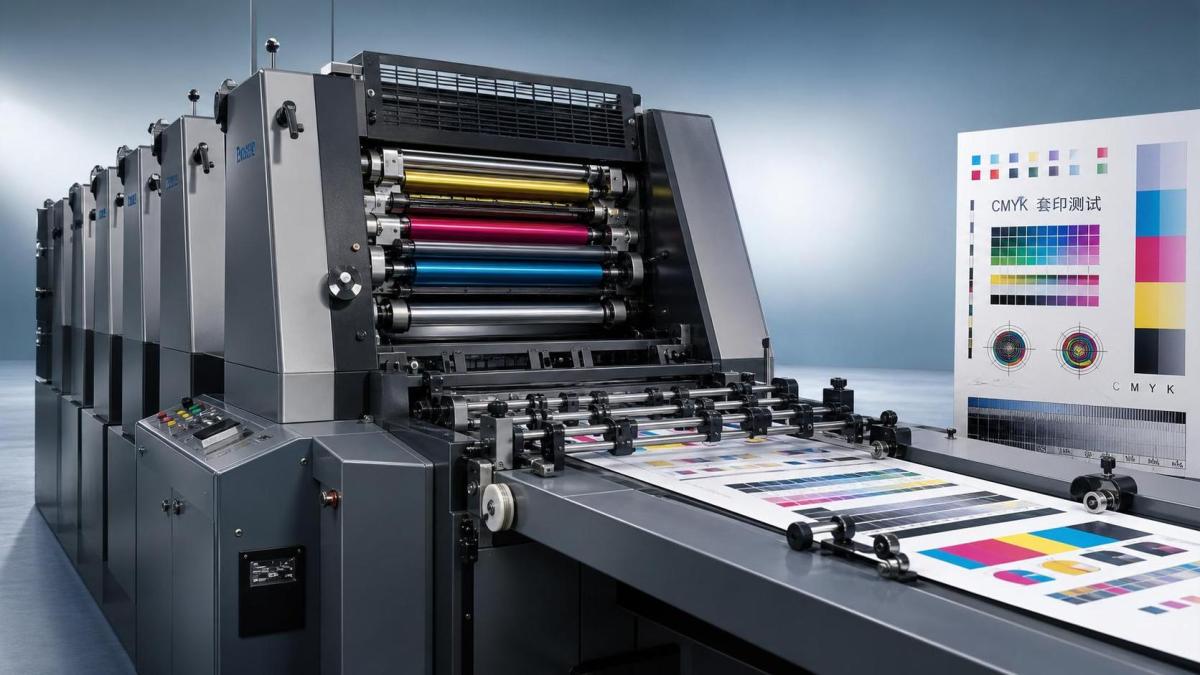
In multi-color sheet-fed printing, even tiny shifts can damage image sharpness, create halos, and drive up waste fast.
That is why color registration control matters so much on offset presses running at commercial speeds.
When register drifts, the problem is rarely random. It usually comes from sheet travel, gripper behavior, dampening, ink, or wear.
The good news is that most registration faults leave clear signals before they become major production losses.
This guide breaks down the common causes and practical fixes, with a focus on day-to-day color registration control.
Why Color Registration Control Fails on Press
Strong color registration control starts with a simple idea: every sheet must arrive at each unit in exactly the same position.
Once that repeatability changes, each printing unit adds a slightly different image position.
The visible result may be side-lay drift, front-to-back shift, or unstable overprint in solids and fine text.
From recent production trends, faster makereadies and thinner stocks make these problems show up even sooner.
More importantly, stable color registration control is not only a quality issue. It is also a cost and delivery issue.
- Poor register increases startup waste.
- It slows down approval at full speed.
- It raises reprint risk on critical packaging jobs.
- It hides deeper mechanical issues if left untreated.
Paper Movement: The Most Common Source of Misalignment
Paper behavior is often the first place to check when color registration control becomes unstable.
A sheet can expand, shrink, curl, or skew before it reaches later units.
Humidity is a major driver. Unconditioned stock absorbs moisture unevenly and changes dimension during the run.
This is especially visible on large solids, heavy coverage, and long runs with repeated washups or stop-start cycles.
Paper grain direction also matters. The wrong grain can amplify stretching and reduce sheet stability through the press path.
What to check
- Stock temperature and humidity before loading.
- Curl, waviness, edge tightness, and pile flatness.
- Grain direction against job requirements.
- Whether the issue grows as the pile changes.
Practical fixes
- Condition stock in the pressroom long enough to match ambient conditions.
- Separate suspect pallets and compare register behavior by batch.
- Reduce excessive water and ink load that can stretch sheets further.
- Use the correct stock specification for tight packaging register.
Gripper and Feeding Errors That Disrupt Color Registration Control
When register shifts appear suddenly, feeding and gripper timing deserve immediate attention.
A sheet that enters slightly off-position cannot be corrected later by wishful adjustments at the console.
Worn gripper pads, uneven spring pressure, and dirty front lays often cause repeatable but unstable errors.
Side-lay inconsistency is another frequent cause, especially during speed changes or on lightweight stock.
Typical warning signs
- Register looks fine at low speed but drifts at production speed.
- Lateral shift changes from sheet to sheet.
- One edge shows stronger misregister than the other.
- Transfer-related marks appear near the gripper edge.
Corrective actions
- Clean lays, feed wheels, gripper faces, and sheet sensors.
- Check gripper opening, closing, and spring balance across the bar.
- Verify feeder timing after maintenance or stock change.
- Confirm side-lay settings under actual running speed.
In real production, many “mystery” register issues turn out to be basic transport instability.
Ink-Water Imbalance and Drying Effects
Color registration control is not only mechanical. Chemistry plays a direct role too.
Too much fountain solution can swell fibers, soften the sheet, and alter dimensions between units.
Heavy ink film can add tack-related drag, especially on absorbent substrates or dense image areas.
That means poor balance may look like a mechanical fault when the root cause is process control.
Where imbalance shows up
- Register drifts after density corrections.
- The issue is stronger in high-coverage colors.
- Later units show more variation than early units.
- Setoff, emulsification, or slow drying appears at the same time.
Fixes that work
- Run with the minimum stable water setting for the plate and image.
- Keep ink tack sequence appropriate across units.
- Monitor pH, conductivity, and additive dosage consistently.
- Avoid aggressive density moves without checking register impact.
A stable print window supports stable color registration control far better than repeated console chasing.
Mechanical Wear, Cylinder Settings, and Press Condition
If the same jobs keep showing similar defects, press condition should move high on the checklist.
Mechanical wear develops slowly, so teams often adapt to it without noticing the deeper trend.
But worn bearings, cylinder packing issues, blanket problems, and transfer timing errors all weaken color registration control.
The stronger signal is repeatability loss that returns after each short-term adjustment.
Mechanical checkpoints
- Blanket tension, packing, and surface condition.
- Cylinder bearer contact and pressure settings.
- Gripper bar wear and transfer alignment.
- Backlash or play in drive-related components.
A Practical Troubleshooting Routine for Better Color Registration Control
When time is tight, random adjustments usually waste more sheets than they save.
A simple sequence helps isolate the true source of poor color registration control.
- Confirm whether the shift is lateral, circumferential, or sheet-to-sheet random.
- Compare behavior at slow speed and production speed.
- Check stock condition, pile quality, and recent pallet changes.
- Review water settings, density moves, and coverage by unit.
- Inspect feeder, lays, grippers, and the affected unit’s mechanics.
- Record the result so the same fault is faster to diagnose next time.
This approach keeps troubleshooting grounded in evidence instead of habit.
It also builds a stronger process culture, which is increasingly important in high-speed packaging and commercial work.
How to Prevent Repeat Misalignment Problems
Long-term color registration control depends on prevention more than correction.
That means maintenance, standard settings, and better job preparation must work together.
- Standardize stock conditioning time by substrate type.
- Create checklists for feeder and gripper inspection per shift.
- Track recurring register faults by unit, stock, and job style.
- Train teams to link register defects with process signals, not only final appearance.
- Schedule preventive replacement before wear causes unstable production.
For industrial printers, this also supports better yield, lower waste, and more reliable delivery performance.
In a market where packaging visuals and turnaround both matter, consistent color registration control becomes a real operating advantage.
Final Takeaway
Most misalignment problems come from a small group of causes: paper movement, feeding errors, ink-water imbalance, and mechanical wear.
Once those areas are checked in a disciplined order, color registration control becomes easier to stabilize.
The practical goal is not endless adjustment. It is repeatable sheet travel, balanced print conditions, and a press that holds register without constant rescue.
Use that standard on every run, and tighter overprint, lower spoilage, and steadier output will follow naturally.
Related News
Get weekly intelligence in your inbox.
No noise. No sponsored content. Pure intelligence.
