
How Flexible Manufacturing High Efficiency Improves Changeovers in Corrugated Production
Why changeover pressure now defines corrugated performance
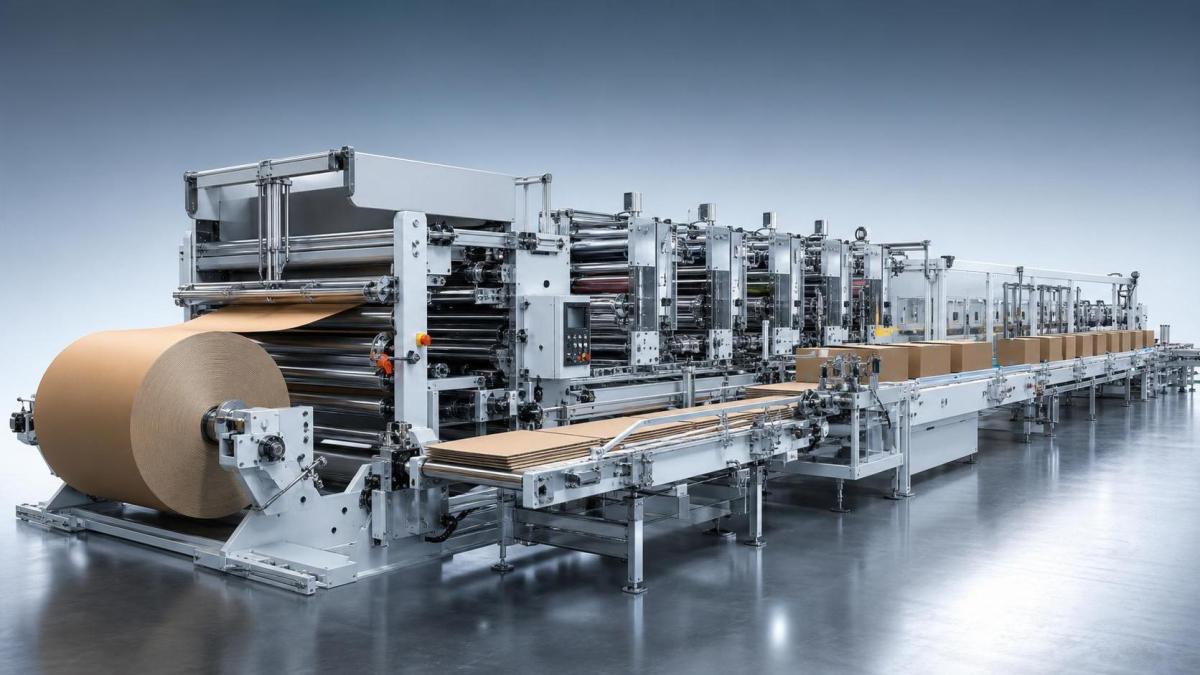
In corrugated production, output is rarely lost during peak speed.
It is usually lost between jobs, when paper grades shift, flute profiles change, print layouts reset, and line balance breaks.
That is why flexible manufacturing high efficiency matters beyond a technical slogan.
It determines whether a plant can absorb shorter runs, retail-ready graphics, e-commerce volume swings, and tighter delivery windows without sacrificing board integrity.
The practical issue is not simply running faster.
The issue is switching faster while keeping glue application stable, moisture under control, slotting aligned, and downstream converting synchronized.
PWFS often frames this through the broader paper and wood manufacturing landscape.
High-speed offset presses, folder gluers, die-cutters, and CNC routers face the same reality: profitable flexibility depends on precise transitions, not isolated machine speed.
Actual operating conditions change what flexible manufacturing high efficiency should solve
Not every corrugated line experiences changeovers in the same way.
A plant focused on plain brown shipping cases has different pressure points than one producing high-graphic displays or mixed-SKU retail packaging.
In actual use, the judgment starts with production mix.
If order frequency is high and average run length is falling, flexible manufacturing high efficiency must prioritize recipe recall, automatic setup sequencing, and real-time line coordination.
If graphics are demanding, the same concept shifts toward registration repeatability, print-to-cut consistency, and defect visibility during startup.
Material diversity changes the picture as well.
Recycled paper behaves differently from virgin liner.
Humidity, starch response, and warp sensitivity can turn a nominally quick job change into a long stabilization period.
This is where data-driven process control becomes more useful than broad efficiency claims.
The most valuable setups connect corrugator settings, press parameters, die-cutting tolerances, and MES scheduling into one decision chain.
Where short-run e-commerce packaging demands a different response
The e-commerce box segment usually creates the most visible changeover stress.
Order patterns are volatile, dimensions shift frequently, and promotional cycles can compress planning time.
Here, flexible manufacturing high efficiency is less about maximum tonnage and more about reducing dead time across the entire line.
A useful indicator is whether the corrugator, printer, and folder gluer recover together after a job switch.
If one section stabilizes quickly but downstream queues build, the gain is only local.
More common improvement points include preloaded order libraries, automated knife positioning, and scheduling logic that groups similar flute and width combinations.
These changes sound operational, but they directly affect quality.
Fewer abrupt parameter jumps mean less board warp, fewer print corrections, and more stable bundle output.
In this scenario, flexible manufacturing high efficiency should be judged by setup recovery time and first-pass saleable output, not only machine availability.
Graphic packaging lines usually care about accuracy before speed
The priorities change when corrugated production serves display-ready or brand-sensitive packaging.
A rapid changeover loses value if color drift, registration error, or die-cut mismatch appears in the first stacks.
This is where the PWFS perspective on print physics becomes relevant.
Micron-level alignment in offset printing has an equivalent lesson for corrugated converting: transitions must protect repeatability, not just motion.
In practice, flexible manufacturing high efficiency in graphic work depends on calibrated presets, vision inspection, and controlled startup waste windows.
The strongest operations often limit manual interventions during changeovers.
Manual tweaks may seem faster in the moment, but they usually reduce predictability across repeat jobs.
A better approach is to store verified production recipes linked to substrate, print coverage, die profile, and environmental conditions.
What usually differs from one operating scene to another
The table below helps clarify why one flexible manufacturing high efficiency strategy does not fit every corrugated workflow.
When compliance and traceability shape the changeover plan
Some corrugated applications cannot treat changeovers as a purely mechanical event.
Food-contact packaging, FSC-linked material flows, and export-oriented print requirements add another layer of control.
In these settings, flexible manufacturing high efficiency must include clean documentation and material segregation.
A fast job switch loses its advantage if traceability records are incomplete or if substrate identity becomes uncertain between runs.
PWFS regularly highlights this connection between compliance and productivity.
The same logic seen in food-grade ink migration control applies here.
Stable, repeatable settings reduce both startup waste and audit risk.
Where standards are strict, the best adaptation is often a digital handoff between scheduling, quality records, and machine setup confirmation.
Misjudgments that make flexible lines slower, not faster
Several common mistakes appear in corrugated operations that pursue flexible manufacturing high efficiency too narrowly.
- Treating nominal setup speed as the main metric while ignoring startup scrap and downstream instability.
- Assuming similar box formats require identical settings despite differences in paper moisture, print load, or adhesive response.
- Investing in automation without aligning MES data, recipe naming, and operator confirmation logic.
- Comparing equipment only by purchase cost while overlooking maintenance intervals, spare part availability, and retraining time.
- Improving one machine center while leaving bottlenecks untouched in die-cutting, bundling, or palletizing.
These are not abstract risks.
They are the typical reasons a line appears flexible on paper but still struggles with real order volatility.
How to adapt the line before the next wave of shorter runs
A workable path usually starts with mapping where time is actually lost.
Separate pure mechanical setup time from stabilization time, waiting time, and quality approval time.
That distinction matters because each loss has a different solution.
Then review jobs by family rather than by individual SKU.
When width, flute, print coverage, and converting method are grouped well, flexible manufacturing high efficiency becomes easier to standardize.
It also helps to define a small set of control points that must be stable after every changeover.
- Board flatness within the first qualified batch
- Print or slot registration after preset confirmation
- Glue consistency before full-speed release
- Traceability record completion for regulated jobs
From there, the next step is straightforward.
Compare the current line against these control points, identify where variability still enters, and build an adaptation standard around recipes, data flow, maintenance, and operator actions.
That is usually where flexible manufacturing high efficiency stops being a claim and starts becoming measurable operating capability.
Related News
Get weekly intelligence in your inbox.
No noise. No sponsored content. Pure intelligence.
