
What Drives Carton Production Equipment Price? A Cost Breakdown for Buyers
Why does carton production equipment price vary so much?
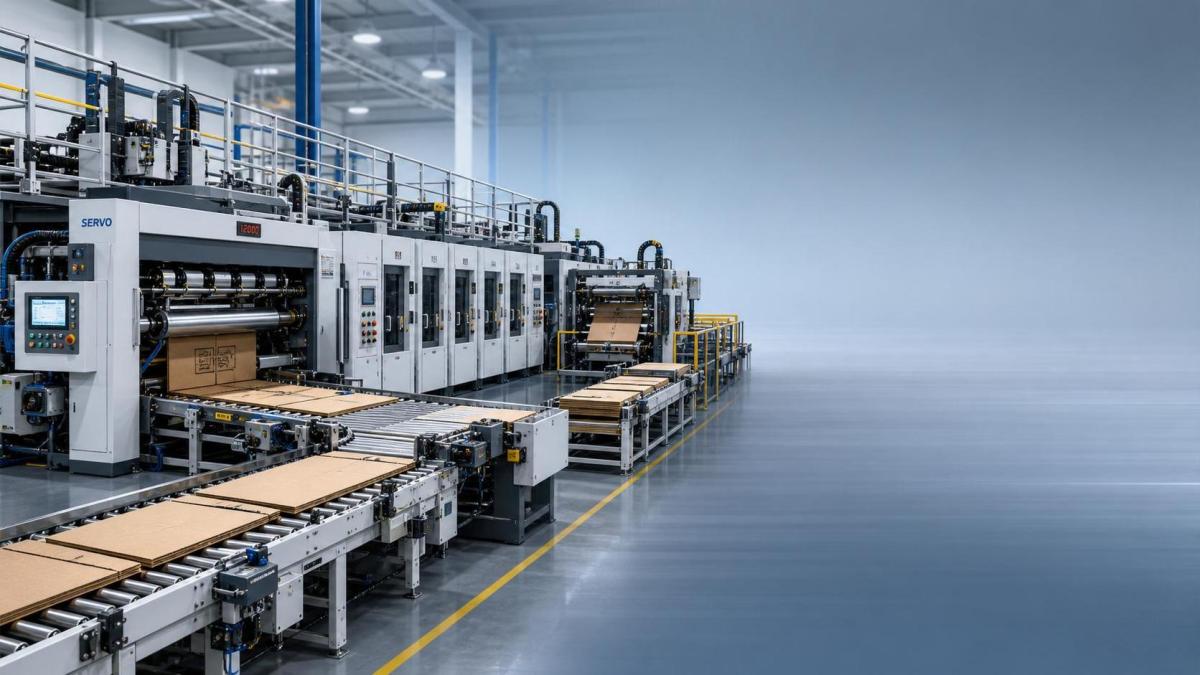
A wide price gap is normal in this market. Two machines may both make cartons, yet their capital logic can be completely different.
That is why carton production equipment price should never be read as a simple quote line. It reflects throughput, automation, precision, energy demand, and future maintenance exposure.
In practical terms, a semi-automatic line for standard transport boxes sits in a different cost tier from a high-speed integrated line.
The difference becomes even larger when buyers add flexo printing, servo controls, automatic stacking, waste removal, or MES connectivity.
PWFS often tracks this through the same lens used across corrugated board lines, offset presses, die-cutters, and folder-gluers.
The equipment price is shaped by physical complexity, output consistency, compliance burden, and the ability to scale without adding labor at the same rate.
So when a quote looks high, the better question is not whether it is expensive. The better question is what cost drivers are inside it.
Which cost components matter most before approving a budget?
Most buyers focus first on base machine cost. That is necessary, but it is rarely enough for a sound approval decision.
A more useful review separates purchase price into visible and hidden cost blocks.
This is where many approvals go wrong. A low carton production equipment price can still produce a higher total project cost.
For example, a cheaper line may require more operators, more setup waste, and more unplanned stoppages during peak order periods.
In contrast, a higher-priced line may protect margin through stable speed and better registration, especially in branded packaging runs.
Does automation really justify a higher carton production equipment price?
Often, yes. But only when the production profile can actually use the automation.
Automation adds cost because it replaces manual adjustment with sensors, servo drives, control software, and synchronized motion systems.
Those systems are not cosmetic. They change setup time, repeatability, waste rate, and staffing pressure.
A line running mixed box sizes, short runs, and urgent replenishment orders benefits more than a plant with long, stable batches.
That is one reason e-commerce packaging operations often accept a higher carton production equipment price than traditional bulk shippers.
The approval logic is similar to what PWFS observes in advanced folder-gluers and CNC routers.
When order variability rises, automation is not just convenience. It becomes a hedge against labor cost, delay penalties, and inconsistent output.
- Auto order changeover matters when SKU count is high.
- Servo-driven feeding matters when board alignment affects print and cut quality.
- Integrated stacking matters when labor availability is uncertain.
- Remote diagnostics matter when overseas service response is slow.
The key is to connect each automation feature to a measurable financial outcome. If that link is weak, the upgrade may be premature.
What hidden costs usually appear after the quotation stage?
This is where the real cost breakdown becomes useful. The quoted carton production equipment price is only one layer of investment.
Several costs appear later, often during installation, trial production, or the first year of operation.
The usual blind spots
- Electrical upgrades for peak load and stable voltage.
- Compressed air, dust collection, and plant layout changes.
- Training time before output reaches promised speed.
- Initial spare parts packages and wear components.
- Software licensing or paid remote service support.
- Board, ink, glue, or tooling adjustments during ramp-up.
Needless to say, these items do not always make a machine unattractive. They simply need to be modeled before approval.
In export-oriented packaging, compliance can also raise effective cost.
Traceability requirements, food-grade ink migration controls, and FSC-related documentation may require better inspection and data functions.
PWFS follows these details closely because the economics of print and converting equipment increasingly depend on compliance-readiness, not just mechanical speed.
How should buyers compare low, mid, and high price ranges without guessing?
Price range comparisons only work when tied to output targets and product mix. Otherwise, the labels low or high say very little.
A practical comparison table helps cut through that ambiguity.
A useful rule is to test each tier against three numbers: target output, labor per shift, and scrap percentage.
If the cheaper option fails those tests, its lower carton production equipment price is not a real saving.
If the premium option requires unrealistic utilization, then the investment case is equally weak.
Where do finance teams misread carton production equipment price most often?
The most common mistake is treating all machine capacity as usable capacity.
Rated speed is not the same as sustained output after setup, operator breaks, maintenance, and order switching are included.
Another mistake is ignoring compatibility with future packaging formats.
If the business may move into printed retail cartons, tighter die-cut tolerances, or integrated gluing, a narrow machine spec can create a second capex event.
There is also a tendency to underprice downtime. In real production, one missed shipping window can erase much of the savings from a lower quote.
More careful approvals usually check these points:
- Quoted speed versus audited running speed.
- Tooling life and replacement cycle.
- Spare parts availability in the target region.
- Integration with existing corrugated, print, or packing workflow.
- Required operator skill during shift changes.
These questions sound operational, but they are financial in effect. They change payback period and risk exposure more than many line-item discounts do.
What is the smartest next step before signing off?
Start with a cost map, not a quote comparison sheet alone.
List current order mix, target carton sizes, expected annual volume, labor assumptions, utility conditions, and required compliance level.
Then ask each supplier to price the same scope. That includes installation, training, spares, software, and achievable output after commissioning.
The most reliable decisions also compare carton production equipment price against lifetime economics, not just year-one capex.
That is especially relevant in sectors influenced by fast-moving packaging demand, branded print quality, and flexible manufacturing expectations.
PWFS frames this broader view well because packaging equipment no longer sits in isolation.
It connects with converting precision, digital control, compliance, and the same industrial logic shaping modern print and woodworking systems.
A solid approval decision usually comes down to this: choose the line whose real operating profile matches the business model, and whose carton production equipment price stays defensible after hidden costs are added.
Before final review, build one internal checklist for throughput, labor, quality, utilities, service, and expansion potential. That will make supplier comparisons much sharper.
Related News
Get weekly intelligence in your inbox.
No noise. No sponsored content. Pure intelligence.
