
How to Choose Carton Production Equipment for Box Size Range, Speed, and Changeover
Choosing carton production equipment is rarely a simple capacity decision. Box size range, running speed, and changeover time shape cost, output stability, and how well a plant can respond to shifting orders. In a market pushed by e-commerce, shorter runs, and stricter packaging performance, the right line has to fit real production patterns rather than headline specifications.
That is why carton production equipment now sits at the center of broader packaging strategy. Across corrugated converting, printing, die-cutting, and folding, equipment choices affect waste, labor use, delivery reliability, and the ability to handle both standard shipping cartons and more customized formats.
Why this decision matters more now
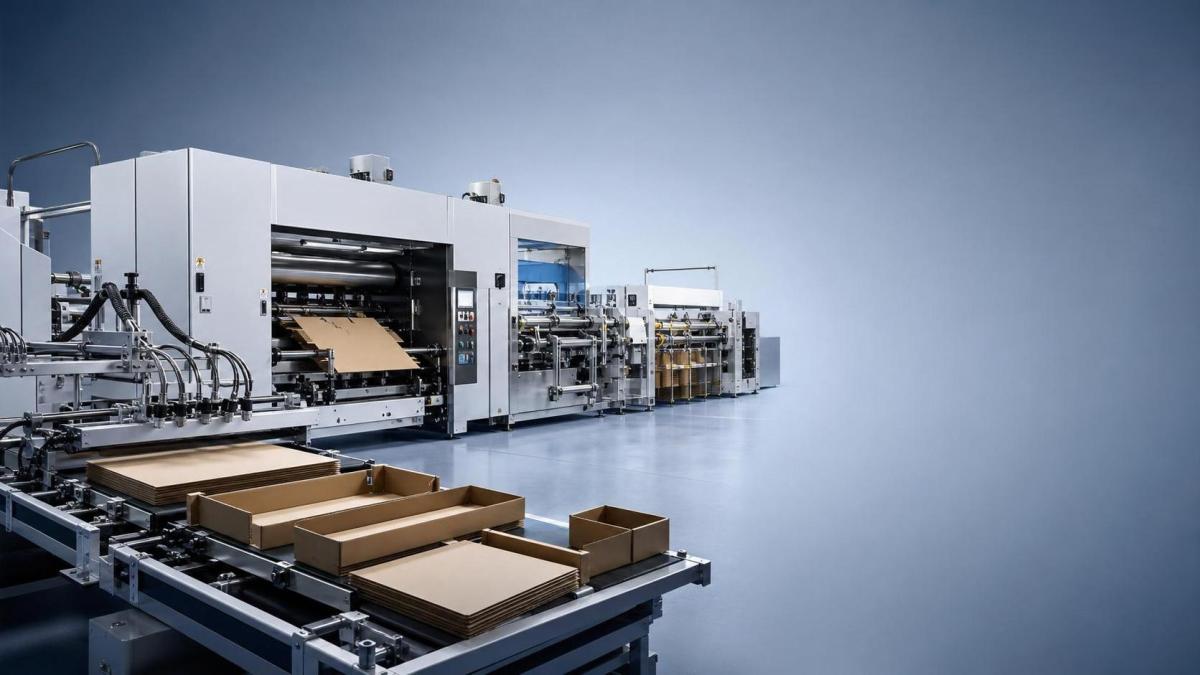
Carton demand is growing, but order structures are changing faster than many lines were designed to handle. Average batch sizes are often smaller. SKU counts are higher. Delivery windows are tighter. That changes how carton production equipment should be evaluated.
A machine that performs well on long, repeat jobs may struggle in mixed-format production. Another line may offer impressive top speed, yet lose practical output through long setup cycles, slow wash-ups, or unstable feeding at smaller sheet sizes.
From the broader PWFS industry perspective, this is not only a converting issue. Corrugated board lines, offset presses, die-cutters, and folder-gluers work as a chain. If one stage cannot match the mix of sizes and job frequency, overall efficiency drops, even when individual machines look strong on paper.
Start with the real box size range
The first filter for carton production equipment should be the actual size envelope of current and expected orders. This sounds obvious, but many buying mistakes begin with broad assumptions such as “mostly regular cartons” or “mainly e-commerce boxes.”
In practice, size range means more than maximum sheet width. It includes minimum stable size, board grade compatibility, flap configuration, slotting limits, bundle handling, and performance at both ends of the format spectrum.
Questions worth answering early
- What percentage of orders fall near the minimum and maximum size limits?
- How often do mixed dimensions appear within the same shift?
- Will future business require larger appliance cartons or smaller rapid-fulfillment boxes?
- Does the line maintain registration, slot accuracy, and folding quality across the full size range?
A wide nominal range is useful only if the machine remains stable and economical throughout that range. Some carton production equipment can technically process small boxes, yet needs slower feeds, more operator intervention, or tighter maintenance attention to do it consistently.
Speed should be measured as usable output
Nameplate speed is often the most visible figure in a quotation. It is also one of the least complete. Real value comes from sustained output under the board types, print requirements, and order sequence that the plant actually runs.
For carton production equipment, usable speed depends on several linked factors. Feeding stability matters. Registration control matters. Waste during ramp-up matters. So does the ability of upstream and downstream stations to keep pace without creating bottlenecks.
This is where PWFS-style line intelligence becomes useful. A high-speed folder-gluer or die-cutter creates value only when its dynamic stability, registration accuracy, and material flow remain balanced under production conditions, not only in demonstrations.
Changeover often decides the economics
Many plants no longer run the same carton for most of the day. Frequent order switching has turned changeover from a maintenance topic into a commercial one. Lost minutes between jobs quickly become lost capacity, extra labor, and delayed shipments.
When comparing carton production equipment, changeover should cover the full reset cycle. That includes feeder settings, printing units, die or slot positions, gluing adjustments, inspection presets, and the time needed to produce approved output.
What separates fast changeover from advertised changeover
Servo positioning, recipe recall, and automatic order setup can reduce downtime, but only if the line is easy to calibrate and repeatable from shift to shift. Poor HMI design or unstable material handling can erase the benefit of advanced automation.
- Check how many settings are automated versus manual.
- Review setup repeatability after tool changes or cleaning.
- Ask how many operators are needed for routine order switches.
- Compare startup waste after each changeover, not only minutes stopped.
In short, the best carton production equipment for mixed-order environments is usually the machine that reaches stable output quickly and predictably, even if its peak speed is not the highest in the tender.
Different production scenarios need different priorities
Equipment selection becomes clearer when linked to production scenarios rather than generic performance claims. A line built around long-run transport cartons should not be judged by the same priorities as a line serving branded retail packaging or rapid-format changes.
This scenario view also explains why PWFS tracks converting equipment alongside print and wood processing systems. The common thread is flexible manufacturing: matching machine architecture to product variation without losing precision or profitability.
Beyond the machine frame
A sound carton production equipment decision also depends on factors outside the main machine body. Digital job transfer, spare parts availability, operator training, remote diagnostics, and compliance support can influence long-term ownership more than an initial speed advantage.
This becomes especially important when plants plan tighter quality control, FSC traceability, food-contact packaging requirements, or deeper MES integration. Equipment that cannot connect cleanly to these systems may become operationally expensive even if the purchase price looks attractive.
Practical checkpoints before final comparison
- Map the last twelve months of box sizes, run lengths, and order frequency.
- Separate peak speed claims from saleable hourly output.
- Measure changeover in minutes and startup waste.
- Check integration with prepress, ERP, MES, and inspection systems.
- Verify service response, parts support, and operator learning curve.
A better way to move forward
The best carton production equipment is not simply the fastest or the most automated. It is the line that fits the real size mix, delivers usable speed, and keeps changeovers from consuming the shift. That balance determines whether capacity turns into profit or into hidden friction.
A useful next step is to build a comparison sheet around three items: actual box size distribution, saleable output by job type, and repeatable changeover performance. With those benchmarks in place, supplier claims become easier to test, and the final decision becomes much more resilient.
Related News
Get weekly intelligence in your inbox.
No noise. No sponsored content. Pure intelligence.
