
Digital Print Packaging Color Accuracy: What to Measure for Consistent Paperboard Output
Digital print packaging color accuracy shapes more than shelf appeal. In paperboard production, it influences brand trust, barcode readability, regulatory alignment, and the stability of every downstream converting step.
That is why consistent color is now treated as a process variable, not a cosmetic preference. When corrugated and folding carton volumes rise, small color shifts quickly become waste, claims, and avoidable rework.
For operations connected to high-speed presses, die-cutters, folder-gluers, and board lines, the practical question is simple: what should be measured, how often, and how should those numbers guide action?
Why color accuracy matters across the paperboard workflow
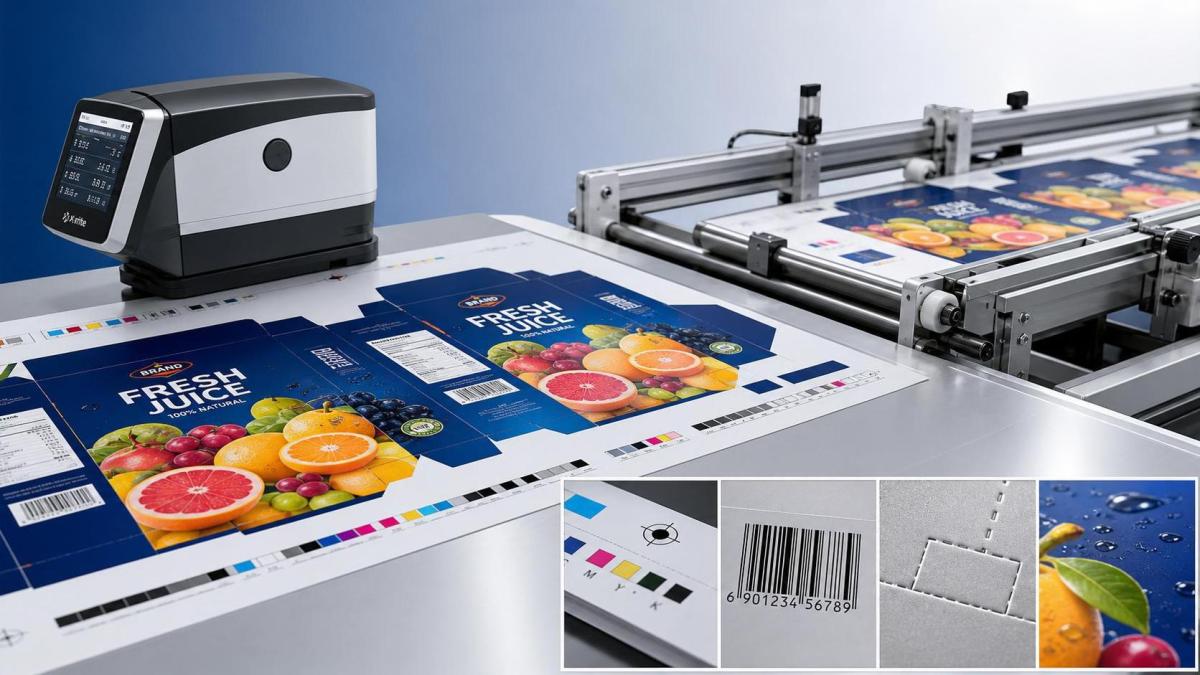
A carton may look acceptable at the press and still fail later. Glue seams, creases, varnish laydown, and retail lighting can expose color instability that was hidden during the run.
In digital print packaging, color accuracy also affects versioned jobs and short runs. Frequent artwork changes leave less room for manual correction and less tolerance for weak measurement discipline.
This is especially relevant in the PWFS context, where print quality is tied to broader production intelligence. Micron-level registration, substrate handling, and converting speed all depend on repeatable process control.
A stable color target reduces disputes between prepress, pressroom, and converting teams. It also supports traceability when customers question a batch after shipment.
What digital print packaging color accuracy really means
The term refers to how closely printed output matches an approved reference under defined conditions. That reference may be a contract proof, a characterization profile, or a signed production standard.
Consistency matters as much as closeness. A job that drifts from sheet to sheet can be more damaging than a job that is slightly off but stable and predictable.
For paperboard output, color accuracy is not isolated from mechanics. Board caliper, coating, moisture, curl, and flute structure can all alter ink laydown and optical response.
That is why visual approval alone is rarely enough. Measured values create a shared language between print quality, compliance records, and production planning.
The measurements that deserve daily attention
Not every metric carries the same decision value. A useful control set should explain whether the problem comes from color formulation, substrate behavior, registration drift, or tonal instability.
Delta E
Delta E is the clearest indicator of visible color difference. It compares the printed patch to the target in a standard color space.
For digital print packaging color accuracy, Delta E is often the first metric reviewed during makeready, in-run checks, and release approval. It is easy to communicate and easy to trend.
Optical density and solid ink behavior
Density helps track how much colorant is effectively landing on the board. While digital devices differ from offset presses, solid area behavior still signals whether output is building as expected.
Sudden density change can point to printhead issues, toner variation, substrate absorbency change, or environmental instability.
Dot gain or tonal value increase
Midtones usually reveal process weakness before solids do. Dot gain shows whether highlights, skin tones, gradients, and fine brand colors are likely to compress or darken.
On paperboard, coating inconsistency and surface roughness can make tonal response shift across the sheet or between lots.
Gray balance and neutral reproduction
A neutral gray that turns warm or green suggests imbalance in CMY interaction. Gray balance is often a stronger process health indicator than judging each process color separately.
If neutrals stay stable, brand images usually remain more reliable across repeat orders.
Registration and image-to-die relationship
Color can be numerically correct and still fail commercially if graphics shift against cuts, folds, or glue areas. Registration therefore belongs in the same control conversation.
This is where PWFS-style cross-process thinking becomes useful. Press output should be evaluated with converting tolerances already in mind.
Substrate variation
Board whiteness, gloss, absorbency, and shade shift the final print appearance. Two compliant boards may still produce visibly different cartons under the same profile.
When digital print packaging color accuracy becomes unstable, substrate lot change should be checked early, not after repeated press adjustments.
Where the biggest problems usually begin
Most color failures do not start with a dramatic machine fault. They start with small uncontrolled variables that accumulate across the workflow.
A proof made on one substrate, a production run moved to another board, and a final inspection under inconsistent lighting can create avoidable disagreement.
Humidity is another quiet factor. Paperboard reacts quickly, and that reaction changes both print reception and dimensional stability.
In food, pharma, and cosmetic packaging, compliance adds another layer. Low-migration inks, coatings, and curing settings must perform without compromising the approved color target.
This is why digital print packaging color accuracy should sit beside safety and traceability records, not outside them.
How to read color data in real production
Raw numbers only help when linked to decisions. A practical review process should separate startup approval, in-run drift control, and final release verification.
- Check target patches at makeready against the approved reference and board grade.
- Trend Delta E and density by time interval, not just by first and last sheet.
- Review gray balance when images appear wrong but single-color solids seem acceptable.
- Compare color results by substrate lot, coating type, and storage condition.
- Tie registration data to die-line position before converting begins.
A useful control chart should show when the process is drifting and whether correction solved the issue. Without that history, teams keep repeating the same press-side adjustments.
Paperboard scenarios that need tighter control
Some jobs are naturally more sensitive. High coverage dark tones, large solid brand panels, and skin-tone graphics expose variation quickly.
So do cartons that move through aggressive finishing. Varnishing, lamination, creasing, and fast folder-gluer transport can change perceived color and surface uniformity.
Short-run e-commerce packaging is another watchpoint. Frequent SKU changes mean less historical data and more risk from rushed approvals.
Across those scenarios, digital print packaging color accuracy depends on linking prepress settings, board specifications, press condition, and converting tolerances into one review loop.
A practical measurement framework
The most effective approach is usually modest and disciplined. It does not begin with more data. It begins with cleaner standards.
Set one approved viewing condition. Lock one substrate family where possible. Define acceptable Delta E, tonal, and registration limits by job type.
Then build escalation rules. When a value moves outside tolerance, the response should already be known: inspect substrate, recalibrate, clean heads, verify profile, or pause release.
PWFS has long emphasized that industrial precision comes from stitched intelligence between machines and measurements. Color control works the same way.
The next step is not to chase every metric at once. It is to map current checkpoints, identify the few measurements that predict failure earliest, and standardize them across repeat paperboard jobs.
That creates a stronger base for evaluating equipment settings, substrate changes, compliance demands, and future automation without losing sight of what the finished carton must actually look like.
Related News
Get weekly intelligence in your inbox.
No noise. No sponsored content. Pure intelligence.
