
How to Choose Furniture Production Systems for Custom Cabinets by Order Size and Workflow
Choosing furniture production systems for custom cabinets is less about buying the biggest machine and more about building the right production logic. Order size, product variation, data flow, and promised lead time all shape what an efficient setup looks like. In a market pushed by whole-house customization, tighter delivery windows, and rising material costs, the wrong system creates hidden friction long before it creates visible breakdowns.
Why system choice now carries more operational weight
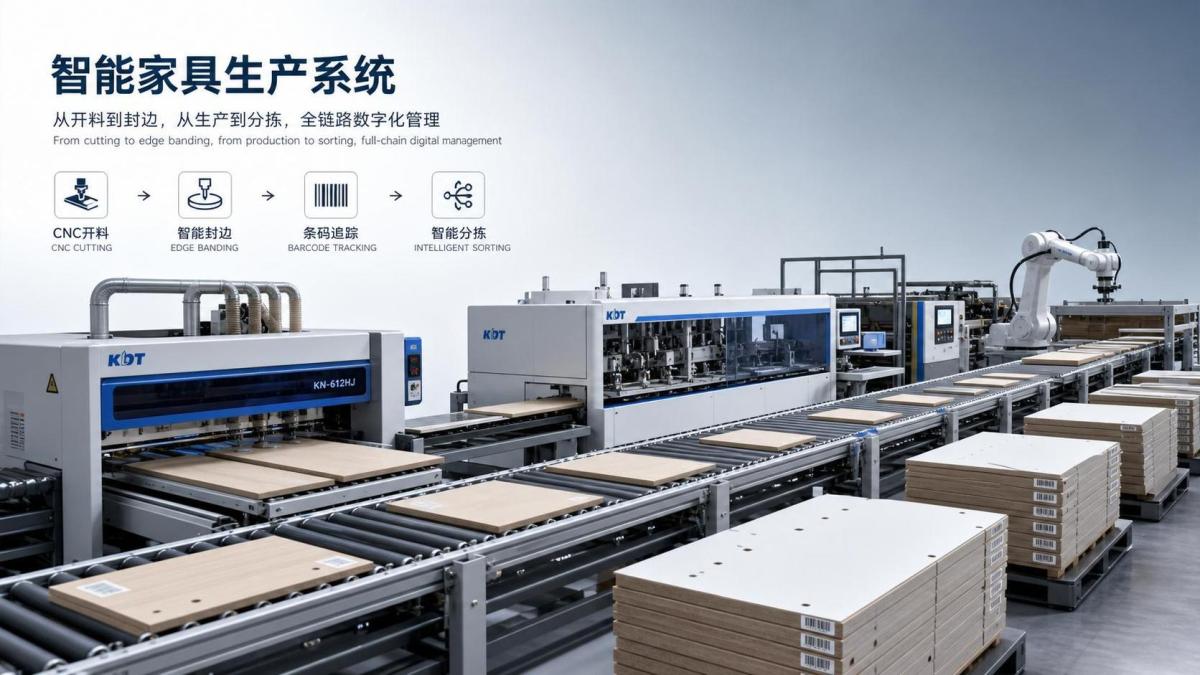
Custom cabinet production has moved away from isolated craftsmanship toward connected manufacturing. Design files, nesting software, CNC processing, edge banding, labeling, and assembly preparation now need to work as one chain.
That shift mirrors what PWFS tracks across paper and wood industries. Whether it is high-speed printing or CNC woodworking, productivity gains come from synchronized process control, not from single-machine performance alone.
For furniture production systems for custom cabinets, this means selection should start with workflow stability. A fast cutting center adds little value if identification, drilling logic, or edge sequencing still depends on manual recovery.
What a furniture production system really includes
A production system is the full operating structure behind output. It includes software, machines, material handling, process standards, and the way production data moves from order entry to packaged components.
In practical terms, furniture production systems for custom cabinets often combine several linked elements:
- front-end design and order decomposition
- nesting or beam-saw cutting strategy
- CNC routing, drilling, and grooving
- edge banding with EVA, PUR, or laser-ready options
- part labeling and traceability
- sorting, buffering, and kit preparation
- MES, ERP, or shop-floor reporting connections
This broader view matters because bottlenecks usually appear between steps. A project can lose margin through waiting time, remakes, mixed parts, or poor batch logic even when machine uptime looks acceptable.
Order size changes the right answer
The best furniture production systems for custom cabinets depend heavily on how many orders move through the plant and how different those orders are from one another.
Small-batch and high-mix production
When orders are highly customized and daily volumes are modest, flexibility usually matters more than line speed. Rapid setup, simple reprogramming, and strong labeling discipline become the main value drivers.
In this environment, nesting CNC routers often perform well. They can process varied panels with fewer changeover penalties and support design diversity without requiring long production runs.
Mid-volume growth stage
As volume rises, manual transfers start to cost more than expected. Material staging, panel identification, and edge-band queueing often become the real constraints.
At this point, semi-automated furniture production systems for custom cabinets often deliver the best balance. Automatic labeling, return conveyors, barcode tracking, and software-driven worklists can unlock more value than adding another standalone CNC.
Large order flow and repeatable throughput
Plants with sustained order density need flow efficiency. Beam saws, CNC drilling cells, intelligent buffering, and high-speed edge banders become more attractive when material streams are predictable.
The logic is similar to other industrial lines followed by PWFS. Once throughput reaches a certain scale, system synchronization and continuous handling matter more than isolated machine versatility.
Workflow complexity matters as much as volume
Two factories with the same order count can need very different systems. The deciding factor may be workflow complexity rather than unit volume.
Complexity usually comes from several sources:
- many panel materials and thicknesses
- frequent color and decor switching
- mixed cabinet standards across projects
- special drilling patterns and hidden hardware
- tight sequencing for room-by-room installation
- integration between design revisions and production release
Where complexity is high, furniture production systems for custom cabinets should prioritize data integrity. A reliable digital thread from design to machining prevents wrong-part production and reduces firefighting on the shop floor.
A practical comparison by production profile
A simple comparison helps frame the decision before deeper vendor evaluation begins.
This comparison is only a starting point. The final choice should still reflect labor availability, floor layout, quality targets, and future order mix.
Where many cabinet projects lose efficiency
Many teams focus first on spindle count, feed speed, or advertised output. Those numbers matter, but they rarely explain why lead times slip.
More often, performance drops in less visible places:
- release of incomplete order data
- repeated board handling between machines
- unbalanced edge banding capacity
- poor offcut management and nesting waste
- manual sorting before assembly or packing
- limited traceability during rework
That is why furniture production systems for custom cabinets should be evaluated as a flow architecture. The question is not only how fast parts are cut, but how reliably they reach the next correct step.
Signals of a mature production setup
The strongest systems share a few traits across different scales. They make variation manageable without sacrificing output discipline.
Digital continuity
Design data should move into machining instructions with minimal manual rewriting. This reduces version confusion and supports faster engineering change control.
Balanced processing capacity
Cutting, drilling, edge finishing, and sorting should be sized as a system. A premium CNC paired with weak downstream handling simply shifts the queue.
Material and part traceability
Barcode or QR-based tracking makes it easier to recover from defects, manage remakes, and maintain project sequence across mixed orders.
Expandable automation
The most resilient furniture production systems for custom cabinets allow staged upgrades. Conveyors, software modules, return handling, and MES links should be added without rebuilding the factory logic.
How to evaluate options before committing capital
Before comparing brands or layouts, it helps to map the current production reality in measurable terms.
- Define average and peak daily order counts.
- Measure SKU variation, board materials, and edge types.
- Identify where waiting time exceeds machining time.
- Track remake causes by data error, process error, and damage.
- Review whether future growth means more orders or more customization.
This approach creates a grounded basis for selecting furniture production systems for custom cabinets. It also aligns well with the PWFS view that advanced manufacturing value comes from intelligent coordination, not isolated equipment headlines.
The next useful step is to build a comparison matrix around workflow, order profile, and expansion path. Once those factors are clear, machine choices become easier to judge and much harder to regret.
Related News
Get weekly intelligence in your inbox.
No noise. No sponsored content. Pure intelligence.
