
Packaging Equipment Applications Overview: Which Machines Fit Food, Pharma, and E-commerce Lines?
Packaging equipment applications overview starts with line reality
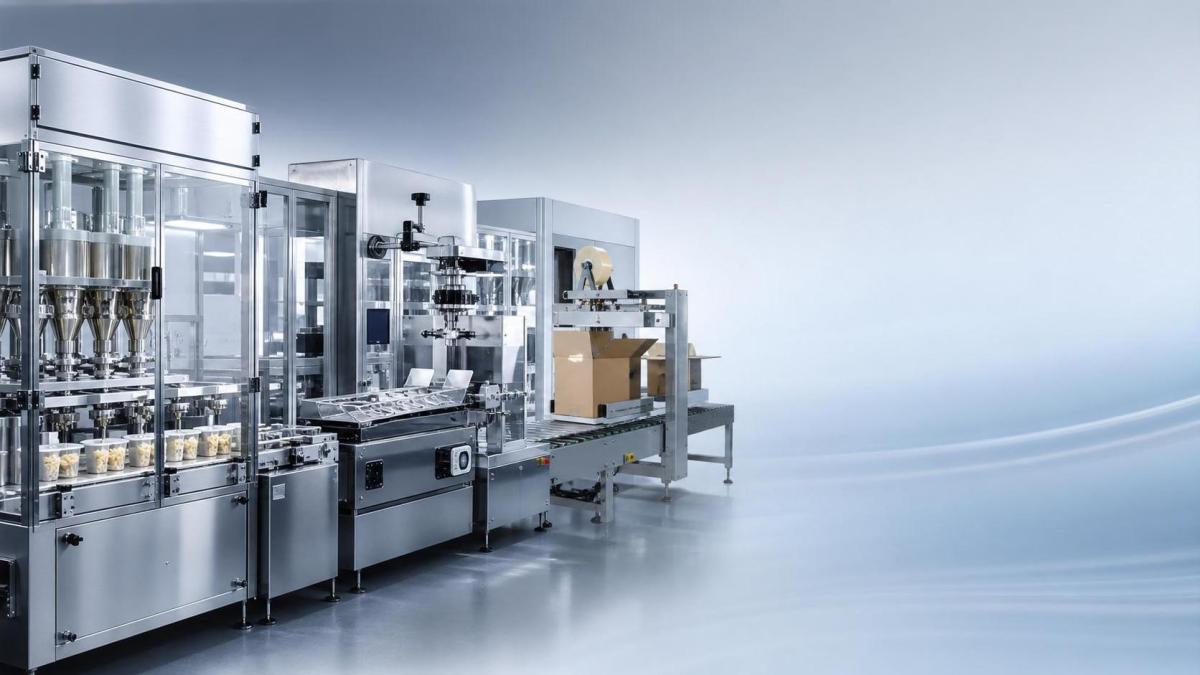
A useful packaging equipment applications overview is not built from machine names alone. It starts with what the line must protect, prove, and deliver every hour.
Food packs must stay clean and stable. Pharmaceutical packs must remain traceable and compliant. E-commerce packs must survive movement, compression, and rapid fulfillment changes.
That is why similar-looking lines often need very different machine combinations. The real decision point is application fit, not catalog breadth.
Within PWFS coverage, this difference is especially clear. Primary packaging equipment matters, but so do corrugated board lines, offset presses, die-cutters, and folder-gluers that shape the outer pack.
In practice, the strongest packaging equipment applications overview connects product sensitivity, packaging format, graphic demands, shipping pressure, and automation depth in one judgment framework.
Why food, pharma, and e-commerce do not ask the same thing
The first difference is risk exposure. Food lines are judged by hygiene, shelf life, and sealing consistency. Pharma lines are judged by validation, serialization, and error prevention.
E-commerce operations usually place the biggest pressure on throughput flexibility. Order profiles shift fast, carton sizes vary, and secondary packaging often decides whether damage rates stay acceptable.
A second difference is where precision matters most. In food, the fill and seal zone often drives performance. In pharma, counting, cartoning, inspection, and coding become critical control points.
For e-commerce, the bottleneck often sits further downstream. Corrugated conversion, box forming, labeling, and case closing may affect output more than the product insertion step itself.
That is also why PWFS tracks both paper conversion and printing systems. Outer-pack strength, print registration, and folding accuracy directly affect application success in transport-heavy channels.
Food lines usually reward hygienic simplicity over excessive complexity
In food packaging equipment applications overview work, one repeated pattern appears. The best-fit machine is often the one that reduces contamination risk and cleaning time without sacrificing seal reliability.
For liquids, sauces, powders, and snacks, common machine groups include fillers, form-fill-seal systems, cappers, tray sealers, labelers, and checkweighing units.
Yet equipment choice changes with product behavior. Free-flowing powders tolerate different dosing hardware than sticky pastes. Fragile bakery products need gentler infeed and discharge handling than dry grains.
A high-speed line looks attractive on paper, but washdown design, allergen changeover, film compatibility, and seal inspection often decide whether the system performs well across shifts.
Secondary packaging should not be treated as an afterthought. Cartoners and case packers must match primary pack rhythm, while corrugated quality must support stacking, cold-chain moisture, or retail shelf presentation.
Where branded cartons matter, offset printing and die-cutting accuracy become part of the food line equation. Food-safe ink migration limits, crease quality, and gluing stability influence both compliance and appearance.
Pharmaceutical applications put control points ahead of headline speed
A packaging equipment applications overview for pharmaceuticals has a different center of gravity. The line must show repeatability, reject errors early, and keep every batch identifiable.
Blister packaging, bottle filling, sachet packing, cartoning, leaflet insertion, vision inspection, and serialization modules often work as one controlled chain.
The important question is rarely just machine speed. More often, it is whether the system supports validated settings, stable code reading, line clearance discipline, and secure handling of small format changes.
Carton conversion quality matters here as well. High-speed die-cutters and folder-gluers must deliver consistent geometry, because poor carton squareness or weak glue lines can disrupt automated cartoning and downstream inspection.
This is where PWFS-style intelligence becomes practical. Compliance standards, print precision, and motion stability are not separate topics. They meet inside the pharmaceutical packaging line every day.
E-commerce lines are shaped by corrugated flow and shipping abuse
In e-commerce, packaging equipment applications overview decisions usually expand beyond the packing station. The shipping box itself becomes a performance component, not simple outer wrapping.
Demand swings, mixed order sizes, and tight dispatch windows favor box forming machines, automatic case erectors, void-fill integration, print-and-apply labeling, and adaptive sealing systems.
When box volumes are high, corrugated board lines and converting equipment strongly affect fulfillment economics. Board compression strength, flute selection, and crease accuracy influence damage rates and parcel dimensional efficiency.
If branding matters, offset printing adds value, but transport resistance still comes first. A visually strong shipper that fails at corners or split seams adds cost faster than it adds recognition.
More advanced sites also connect order data with packaging decisions. That can mean right-size box selection, dynamic label generation, and faster transitions between SKUs without long manual resets.
Different packaging environments change the machine mix
A clear packaging equipment applications overview should compare what each environment actually prioritizes. The table below is more useful than generic claims about efficiency.
The same machine category can still behave differently across these environments. That is why application review should include material flow, operator intervention, and packaging waste patterns.
Common misreads before equipment selection
One common mistake is copying a line design from a similar product. Similar pack formats can hide very different sealing windows, coding needs, or warehouse stress conditions.
Another is evaluating primary packaging without checking secondary and tertiary packaging compatibility. A stable pouch or blister still fails the application if the carton jams or the shipper crushes.
Cost is also misread when only purchase price is compared. Change parts, tool wear, cleaning downtime, glue consumption, board waste, and rejected print runs often reshape total operating cost.
- Do not rate speed before checking usable speed under real changeover frequency.
- Do not separate print quality from carton conversion quality in branded folding cartons.
- Do not assume all corrugated boxes suit automated packing and courier compression loads.
- Do not ignore digital integration when order variability is high.
A practical way to build application fit
A grounded packaging equipment applications overview usually ends with structured comparison, not a universal answer. The right next move is to define the line around failure points first.
Map product sensitivity, pack format range, coding obligations, corrugated strength needs, and expected SKU variation. Then check where the line loses time, accuracy, or material yield.
For food, confirm cleaning routines, sealing validation, and material compatibility. For pharma, verify inspection logic, serialization architecture, and carton precision. For e-commerce, test box performance under actual shipping profiles.
PWFS context is useful here because packaging decisions rarely stop at one machine. Corrugated formation, print registration, die-cutting balance, and high-speed gluing all shape downstream results.
When those links are reviewed together, equipment selection becomes clearer. The better result is not simply more automation. It is a line whose machines match the application conditions they must actually survive.
Related News
Get weekly intelligence in your inbox.
No noise. No sponsored content. Pure intelligence.
