
How to Choose Ecommerce Packaging Machinery for High-Volume Fulfillment Centers
Choosing ecommerce packaging machinery for fulfillment centers is ultimately a capacity and fit decision, not a simple speed comparison. Procurement teams need equipment that matches order volume, carton mix, labor strategy, available floor space, and downstream shipping requirements. The right system reduces manual touchpoints, supports peak throughput, and protects margins over several years, while the wrong one locks the operation into bottlenecks, rework, and rising maintenance costs.
For high-volume environments, the best buying decisions usually come from evaluating packaging machinery as part of the entire fulfillment flow. That means looking beyond headline cycle rates and asking how each machine handles SKU variability, right-size packaging needs, integration with WMS or conveyor systems, consumables, changeover time, service support, and total cost of ownership. This guide focuses on the practical factors procurement teams should use to compare options with confidence.
What Procurement Teams Are Really Trying to Solve
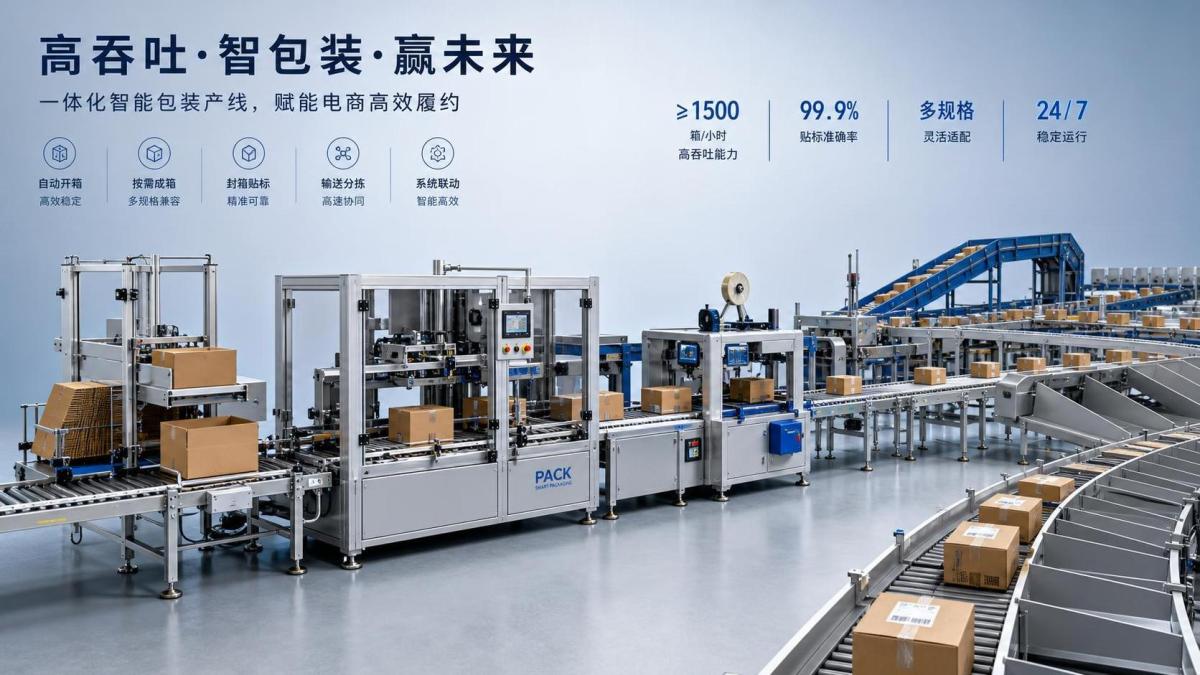
When buyers search for ecommerce packaging machinery for fulfillment centers, they are rarely looking for generic automation theory. Their real goal is to identify which equipment can support sustained daily throughput without creating new constraints elsewhere in the line. They want to know what type of machinery fits their fulfillment profile and how to avoid expensive purchasing mistakes.
In most cases, the core concerns are operational. Can the system keep up with order spikes? Will it handle multiple box sizes without excessive manual intervention? How much labor can be reduced in a measurable way? What is the realistic payback period? These questions matter far more than broad claims about innovation or smart manufacturing.
That is why a useful evaluation framework starts with business conditions inside the warehouse. High-volume fulfillment centers typically process a large number of orders under tight cut-off windows, with pressure on shipping accuracy, parcel presentation, and carrier cost control. Packaging machinery must support those realities every shift, not only under ideal test conditions.
Start With Your Order and Carton Profile, Not the Machine Brochure
The first filter should be your actual packaging demand. Procurement teams should review average and peak orders per hour, SKU dimensions, item fragility, returns volume, and the percentage of single-line versus multi-line orders. Machinery selection becomes clearer once the operation’s packaging pattern is quantified.
A fulfillment center shipping mostly standard cartons with limited size variation may benefit from high-speed automatic case erecting, sealing, and labeling lines. By contrast, operations with broad SKU size variability often gain more from right-size packaging systems, automated box-on-demand solutions, or flexible auto-bagging platforms.
Carton style also matters. Regular slotted containers, mailer boxes, padded envelopes, and custom-fit corrugated packs require different forming and sealing methods. A machine that performs well for one packaging format may create waste, slowdowns, or quality issues when pushed into another format it was not designed to handle.
For procurement, this means the best question is not “What is the fastest machine?” but “What percentage of our order profile can this system process without exception handling?” That number has direct implications for labor planning, equipment utilization, and expected return on investment.
Which Types of Ecommerce Packaging Machinery Matter Most
Most high-volume fulfillment operations do not buy a single machine. They invest in a packaging workflow made up of several linked functions. These commonly include carton erectors, box-on-demand systems, auto-baggers, void fill equipment, case sealers, print-and-apply labelers, weigh-check stations, and sortation interfaces.
Carton erectors are useful when order volume is high and packaging formats are standardized. They reduce manual box forming labor and create a predictable upstream feed for packing stations or fully automated lines. Their value depends on reliable blank feeding, quick format changeovers, and consistent output at production speed.
Box-on-demand equipment is increasingly attractive for ecommerce because it reduces dimensional weight charges and excess void fill. Instead of relying on a fixed inventory of pre-made cartons, these systems create right-sized corrugated boxes based on product dimensions. For centers with broad SKU variation, this can improve shipping economics and customer presentation at the same time.
Auto-bagging systems fit operations shipping apparel, soft goods, accessories, and other non-fragile items. They often deliver high throughput in a smaller footprint than carton-based equipment. However, procurement teams must assess material cost, sustainability requirements, damage risk, and customer expectations before committing to a bag-based strategy.
Sealing, labeling, and verification equipment may look secondary, but these are frequent sources of hidden bottlenecks. A fast packaging machine can lose much of its value if label application, weighing, or scan verification cannot keep pace. High-volume lines should be evaluated as a system, not as isolated machine centers.
How to Compare Throughput Claims Without Getting Misled
One of the most common procurement mistakes is treating vendor-rated speed as real operating throughput. Published cycle rates are often based on optimal product conditions, limited carton variability, and ideal feeding consistency. Those figures are useful, but they are not enough for investment decisions.
Buyers should ask for effective throughput under their own operating assumptions. That includes shift length, SKU diversity, operator intervention, jam frequency, preventive maintenance windows, and planned downtime. A machine rated at a very high speed may deliver lower actual output than a slower but more stable alternative.
It is also important to understand line balance. If upstream picking delivers work inconsistently, or downstream sortation has limited accumulation, the packaging machine’s top speed may never be realized. In that case, paying a premium for maximum speed produces little benefit compared with investing in flexibility or reliability.
Procurement teams should request performance data tied to similar applications, not just laboratory demonstrations. Site visits, reference checks, and live trials with representative cartons provide far better evidence than brochure metrics. For capital equipment, operational credibility matters more than marketing language.
Key Evaluation Criteria Beyond Speed
For most buyers, the strongest purchasing decision comes from a weighted comparison across several practical criteria. Flexibility is usually near the top of the list. A machine should accommodate current packaging requirements, but it should also support forecast growth, seasonal volume swings, and future carton changes.
Changeover time is another critical factor. In high-volume ecommerce, even short interruptions can affect cut-off performance. Equipment that requires extensive manual adjustment between box sizes may look acceptable on paper but become inefficient under daily mixed-order conditions.
Footprint and layout compatibility also deserve close attention. Many fulfillment centers operate with limited expansion room, complex conveyor paths, and strict safety clearances. A technically capable machine can still become a poor investment if it introduces awkward material flow or forces expensive facility redesign.
Consumables should be reviewed with the same rigor as the machinery itself. Corrugated blanks, film, tape, labels, glue, and void fill all affect recurring operating cost. A machine with lower capital cost but higher ongoing consumable expense may become the more expensive option within a short period.
Maintenance access, spare parts availability, and local service support are equally important. Procurement teams should ask how quickly critical parts can be delivered, what remote diagnostics are available, and whether technicians are accessible during peak seasons. Equipment uptime has direct commercial value in fulfillment operations.
Integration Risks Often Matter More Than Machine Specs
Packaging machinery for fulfillment centers rarely operates alone. It must integrate with warehouse management systems, order data feeds, barcode infrastructure, conveyors, scanners, dimensioning tools, and carrier compliance workflows. Integration failures can delay commissioning far more than mechanical installation itself.
That is why procurement teams should involve operations, IT, engineering, and maintenance early in the buying process. The machine may physically perform well, but if data exchange is unreliable or print-and-apply logic does not match order routing rules, the system will underperform in live production.
For right-size packaging or automated carton selection, data accuracy becomes even more important. The machinery depends on correct product dimensions, order grouping rules, and packaging logic. If upstream master data is inconsistent, the packaging line may generate waste or increase exception handling instead of reducing it.
Procurement should request a clear integration scope from suppliers. That should include interface responsibility, communication protocols, testing stages, acceptance criteria, and post-startup support. Many difficult launches come from blurred ownership between machine vendors, software providers, and internal teams.
How to Build the ROI Case for Management
Senior decision-makers usually approve packaging automation based on business outcomes, not equipment features. Procurement therefore needs a model that connects machinery investment to measurable gains. The most common drivers are labor reduction, higher throughput, lower parcel shipping cost, improved packing consistency, and reduced damage claims.
Right-size corrugated systems may generate value through dimensional weight savings, lower corrugated consumption, and less void fill. Automatic carton erecting and sealing lines often produce value through labor redeployment and more stable output per shift. Auto-bagging may improve both speed and floor-space efficiency in the right application.
However, good ROI modeling also includes less obvious costs. These include installation, integration, line commissioning, operator training, spare parts, maintenance contracts, software licenses, and facility modifications. Ignoring these items can make the payback estimate look attractive at first and disappointing later.
Procurement teams should present both best-case and realistic-case scenarios. Management will usually trust a grounded business case more than an aggressive one. It is better to show credible assumptions around utilization, downtime, and growth than to rely on optimistic vendor projections.
Questions Buyers Should Ask Before Issuing a Final Recommendation
Before final selection, procurement should pressure-test each shortlisted supplier with a focused set of questions. What percentage of our current order mix can the system process automatically? What is the proven throughput in a comparable fulfillment center? What happens during size changes or damaged blank feeding?
Buyers should also ask about mean time between failure, average service response time, training requirements, and the expected ramp-up curve after installation. A machine that appears simple in a demo may still require significant operator discipline to perform consistently in a demanding warehouse environment.
Another useful question concerns future adaptability. Can the equipment support new packaging formats, sustainability targets, or different shipping profiles without major reinvestment? Procurement teams responsible for long asset life should give meaningful weight to this point, especially in fast-changing ecommerce networks.
Finally, reference validation is essential. Speaking with operators, maintenance managers, and engineering teams at existing customer sites often reveals more than commercial presentations. These conversations help buyers understand what the machine is like after the first few months, when daily reality replaces launch-stage enthusiasm.
Conclusion: Choose for Operational Fit, Scalable Economics, and System Reliability
The right ecommerce packaging machinery for fulfillment centers is the equipment that matches your order profile, integrates cleanly with warehouse systems, and delivers stable output under real production conditions. For procurement teams, the decision should be based less on maximum advertised speed and more on usable throughput, packaging flexibility, serviceability, and total landed value over time.
In practice, the strongest investments come from treating packaging automation as a fulfillment system decision rather than a standalone machine purchase. When buyers align machinery choice with carton mix, labor goals, layout constraints, and shipping economics, they improve both immediate operating performance and long-term scalability. That is the standard worth using when evaluating any high-volume packaging line.
Related News
Get weekly intelligence in your inbox.
No noise. No sponsored content. Pure intelligence.
