
How to Select a Laser Edge Banding Machine for PVC Edges and Panel Volumes
How to Select a Laser Edge Banding Machine for PVC Edges and Panel Volumes
Selecting a laser edge banding machine for PVC requires more than comparing purchase prices. Procurement teams must match laser technology, PVC edge specifications, panel volumes, automation requirements, and lifetime costs.
The central buying decision is straightforward: choose a machine whose laser system, feed speed, processing modules, and uptime capability match the factory’s real production mix.
For panel furniture producers, an underspecified machine creates bottlenecks and inconsistent seams. An oversized line consumes capital, floor space, energy, and maintenance resources without proportional returns.
This guide helps procurement teams evaluate a laser edge banding machine for PVC by focusing on capacity, compatibility, finish quality, ownership cost, supplier support, and measurable ROI.
Start With Production Reality, Not the Machine Brochure
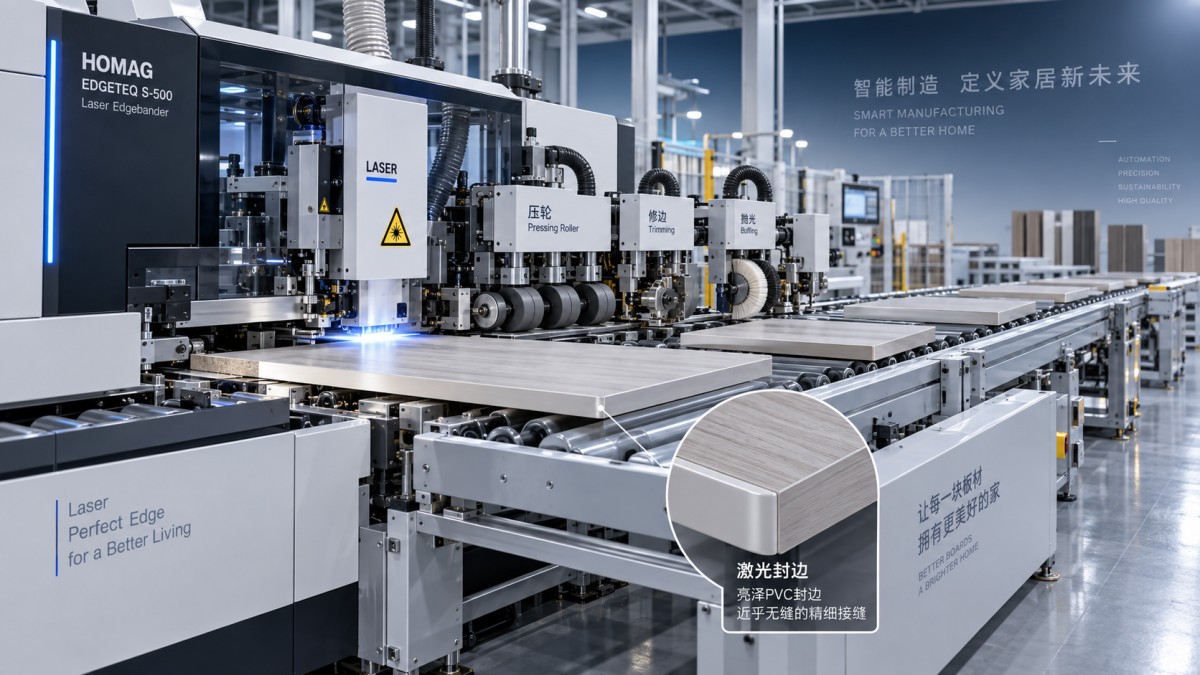
Buyers should begin with actual panel data: daily throughput, shift pattern, average panel size, edge lengths processed, PVC thicknesses, and the percentage of customized orders.
Panel volume should be measured in total linear meters of edged material, not only in panels per shift. Small cabinets and large wardrobes create very different workloads.
A factory processing 400 large panels may edge more linear meters than a facility processing 900 narrow drawer components. This distinction affects feed-speed and automation requirements.
Review historical production records for at least three months. Include peak periods, seasonal demand, rework levels, product changes, and expected growth from new customer programs.
Procurement teams should also identify the current constraint. It may be edge banding capacity, manual loading, glue-change downtime, cleaning, panel return handling, or quality inspection.
A laser edge banding machine for PVC should remove the genuine constraint rather than merely replace an older machine with a more sophisticated-looking alternative.
Separate standard volume from peak volume. A machine designed only around average output can become the limiting operation during project deadlines, promotions, or dealer replenishment cycles.
However, specifying maximum theoretical capacity without considering utilization can damage ROI. Reliable throughput at practical operating conditions matters more than a headline speed figure.
Confirm That Laser Edging Fits Your PVC Materials
Laser edging does not treat every PVC edge band identically. The machine, laser source, and edge-band functional layer must work together to create a durable seam.
Traditional hot-melt edge banding applies adhesive between panel and edge. Laser technology activates a polymer functional layer pre-applied to the edge-band backer.
When properly matched, the activated layer fuses with the panel edge, creating a nearly invisible joint. This is often called a zero-joint or seamless appearance.
Ask edge-band suppliers whether their PVC products are specifically formulated for laser activation. Standard EVA-compatible PVC rolls may not provide consistent laser bonding performance.
Request documented information on functional-layer chemistry, activation range, recommended laser source, storage conditions, color range, thickness availability, and expected bonding strength.
PVC edge thickness is a critical procurement variable. Common furniture applications may use 0.4 mm, 0.8 mm, 1 mm, 2 mm, or thicker edge bands.
The selected machine must process the planned thickness range without frequent manual reconfiguration. Confirm capabilities for thin cabinet edges, durable worktops, and shaped furniture components.
Color and surface finish also matter. Dark, light, textured, high-gloss, matte, woodgrain, and metallic PVC materials can respond differently to thermal activation conditions.
Before final selection, run representative samples using the exact PVC brands, colors, panel substrates, and thicknesses used in production. Generic demonstration samples are insufficient.
Evaluate seam visibility under direct light, bond strength, corner integrity, thermal discoloration, trimming quality, and resistance to moisture, cleaning chemicals, and daily abrasion.
Match Laser Source and Process Control to Quality Expectations
Laser edge banding systems commonly use diode, fiber, or other engineered laser configurations. Buyers should focus on proven application performance instead of technology labels alone.
The supplier should explain how its laser source delivers stable energy to the functional layer across changing edge-band colors, widths, feed rates, and environmental conditions.
Energy control is essential because insufficient activation can weaken the bond. Excessive energy can damage the PVC surface, discolor edges, or affect panel-facing quality.
Ask whether the system automatically adjusts laser power according to edge thickness, material color, production speed, and stored job parameters. Manual tuning raises operator dependency.
Closed-loop process monitoring is especially valuable for high-volume producers. Sensors, temperature data, fault alarms, and recipe management help maintain repeatable output across shifts.
For customized furniture operations, rapid recipe changes matter as much as maximum speed. Operators should be able to retrieve approved settings without lengthy trial-and-error adjustments.
Inspect the physical design around the laser application zone. Effective extraction, shielding, cleaning access, and safety interlocks protect both process stability and personnel.
Clarify whether laser components require scheduled calibration, specialized service tools, cooling systems, replacement optics, or supplier-only maintenance. These details significantly affect downtime risk.
Choose Feed Speed Based on Finished Output, Not Empty-Line Speed
Machine suppliers often highlight maximum feed speed, but this figure has limited value unless it includes real processing conditions and the required finishing modules.
A fast transport chain does not guarantee fast finished panels. Pre-milling, laser activation, pressure, end trimming, rough trimming, fine trimming, scraping, and buffing all matter.
Ask for tested output figures using your own panel sizes and PVC specifications. Include short panels, narrow parts, mixed batches, and common product-change conditions.
High feed speeds can be economically justified for stable kitchen, office, or flat-pack furniture programs. They may offer little benefit in highly variable custom-order workshops.
Compare rated speed with sustainable speed. Sustainable output includes loading, unloading, setup, material replenishment, inspection, minor stops, cleaning, and operator interventions.
For medium-volume production, a machine running reliably at 18 to 25 meters per minute may outperform a faster system that suffers frequent setup delays.
For continuous industrial production, consider whether the line can maintain quality at 30 meters per minute or above with your thickest PVC and most demanding finish.
Procurement specifications should define acceptable output as qualified panels per shift. This is more useful than quoting meters per minute without yield data.
Set a target for first-pass yield. A higher-speed machine that creates more visible seams, chipped corners, or trimming defects can create expensive downstream rework.
Specify the Required Modules for Your Panel Portfolio
A complete laser edge banding machine is a processing platform, not simply a laser unit. Module selection determines whether panels leave the machine ready for assembly.
Pre-milling is usually essential when panel edges show saw marks, chipping, coating residue, or minor dimensional inconsistency. A clean substrate edge supports stronger laser bonding.
Confirm cutter type, spindle power, dust extraction requirements, tool-change procedure, and adjustment range. Weak pre-milling can undermine the quality benefits of laser edging.
Pressure rollers must apply the activated PVC edge uniformly while the functional layer remains processable. Check roller configuration, pressure control, and access for cleaning or replacement.
End trimming and profile trimming should match the product design. Straight cabinet panels, soft-formed edges, thick worktops, and high-gloss fronts can require different tool configurations.
Corner rounding improves appearance and user comfort on many furniture products. It can be valuable for premium retail furniture but may be unnecessary for basic utility panels.
Scraping and buffing stations can improve the final finish, particularly on glossy PVC edges. Their value should be judged through samples, not assumed from a module list.
For a mixed product environment, automatic adjustment of modules reduces changeover time. Determine which settings are electronically controlled and which still need manual intervention.
Also assess panel return systems, automatic loading, barcode scanning, label handling, and unloading conveyors. These options affect labor efficiency and line balance more than machine speed alone.
Calculate Total Cost of Ownership and ROI Carefully
The purchase price is only one component of the investment. A procurement comparison should include installation, utilities, extraction, training, spare parts, tooling, and software integration.
Laser edging can reduce adhesive consumption because the edge band contains its own functional layer. Yet laser-ready PVC materials may cost more than conventional alternatives.
Compare total material cost per linear meter, including edge-band purchase price, adhesive, cleaning agents, waste, rejected parts, and inventory complexity across edge-band types.
Labor savings can be meaningful when automated adjustment, material handling, and recipe recall reduce manual tasks. Savings should be calculated from realistic staffing patterns and wage costs.
Quality-related gains are equally important. A seamless edge can improve product positioning, reduce complaints, increase moisture resistance, and support premium furniture pricing in competitive markets.
Estimate the value of lower rework and warranty exposure. Edge separation, adhesive lines, discoloration, and poor corner finishing can create costly problems after installation.
Energy consumption deserves direct comparison. Ask suppliers for measured electrical load during startup, idle operation, normal PVC processing, and maximum-capacity production, including auxiliary equipment.
Develop a five-year ownership model with conservative assumptions. Include annual maintenance, expected wear parts, laser service agreements, financing costs, residual value, and planned utilization.
Payback is strongest when laser technology supports both higher throughput and higher-value product quality. It is weaker when the factory mainly produces low-margin, basic panels.
Evaluate Reliability, Service Coverage, and Integration Risk
For procurement teams, machine availability is often more valuable than a small difference in quoted speed. A stopped edge bander can halt drilling, assembly, and delivery schedules.
Ask suppliers for reference installations that process PVC at similar volumes. Speak with users about uptime, operator learning curves, service response, spare-part availability, and real quality results.
Request a clear preventive maintenance schedule. It should identify daily cleaning, weekly checks, periodic lubrication, tool replacement, laser inspections, and the required skill level.
Determine where critical spare parts are stocked. International shipments for sensors, electronics, rollers, trimming motors, or laser assemblies can create long and costly outages.
Remote diagnostics can shorten troubleshooting time, but it should not replace qualified local service. Confirm response commitments, escalation procedures, technician coverage, and service contract exclusions.
Integration capability matters in connected factories. Check compatibility with barcode systems, production scheduling, MES platforms, panel-identification workflows, and factory data collection standards.
Machine safety must also be examined during supplier evaluation. Confirm laser enclosure design, interlocks, emergency stops, extraction specifications, certifications, and operator training requirements.
Acceptance testing should be written into the purchase contract. Define material types, throughput, seam quality, dimensional tolerances, rejection criteria, installation responsibilities, and final sign-off conditions.
Use a Structured Procurement Scorecard Before Awarding the Order
A weighted scorecard prevents purchasing teams from selecting only on price or brand familiarity. It makes tradeoffs visible across operations, finance, engineering, quality, and maintenance.
Assign meaningful weight to PVC compatibility, qualified throughput, seam appearance, automation level, changeover time, reliability evidence, supplier service, ownership cost, and delivery schedule.
Quality teams should score physical samples independently. Production teams should evaluate usability, setup time, cleaning access, and maintenance teams should assess serviceability and spare-part requirements.
Finance should validate all savings assumptions, especially reduced labor, lower waste, premium product pricing, and expected utilization. Overstated utilization is a common cause of weak payback.
Use a factory acceptance test before shipment when possible. It provides the best opportunity to verify the laser edge banding machine for PVC under controlled conditions.
Then conduct a site acceptance test after installation using local materials, factory utilities, actual operators, and production-like panel sequences. Document every unresolved issue before payment release.
Do not overlook training. Operators need more than startup instructions; they need process understanding, fault recognition, safe adjustment practices, quality inspection criteria, and basic maintenance discipline.
A phased ramp-up plan reduces risk. Begin with approved PVC materials and stable product families, then add new colors, thicknesses, complex profiles, and automation interfaces.
Conclusion: Select Capacity, Compatibility, and Support Together
The right laser edge banding machine is not necessarily the fastest or most heavily equipped model. It is the system that reliably produces approved PVC-edged panels at required volume.
Procurement teams should first define linear-meter demand, product variability, edge-band specifications, finish expectations, and required staffing levels. Those inputs create a defensible technical requirement.
Next, validate laser-ready PVC compatibility through representative trials. Evaluate seam quality, bond performance, color consistency, and trimming results before accepting supplier claims or standard demonstrations.
Finally, compare total cost of ownership, qualified output, service strength, integration capability, and contractual acceptance criteria. This approach turns a capital purchase into an operational investment.
For furniture manufacturers pursuing seamless finishes, stronger panel protection, and scalable automation, a properly specified laser edge banding machine for PVC can become a durable competitive asset.
Related News
Get weekly intelligence in your inbox.
No noise. No sponsored content. Pure intelligence.
