
Tobacco Carton Machinery Price Guide: What Drives Cost and What Buyers Should Compare
Why does tobacco carton machinery price vary so much between similar-looking lines?
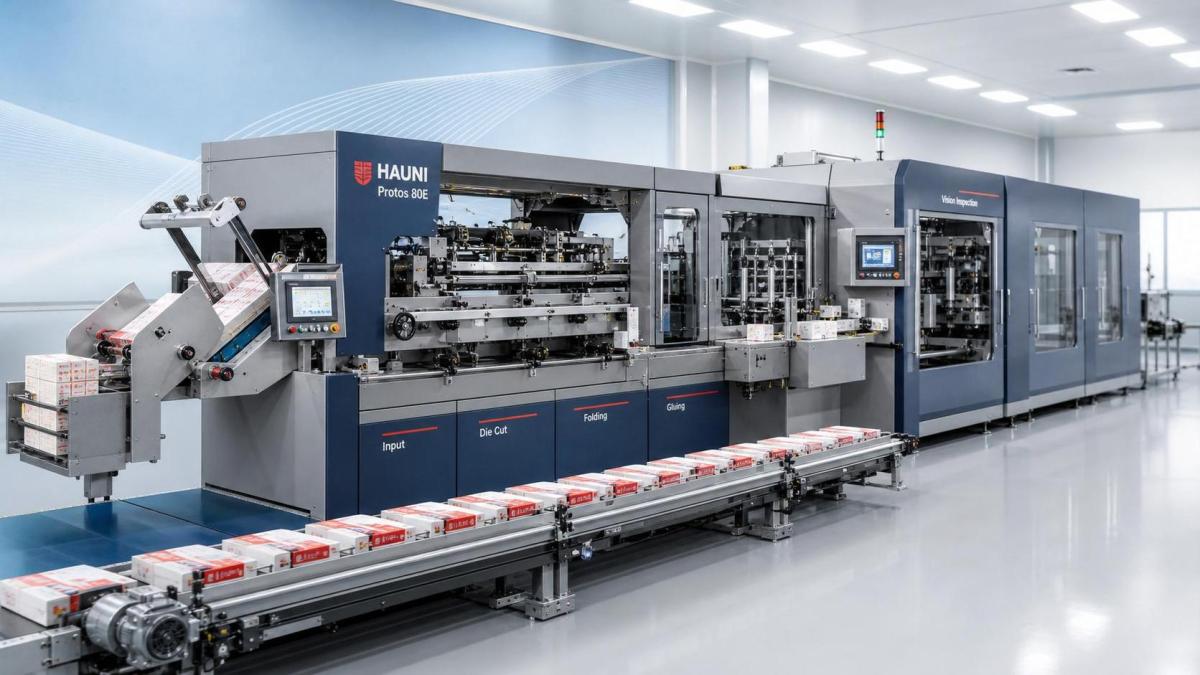
Understanding tobacco carton machinery price starts with a simple reality: two machines can look similar, yet carry very different production economics.
The quoted number usually reflects much more than frame size, motor power, or listed speed.
In tobacco carton converting, cost is shaped by precision, compliance, uptime stability, and how well the machine handles demanding visual standards.
That matters because tobacco cartons sit inside a packaging chain where printing accuracy, die-cutting consistency, and folding quality directly affect brand presentation.
PWFS follows this wider chain closely.
Its coverage of offset presses, die-cutters, folder-gluers, and automation systems helps explain why machinery pricing cannot be judged by base configuration alone.
A lower entry quote may exclude inspection cameras, servo correction, dust extraction, compliance modules, or MES connectivity.
In actual use, those omissions often reappear as waste, stoppages, slower changeovers, and post-installation upgrades.
So when people search tobacco carton machinery price, the real question is not only “How much does it cost?”
More often, it is “What exactly am I paying for, and what risk sits behind the quote?”
Which cost drivers matter most before you compare suppliers?
The strongest pricing drivers usually sit in six areas, and they affect both purchase cost and operating cost.
- Automation level: auto feeder, servo controls, recipe storage, job memory, and auto correction raise capital cost but reduce labor dependence.
- Running speed under real conditions: quoted peak speed is less useful than stable output on tobacco-grade cartonboard.
- Precision tolerance: tighter folding, registration, and glue placement usually require stronger mechanics and control systems.
- Material range: coated board, laminated stock, embossed surfaces, and specialty finishes can demand upgraded feeding and handling.
- Compliance and traceability: documentation, safety systems, inspection devices, and export standards all add cost.
- Lifecycle support: spare parts access, remote diagnostics, installation depth, and training quality influence long-term value.
A practical tobacco carton machinery price comparison should separate base machine cost from required options.
That includes pre-feeding, stripping, blanking, vision inspection, compression section upgrades, and waste removal systems.
Machines connected to higher-end offset printing and carton finishing workflows also tend to cost more.
The reason is straightforward.
Once micron-level print quality is achieved upstream, downstream converting must protect it without scuffing, misalignment, or dimensional drift.
A quick comparison framework
Before discussing offers, it helps to align each supplier against the same commercial and technical checkpoints.
Is a lower tobacco carton machinery price always a better deal?
Usually not.
A lower tobacco carton machinery price can make sense for short runs, simple carton structures, or less automated plants.
But it becomes risky when output targets are tight and brand finish quality is non-negotiable.
One common mistake is comparing only machine acquisition cost while ignoring line balance.
If the folder-gluer or die-cutter cannot match upstream printing quality, the whole production flow slows down.
Another mistake is trusting nameplate speed without checking actual uptime.
In real factories, profitable output depends on changeovers, maintenance intervals, board flatness, and operator consistency.
This is where broader packaging intelligence becomes useful.
PWFS often frames equipment value across the full paper converting chain, not as isolated machine islands.
That perspective is important because bottlenecks rarely stay in one station for long.
A “cheaper” line may become expensive once downtime, spoilage, and delayed delivery are counted.
What should you compare beyond the quote sheet?
This is where many tobacco carton machinery price evaluations become clearer.
The quote sheet gives numbers, but the decision usually depends on evidence.
A stronger review process includes the following checks.
- Sample testing on actual board grades, coating types, and carton structures.
- Factory acceptance criteria with measurable output, defect rate, and setup benchmarks.
- Electrical and software architecture review, especially for future MES or ERP integration.
- Wear part list with replacement frequency and annual cost estimate.
- Operator training scope, including troubleshooting and preventive maintenance routines.
- Installation boundary list covering air, power, floor loading, extraction, and safety guarding.
Need-to-know detail often hides in these areas, not in the headline tobacco carton machinery price.
For example, a machine with fast order memory and servo repositioning may cut setup losses sharply in mixed-batch production.
That premium may be justified even when annual volume is moderate.
By contrast, if carton formats are stable and product variation is low, a simpler configuration may deliver better return.
How do compliance, quality demands, and digital integration affect cost?
They affect cost more than many first-time comparisons expect.
Tobacco packaging often requires consistent geometry, print protection, pack integrity, and traceable quality records.
If a supplier includes stronger inspection, documentation, and data connectivity, the tobacco carton machinery price will naturally rise.
Still, the added cost can be reasonable when viewed against rejected batches or audit exposure.
PWFS regularly highlights this link between mechanical precision and digital control.
That same logic appears across high-precision offset printing, automated die-cutting, and connected finishing lines.
In practical terms, buyers should confirm whether the machine supports:
- Production data capture by job and shift.
- Defect logging and alarm history.
- Remote diagnostics and software updates.
- Recipe management for recurring carton styles.
- Interface readiness for broader smart factory systems.
Those functions may look secondary during quotation review.
Later, they often become central to output discipline and cost control.
What is the most reliable way to judge total value before final selection?
A useful approach is to score total value instead of chasing the lowest tobacco carton machinery price.
That score should combine technical fit, operating cost, risk level, and implementation readiness.
More common high-value indicators include stable output, short ramp-up time, manageable maintenance, and dependable local support.
It also helps to build a simple pre-award checklist.
- Define carton structures, board specs, target speed, and acceptance quality before collecting final offers.
- Request net output evidence on comparable jobs, not only brochure ratings.
- Separate one-time capital expense from annual consumables, maintenance, and downtime risk.
- Check whether future digital integration will require extra hardware or licenses.
- Review service commitments in writing, including parts availability and escalation path.
In the end, tobacco carton machinery price is best understood as a packaged decision, not a single figure.
The right comparison connects machine capability with print quality expectations, compliance burden, and long-term production discipline.
A careful review of speed, automation, precision, material fit, and support terms usually reveals which quote is genuinely competitive.
The next step is straightforward: map your required carton range, define measurable acceptance targets, and compare each offer against total operating reality.
Related News
Get weekly intelligence in your inbox.
No noise. No sponsored content. Pure intelligence.
