
High-Speed Printing Presses Cost Breakdown: What Drives Price per Hour and Total Ownership
What does high-speed printing presses cost really include?
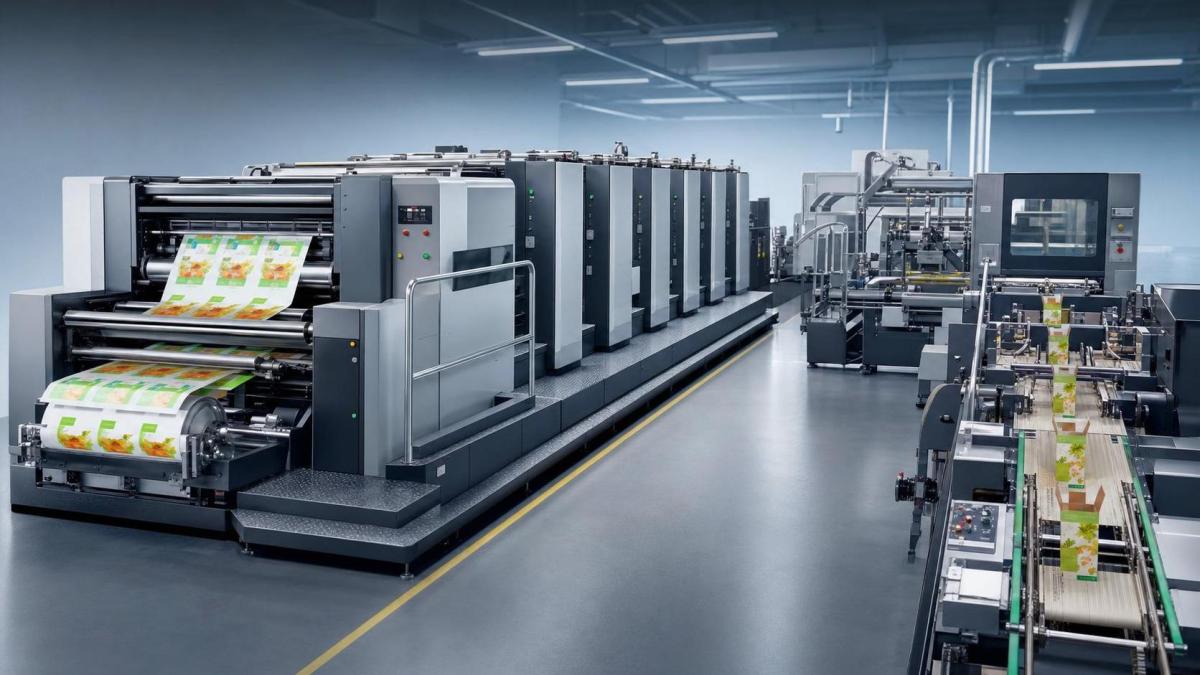
When people discuss high-speed printing presses cost, the headline machine price usually gets too much attention.
In practice, the bigger question is cost per productive hour and cost per saleable sheet.
That matters because a fast offset press can look expensive upfront, yet produce lower total ownership cost over five to ten years.
The reason is simple. Industrial print economics are shaped by output, waste, downtime, staffing, energy draw, service exposure, and resale value.
PWFS follows these issues across corrugated lines, offset presses, die-cutting systems, folder-gluers, and woodworking automation.
That broader view is useful because packaging plants rarely buy a press in isolation.
A press affects the rhythm of prepress, coating, die-cutting, folding, gluing, palletizing, and delivery promises.
So, if you are comparing equipment, ask a wider question.
Will this machine reduce the full manufacturing cost of packaging, or only shift cost into another department?
That is where total ownership becomes more revealing than invoice price.
Why can two presses with similar speed ratings have very different price per hour?
Rated speed is only a surface number.
A press advertised at 15,000 sheets per hour may never sustain that pace on mixed commercial work.
More common differences come from setup time, registration stability, ink control, feeder reliability, and washup automation.
If one machine reaches color faster and holds register better, it wastes fewer sheets at every job change.
Across hundreds of jobs a month, that alone can reshape high-speed printing presses cost.
Another hidden driver is labor structure.
One line may need more manual adjustment, more skill concentration, or more overtime support during peaks.
Another line may run with tighter process control and fewer interruptions.
The second machine often looks costlier on paper but cheaper in reality.
A useful comparison method is to separate price per hour into four buckets:
- Fixed capital cost per scheduled hour
- Variable production cost per running hour
- Waste cost per job and per substrate type
- Downtime cost per month
Once those are visible, nominal speed stops distorting the decision.
Which cost drivers have the biggest impact on total ownership?
Most buyers expect consumables and service to matter.
What they often underestimate is the compounding effect of small process losses.
Makeready waste, micro-stops, and unstable color control can quietly erode margin every shift.
The table below helps frame the main high-speed printing presses cost factors in a way that supports approval reviews.
In actual operations, the most expensive machine is often the one that creates unstable flow downstream.
For folding carton and corrugated work, press consistency affects die-cutting pressure settings, glue quality, and delivery timing.
That is one reason PWFS treats the press as part of a wider converting system, not just a standalone asset.
When does a higher purchase price actually make financial sense?
A more expensive press earns its place when it improves contribution margin faster than it increases annual ownership cost.
That usually happens in three situations.
- Job mix includes many short runs with frequent changeovers
- Substrates are costly, branded, or quality-sensitive
- The plant loses profit when one bottleneck delays the entire packaging line
For example, advanced presetting, inline inspection, and closed-loop color control may add capital cost.
But those options can dramatically reduce waste on repeat consumer packaging work.
The same logic applies when export orders require stricter traceability, food-contact compliance, or repeatable brand color.
A cheaper press may still print acceptable work, yet absorb margin through slower approval cycles and more quality disputes.
The better financial question is not, “Can this machine print?”
It is, “Can this machine protect profit under our actual order pattern?”
That difference is central to understanding high-speed printing presses cost.
What mistakes distort a press cost comparison?
The first mistake is comparing quotations without matching production assumptions.
One supplier may model long-run packaging jobs.
Another may assume more short runs, more washups, and lower net utilization.
Those scenarios are not financially interchangeable.
The second mistake is ignoring integration cost.
A press that requires software customization, extra air handling, floor reinforcement, or upgraded power quality changes the total project budget.
The third mistake is forgetting lifecycle timing.
Major components, control upgrades, and service contract resets do not appear evenly across years.
A five-year cash model can look comfortable while year six becomes expensive.
Another common blind spot is resale and redeployment value.
Well-supported platforms with strong installed bases often carry lower residual risk.
That matters if capacity planning changes or production shifts between sites.
A practical review checklist usually includes:
- Net output by real job family, not brochure speed
- Waste assumptions by board grade and ink set
- Parts availability within your region
- Operator dependency during shift changes
- Compatibility with prepress, MES, and downstream converting
How should you build a reliable ROI model before approval?
Start with demand truth, not equipment ambition.
Break your order base into repeat packaging work, short custom runs, premium color jobs, and urgent schedules.
Then test each press option against those realities.
A disciplined model for high-speed printing presses cost should include both direct and system-level effects.
It also helps to build three scenarios: conservative, expected, and peak utilization.
That exposes whether the business case only works under ideal load.
More experienced evaluators also ask for sample jobs, reference visits, and service response evidence.
Those checks turn abstract claims into measurable cost assumptions.
So, what is the most useful way to judge high-speed printing presses cost?
The most useful lens is not cheapest purchase price, and not highest rated speed.
It is the ability to convert substrate, labor, and machine time into stable saleable output.
That is why high-speed printing presses cost should always be tied to throughput quality, line integration, and long-term support.
PWFS often frames this within a wider industrial picture.
The same discipline used to evaluate color registration on offset presses also applies to downstream converting and even automated woodworking cells.
In each case, profitable automation depends on yield, repeatability, and system coordination.
Before moving forward, organize your actual job mix, quantify waste and downtime history, and compare suppliers using the same assumptions.
Then test whether the machine improves total ownership cost across the full packaging workflow.
That approach creates a clearer approval case and lowers the chance of paying for speed that never becomes profit.
Related News
Get weekly intelligence in your inbox.
No noise. No sponsored content. Pure intelligence.
