
Automated Woodworking in Europe: Which Processes Deliver the Fastest Labor Savings?
Where automated woodworking Europe saves labor first
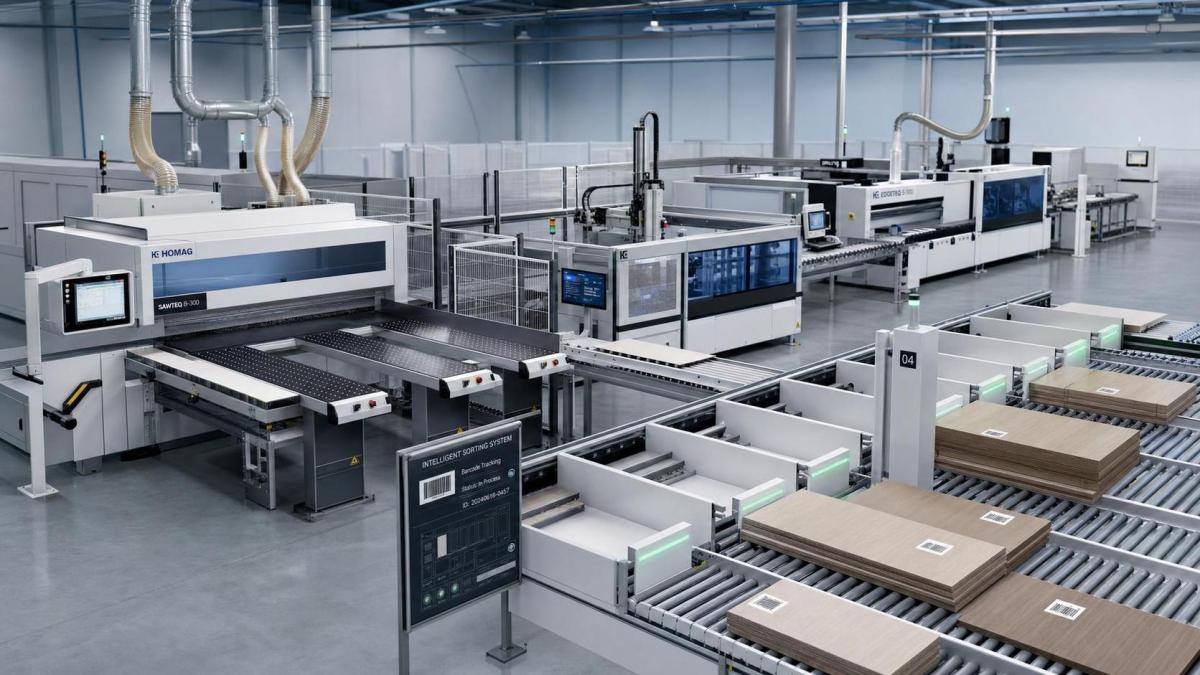
In automated woodworking Europe, labor savings rarely begin with the most advanced machine.
They usually begin where people still lift, sort, align, drill, trim, and move panels by hand.
That matters because European woodworking is under pressure from wage inflation, labor shortages, energy costs, and shorter custom-order lead times.
In practice, the fastest gains often come from CNC nesting, automated drilling, edge banding, and smart material flow.
These processes remove repetitive handling before they chase absolute machine speed.
That is also why PWFS tracks woodworking alongside corrugated, offset, and folding systems.
Across paper and wood, the pattern is similar: automation pays back fastest when it stabilizes precision and reduces manual touchpoints.
Why the fastest labor savings depend on the production scene
Not every plant in automated woodworking Europe loses labor in the same place.
A batch-based cabinet line struggles with order variation, label accuracy, and panel tracking.
A larger furniture plant may already cut efficiently, but still rely on manual downstream sorting.
Shops producing high-mix interior components often spend more labor on setup changes than on cutting itself.
This is the key judgment point.
The best automation choice is not the machine with the highest technical specification.
It is the process step where labor hours repeat daily, errors create rework, and flow interruptions spread across the whole line.
In real factories, labor savings accelerate when software, cutting, drilling, and edge finishing are linked as one data chain.
When panel cutting is still manual-heavy, CNC nesting moves fastest
For many custom furniture operations, CNC nesting is the first serious labor-saving step.
The reason is simple.
Manual marking, positioning, cutting decisions, and part identification consume labor before machining even starts.
In automated woodworking Europe, nesting cells reduce those tasks by reading production data directly from design and order systems.
That changes more than cut speed.
It reduces operator dependency, improves board yield, and makes repeat orders easier to schedule.
This is especially valuable where whole-house customization creates many unique parts per order.
The common mistake is to compare routers only by spindle power or axis count.
Faster labor savings usually depend more on automatic loading, labeling, offloading, and nesting software quality.
If parts leave the machine without clear identity, manual sorting returns immediately.
Best fit conditions for CNC nesting
- Frequent design changes and small batch orders
- High labor spent on panel loading and part labeling
- Recurring cutting errors caused by manual interpretation
- Need to connect CAD, MES, and machine output without re-entry
Drilling delivers quick savings where hardware complexity keeps growing
Drilling often looks secondary beside cutting, but it frequently delivers faster labor reduction.
That is common in European cabinet and wardrobe production, where fittings, connectors, and concealed hardware are becoming more complex.
Manual or semi-manual drilling creates two costs at once: direct labor and hidden assembly mistakes.
Automated drilling centers remove repeated alignment work and protect hole accuracy across mixed orders.
In automated woodworking Europe, that accuracy matters because downstream assembly is less tolerant of variation.
A small drilling error can travel into fitting problems, customer returns, or on-site installation delays.
The useful judgment here is not holes per minute alone.
It is whether the drilling unit can handle part variety without creating a new bottleneck in buffering or orientation.
Edge banding often saves labor after cutting looks already optimized
Many lines appear efficient at the router, yet remain labor-heavy at the edgebander.
This happens when operators still feed parts manually, change settings often, or rework poor glue joints.
In automated woodworking Europe, edge banding creates fast labor savings because it combines finishing, quality control, and environmental expectations.
Laser edge banding and PUR systems can reduce post-processing and improve consistency, but the labor win depends on upstream discipline.
If incoming parts vary in dimension or chip condition, no advanced edge technology will solve the labor issue alone.
This is one place where PWFS-style cross-process thinking matters.
The same logic used in print registration and folder-gluer stability applies here: process consistency creates labor efficiency.
Material flow becomes the real multiplier in high-mix production
Once cutting, drilling, and banding are upgraded, the next labor drain is usually movement.
Panels wait, parts get stacked twice, and finished components travel too far between stations.
In automated woodworking Europe, smart material flow often decides whether earlier automation really pays back.
This includes automatic loading, return conveyors, sorting buffers, barcode tracking, and software-based work-in-progress control.
The labor savings are less visible than a new CNC cell, but often more durable.
That is because material flow reduces non-cutting labor across every shift, not just at one machine.
It also supports the broader industrial pattern PWFS follows across packaging and woodworking.
When data and movement stay synchronized, flexible production scales without adding people at each handoff.
Different factory situations change the right priority
The table below reflects a more useful way to assess automated woodworking Europe investments.
It focuses on where labor disappears fastest under different production realities.
Where projects in automated woodworking Europe are often misjudged
A common error is to treat similar products as identical automation cases.
Flat-pack volume furniture, bespoke wardrobes, and shopfitting panels may use similar machines, yet their labor patterns differ sharply.
Another mistake is chasing throughput before stabilizing data.
If CAD data, labels, and machine instructions are inconsistent, faster equipment only produces faster confusion.
Some projects also underestimate maintenance and tool management.
Tool wear, dust extraction, glue handling, and spare-part availability directly affect real labor performance.
In Europe, compliance and traceability can also shift priorities.
FSC-linked material control, emissions expectations, and documented process quality increasingly shape automation choices.
Checks worth making before any upgrade
- Map labor hours by process, not by department name
- Track rework sources before comparing machine quotations
- Measure manual touches per panel from intake to packing
- Confirm software compatibility, training load, and service response
- Review future order mix, not only current best-selling items
A practical next step for choosing the right automation path
The strongest approach in automated woodworking Europe is usually phased, not dramatic.
Start with the process where manual handling repeats most and data errors spread furthest.
For some operations, that means nesting first.
For others, drilling, edge banding, or smart intralogistics will return labor savings faster.
What matters is aligning the upgrade with actual order structure, panel flow, and precision demands.
That same cross-process discipline is why PWFS frames woodworking beside packaging and print systems.
The winning lines are not simply faster machines.
They are connected production environments where labor no longer disappears into handling, adjustment, and preventable rework.
The next step is to compare real process bottlenecks, verify data readiness, and set a scene-based automation standard before expansion.
Related News
Get weekly intelligence in your inbox.
No noise. No sponsored content. Pure intelligence.
