Woodworking Machine Specifications Guide: How to Compare Power, Feed Rate, and Tolerance
A reliable woodworking machine specifications guide is less about reading a brochure and more about understanding what machine numbers really predict on the shop floor. In CNC woodworking, small differences in spindle power, feed rate, and tolerance can change cut quality, cycle time, energy draw, and stability across long production runs. That matters even more now, as flexible furniture manufacturing, fast delivery, and digital production planning push equipment decisions closer to the standards already seen in advanced print and packaging lines.
Why specification reading matters more now
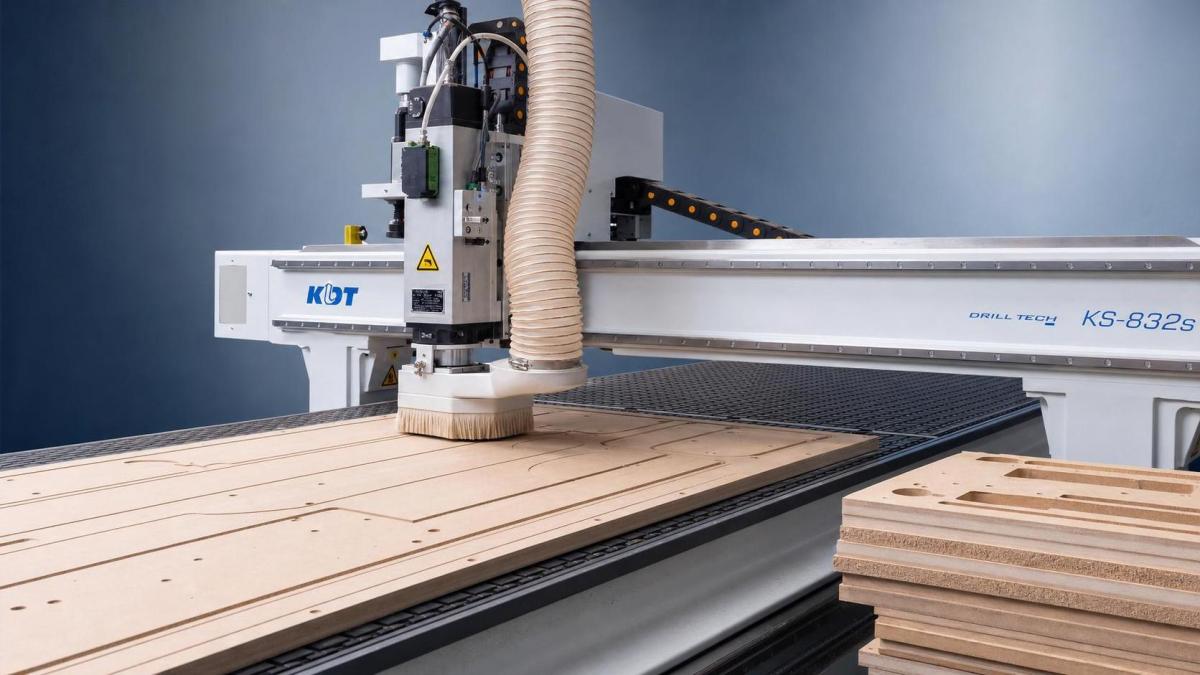
Woodworking equipment is no longer judged only by whether it can cut a panel. It is judged by whether it can cut repeatably, integrate with software, and stay stable under mixed-order production.
That shift connects woodworking with broader industrial logic. Corrugated lines, offset presses, die-cutters, and CNC routers all depend on precise motion, controlled throughput, and predictable output.
PWFS tracks these links closely because packaging and furniture manufacturing increasingly share the same pressures: automation, traceability, reduced waste, and fast customization.
In this environment, a woodworking machine specifications guide becomes a decision tool. It helps separate useful performance data from marketing language.
The three numbers that shape real machining results
Most comparisons begin with power, feed rate, and tolerance. They look simple, but each one only makes sense when read in relation to materials, tooling, and production targets.
Power is about load capacity, not headline strength
Spindle power affects how the machine handles dense boards, deeper cuts, larger tools, and longer shifts. Higher power can support aggressive machining, but it does not automatically mean better finished quality.
A machine with strong power but weak structure may still chatter. A lower-rated spindle on a rigid frame may deliver cleaner edges in daily production.
Power should also be read alongside torque curves, spindle speed range, cooling design, and duty cycle. These factors reveal whether the machine can sustain output instead of only reaching a peak figure.
Feed rate shows throughput only when cutting remains stable
Feed rate is often presented as a direct speed advantage. In practice, there is a major difference between maximum travel speed and effective cutting feed.
Rapid traverse may impress in a catalog, yet actual productivity depends on how fast the machine can move through MDF, plywood, particle board, or solid wood without burning, tearing, or tool overload.
The useful question is not “How fast can it move?” It is “How fast can it cut repeatedly while holding finish standards?”
Tolerance defines whether customization can scale
Tolerance is the measurement that often decides whether a line supports premium output. In panel furniture, small dimensional drift can create visible assembly gaps, edge banding mismatch, and hardware alignment problems.
Tolerance should never be read as a single ideal-condition number. It must be tested against repeatability, thermal drift, axis positioning, table flatness, and vibration behavior over time.
That is why any serious woodworking machine specifications guide treats tolerance as a system result, not a standalone promise.
How to compare specifications without being misled
The same machine number can mean very different things across brands. Comparison works better when the data is normalized around actual operating conditions.
This kind of structured review is especially useful in flexible manufacturing. One day may involve nested cutting of cabinet parts, while the next requires drilling, grooving, or contour processing.
Where power, feed rate, and tolerance affect business value
The value of a woodworking machine specifications guide becomes clearer when linked to downstream results. Technical data shapes more than machine behavior.
Cut quality and finishing performance
Poor power matching or unstable feed can leave fuzzy edges, breakout, burning marks, or inconsistent hole geometry. These defects move downstream into sanding, edge banding, and assembly.
For plants using PUR or laser edge banding, cut consistency matters even more. Cleaner panels support tighter seams and better surface appearance.
Scheduling and line balance
A fast CNC router that cannot maintain tolerance creates hidden bottlenecks later. Rework, sorting, and fit correction consume the speed advantage.
This is similar to print and packaging operations, where registration errors on a high-speed press erase the benefit of nominal throughput.
Energy and maintenance
Machines that rely on excessive spindle loading or unstable acceleration often raise tool wear, bearing stress, and energy consumption. Better-matched specifications usually improve both uptime and lifecycle cost.
Typical evaluation scenarios
A useful woodworking machine specifications guide should reflect different production realities rather than assume one universal benchmark.
- Nested-based panel processing: feed stability, vacuum holding, and repeatable dimension control usually matter more than extreme peak power.
- Solid wood shaping: spindle torque, structural rigidity, and chip evacuation become more critical due to variable grain and higher cutting loads.
- Five-axis custom work: tolerance behavior across complex paths matters more than simple straight-line speed claims.
- High-mix, low-volume orders: acceleration, software response, tool-change reliability, and calibration speed can shape total output more than raw feed rate.
In each case, specification reading should follow the process route, not the catalog layout.
Questions worth asking during comparison
This is where a woodworking machine specifications guide becomes practical. Better questions often reveal more than longer specification sheets.
- What material set was used to validate cutting feed rates?
- Is the stated spindle power continuous, or only a short-duration peak?
- How does tolerance change after several hours of production?
- What is the measured result after tool wear begins to rise?
- Which servo, rail, and controller components support the stated precision?
- How easily can the machine connect with CAD, MES, or order-driven production software?
Those questions fit current PWFS industry analysis because woodworking performance increasingly depends on digital continuity, not only isolated machine mechanics.
A grounded way to use this woodworking machine specifications guide
A specification comparison works best when tied to three layers: target products, target output, and acceptable quality deviation. Without those filters, even accurate numbers can lead to the wrong decision.
Start with the parts that create the most complaints or rework. Then map those issues back to machine behavior. In some cases, tolerance is the weak point. In others, the problem is unstable feed under real tool load.
The next step is to compare machines under matched test conditions, using the same materials, tooling logic, and output standards. That approach turns a woodworking machine specifications guide into a useful benchmark instead of a reading exercise.
For operations moving toward flexible manufacturing, the most useful comparisons often combine machine data, software readiness, downstream finishing impact, and long-run stability. That broader view is where equipment selection becomes more precise and far more defensible.
Related News
Get weekly intelligence in your inbox.
No noise. No sponsored content. Pure intelligence.
