
Paper Converting Machinery in Europe: Key Buying Factors for Compliance, Output, and Changeover
Paper converting machinery Europe buyers compare: what matters first?
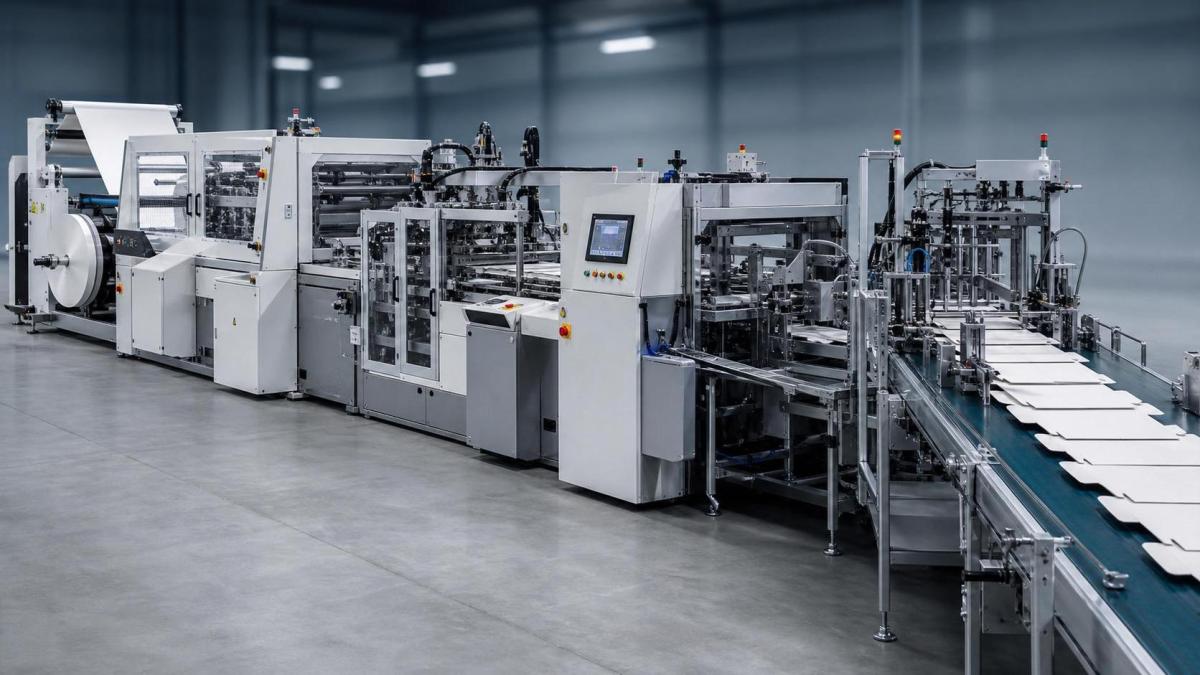
When reviewing paper converting machinery Europe suppliers present, the headline price rarely tells the full story.
The harder question is whether a line will stay compliant, hold output, and switch jobs quickly without draining margin.
That balance matters even more in packaging and print environments shaped by shorter runs, traceability rules, and tighter delivery windows.
PWFS tracks these pressures across corrugated lines, offset presses, die-cutters, folder-gluers, and connected finishing systems.
A useful buying view starts with the whole process, not a standalone machine.
Board feeding, register stability, glue application, waste removal, recipe recall, and digital data flow all shape real operating value.
So the practical search behind paper converting machinery Europe is usually this: which line keeps risk low while staying flexible enough for tomorrow’s mix?
Is CE compliance enough, or should the review go deeper?
CE marking is essential, but it should be treated as the starting gate, not the finish line.
In real evaluations, buyers also check the quality of the technical file, guarding logic, emergency stops, lockout access, and operator-zone design.
This matters because two machines can both carry CE marking and still differ sharply in usability and inspection readiness.
For food, pharma, or branded packaging, compliance often expands beyond mechanical safety.
Material traceability, ink migration controls, dust extraction, and documentation discipline start to affect qualification decisions.
That is where paper converting machinery Europe projects often become cross-functional.
Engineering wants reliability, operations wants uptime, and quality teams want auditable records.
A stronger review normally includes these checks:
- Risk assessment aligned with the actual installation layout.
- Electrical components and safety PLC architecture from recognized suppliers.
- Clear validation records for speed, guarding, and alarm response.
- Documentation for FSC-sensitive workflows or regulated packaging environments.
A machine that passes audits cleanly usually enters production faster and creates fewer hidden launch costs.
How should output be judged beyond the rated speed?
Rated speed looks impressive in brochures, but sustained throughput is the number that protects cost per unit.
In practice, output depends on substrate range, feeder behavior, register control, drying or gluing stability, and the machine’s tolerance for minor material variation.
A line that runs fast only on ideal stock can become expensive on mixed daily work.
This is why PWFS often frames performance around process physics.
On high-speed converting equipment, vibration balance, web tension, pressure consistency, and waste evacuation influence real output more than headline RPM alone.
A useful supplier conversation asks for three specific data sets:
For paper converting machinery Europe comparisons, stable throughput usually beats peak speed when order profiles are diverse.
Where do changeover losses really come from?
Most teams expect tooling exchange to be the main delay.
More often, the larger losses come from recipe setup, register correction, glue tuning, material alignment, and approval waiting time.
That is why “fast changeover” should be tested as a sequence, not a single claim.
Ask how long it takes from the last good sheet of Job A to the first approved sheet of Job B.
Then separate manual tasks from automated tasks.
The most valuable features are often modest but decisive:
- Stored job recipes with version control.
- Servo-driven positioning with repeatable recall.
- Tool-free access to cleaning and wear parts.
- HMI guidance that reduces operator dependency.
- MES connectivity for preloaded order parameters.
In shorter-run packaging work, these details can influence annual capacity more than top speed.
This logic also connects with broader PWFS coverage.
The same discipline behind fast die-cutter setup or offset register recall increasingly shapes paper converting machinery Europe decisions.
How do buyers compare total cost without missing hidden items?
The safest method is to treat acquisition cost as only one layer of the investment.
A cheaper machine can become the higher-cost option once energy use, setup waste, spare lead times, and downtime exposure are counted.
For paper converting machinery Europe projects, hidden cost usually appears in five places:
- Installation scope, including foundations, air, extraction, and guarding integration.
- Commissioning time and production ramp-up losses.
- Consumables, tooling life, and adhesive or ink efficiency.
- Availability of local service and critical spare parts.
- Software licensing, data interfaces, and future upgrade paths.
It helps to model cost over three to five years rather than relying on a simple payback estimate.
That wider lens captures how automation affects labor intensity and schedule resilience.
In volatile order environments, predictable uptime often carries more value than the lowest purchase quote.
What signals separate a dependable supplier from a risky one?
The strongest signal is not a polished presentation.
It is the supplier’s willingness to discuss constraints, not only strengths.
When evaluating paper converting machinery Europe options, look for technical transparency across testing, integration, and after-sales support.
A dependable partner usually provides:
- Reference sites with similar substrate mix and order pattern.
- Factory acceptance testing tied to measurable criteria.
- Clear spare parts strategy for fast-moving and long-lead components.
- Remote diagnostics and structured escalation procedures.
- An integration view covering upstream and downstream equipment.
This broader view matters because converting lines rarely fail at a single node.
Bottlenecks often sit between printing, die-cutting, folding, stacking, and data handoff.
That system-level perspective is exactly where PWFS tends to be useful.
Its research focus links compliance, kinematics, digital workflow, and capital efficiency instead of isolating one machine from the plant reality.
So what should the next evaluation step look like?
A sensible next step is to narrow the review to a few decision variables that can actually be verified.
Start with product mix, run lengths, target OEE, compliance requirements, and acceptable changeover windows.
Then ask each supplier to respond against the same operating scenario.
That makes paper converting machinery Europe comparisons cleaner and less vulnerable to marketing language.
It also helps to score proposals with a weighted matrix.
Compliance readiness, sustained output, setup time, integration fit, and life-cycle cost should all carry visible weight.
The best choice is usually not the fastest machine or the cheapest offer.
It is the line that keeps production flexible, audit-ready, and financially predictable as order complexity rises.
For teams using market intelligence from sources such as PWFS, the advantage is clearer context.
That context makes it easier to compare equipment on facts, not promises, and to move toward a durable investment decision.
Related News
Get weekly intelligence in your inbox.
No noise. No sponsored content. Pure intelligence.
