
Panel Edge Banders vs PUR Edge Banding Lines: Which Fits Your Product Mix and Budget?
Why is this comparison getting so much attention?
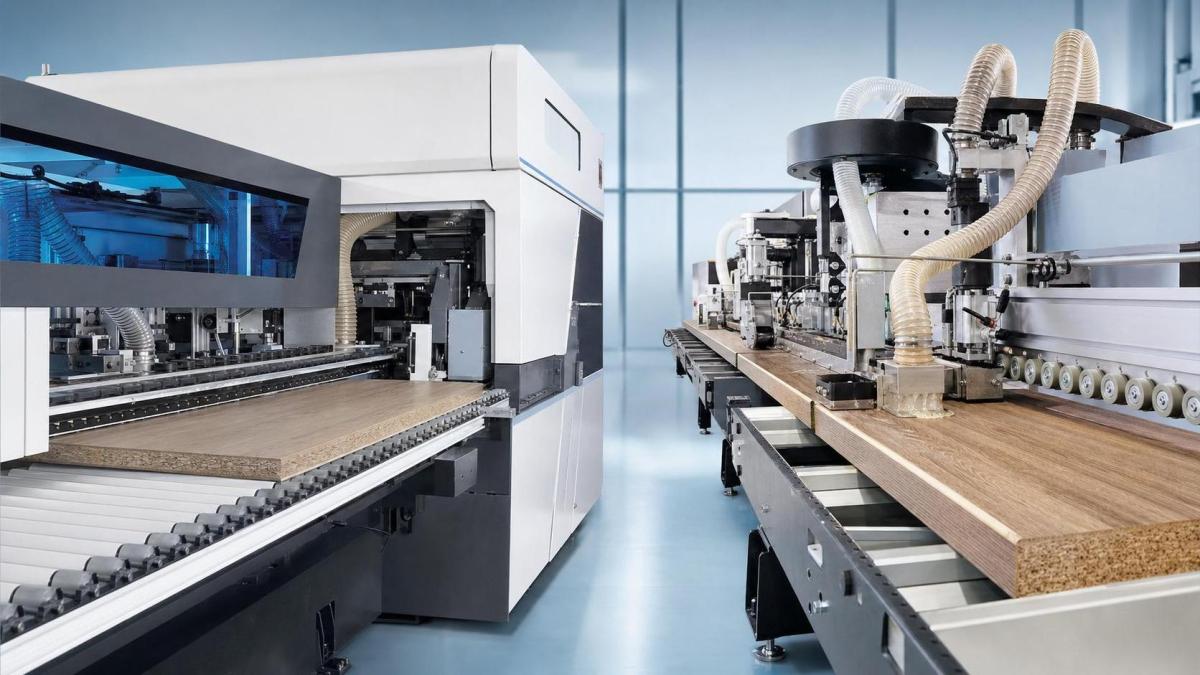
Choosing between panel edge banders and PUR edge banding lines shapes more than edge appearance. It affects output rhythm, adhesive performance, labor structure, and capital recovery.
In furniture and panel processing, edging is often the last step that decides whether a board feels premium or ordinary. That is why this comparison keeps appearing in buying discussions.
A standard panel edge bander can already deliver clean, stable sealing for many product categories. A full PUR edge banding line goes further on moisture resistance, invisible joints, and line integration.
The practical question is not which technology sounds better. It is which setup matches the real product mix, order volatility, and budget discipline behind daily production.
Within the wider PWFS view of paper and wood equipment, edge processing sits in the same logic as printing or die-cutting. Precision matters, but so does throughput, waste control, and digital coordination.
That broader perspective helps explain why panel edge banders remain central. They are not isolated machines. They are part of a flexible manufacturing chain serving custom interiors and volume panel programs.
So what is the real difference between panel edge banders and PUR lines?
The simplest distinction is this: panel edge banders describe the machine category, while PUR edge banding lines describe a production configuration centered on PUR adhesive application.
Many panel edge banders use EVA glue and cover a broad range of daily work. They are usually easier to run, easier to maintain, and less demanding on cleaning discipline.
PUR lines are built for tighter seam quality and stronger resistance to heat, moisture, and chemical exposure. They are often chosen for kitchens, bathrooms, premium closets, and export-oriented products.
That said, PUR is not automatically better for every factory. If order sizes are small, material changes are frequent, and premium waterproof performance is rarely required, a versatile panel edge bander may deliver better economics.
A useful way to read the market is to compare process burden, not just glue type. PUR usually requires stricter temperature control, cleaning routines, adhesive handling, and shutdown management.
The table below helps frame the decision in a less abstract way.
Which option fits a mixed product portfolio better?
This is usually where the decision becomes clearer. If the production schedule includes wardrobes, office furniture, shelving, retail fixtures, and occasional custom panels, flexible panel edge banders often win.
Why? Because mixed portfolios bring frequent edge tape changes, board thickness variation, and uneven daily volume. A machine that resets quickly can outperform a more advanced line with heavier process discipline.
PUR lines make more sense when the product mix is not just broad, but consistently premium. Examples include lacquered panels, compact moisture-prone applications, and projects where the edge must remain visually minimal.
In actual evaluations, the better question is not “Do we make premium products?” It is “How many of our monthly panels truly need PUR-grade bonding and appearance?”
If that share is small, the return may be delayed. If that share is rising and drives margin, a dedicated PUR configuration may protect both quality claims and brand consistency.
PWFS often frames this through flexible manufacturing logic. The strongest equipment choice is the one that keeps precision high without creating a mismatch between machine capability and order reality.
A quick field check helps
- If more than half of output is standard indoor furniture, panel edge banders usually cover the need well.
- If high-humidity applications are common, PUR becomes easier to justify.
- If rework costs from visible glue lines are frequent, process upgrading deserves serious review.
- If daily batch sizes are unstable, flexibility may be worth more than peak specification.
How should cost be judged beyond the machine price?
A common mistake is comparing quotations only at purchase stage. Edge technology decisions pay back through labor, reject rates, adhesive waste, downtime, and speed stability.
Panel edge banders usually have a lower entry barrier. That includes easier commissioning, broader operator availability, and fewer surprises during startup.
PUR lines can justify higher capital cost, but only when the full chain supports them. That means reliable panel preparation, accurate feeding, controlled ambient conditions, and disciplined maintenance.
When those basics are weak, expected gains can disappear into scrap, glue waste, and stoppages. In other words, premium technology amplifies both strengths and weaknesses.
A realistic budget review should include the following items, not just the sticker price.
- Adhesive cost per finished panel, including waste during changeover.
- Cleaning time and consumables linked to daily shutdowns.
- Operator training and the learning curve during the first months.
- Expected reject reduction from cleaner seam quality.
- Need for return conveyors, sorting, curing buffers, or MES connection.
This is also where PWFS-style intelligence becomes useful. The machine should be judged as part of a system, much like offset presses or CNC routers are judged by uptime, integration, and process consistency.
What risks are often underestimated before buying?
The biggest risk is buying for the brochure sample, not for the production floor. Beautiful edge samples can hide the fact that daily panel quality, dust control, and staff routines are not ready.
Another overlooked issue is line balance. A fast edging solution does not create value if upstream cutting, drilling, or sorting cannot feed it steadily.
For panel edge banders, the risk is usually under-specification. A low-cost machine may struggle with thicker edge materials, demanding finishes, or future automation upgrades.
For PUR lines, the risk is over-specification. The plant ends up paying for a performance ceiling that daily orders never truly use.
There is also a compliance angle. Export furniture, low-emission interiors, and moisture-sensitive applications may require tighter documentation of process stability and material traceability.
That is one reason industry observers track edge sealing alongside broader quality systems. In a market shaped by whole-house customization and higher finish expectations, small process weaknesses become visible very quickly.
Warning signs worth checking before approval
- No clear data on how many panels require waterproof or heat-resistant bonding.
- No trial using actual substrates, edge tapes, and common defect scenarios.
- No plan for adhesive storage, cleaning routines, and downtime response.
- No alignment between edging speed and upstream CNC or cutting output.
What is the smartest next step before making the final choice?
Start with the last six to twelve months of finished panel demand. Sort orders by board type, edge material, moisture exposure, finish expectation, and average batch size.
That review usually shows whether panel edge banders should remain the main platform, or whether a PUR edge banding line deserves priority for a defined premium segment.
Then request trials using real production parts, not ideal samples. Include restarts, tape changes, short runs, and visual inspections after cooling. Those details reveal true operating fit.
If both options remain viable, compare them using a simple scoring model. Weight seam quality, flexibility, investment, labor dependence, downtime risk, and projected margin impact.
In many cases, the answer is not purely one or the other. A high-spec panel edge bander may cover current volume well, while leaving room for a future PUR cell once premium demand becomes stable.
The strongest decision is the one that keeps panel edge banders aligned with actual orders, plant discipline, and long-term production architecture. That is how quality, flexibility, and budget begin to reinforce each other instead of competing.
Related News
Get weekly intelligence in your inbox.
No noise. No sponsored content. Pure intelligence.
