
How to Choose Industrial Packaging for Logistics Based on Load, Transit Risk, and Handling Method
How to Choose Industrial Packaging for Logistics Based on Load, Transit Risk, and Handling Method
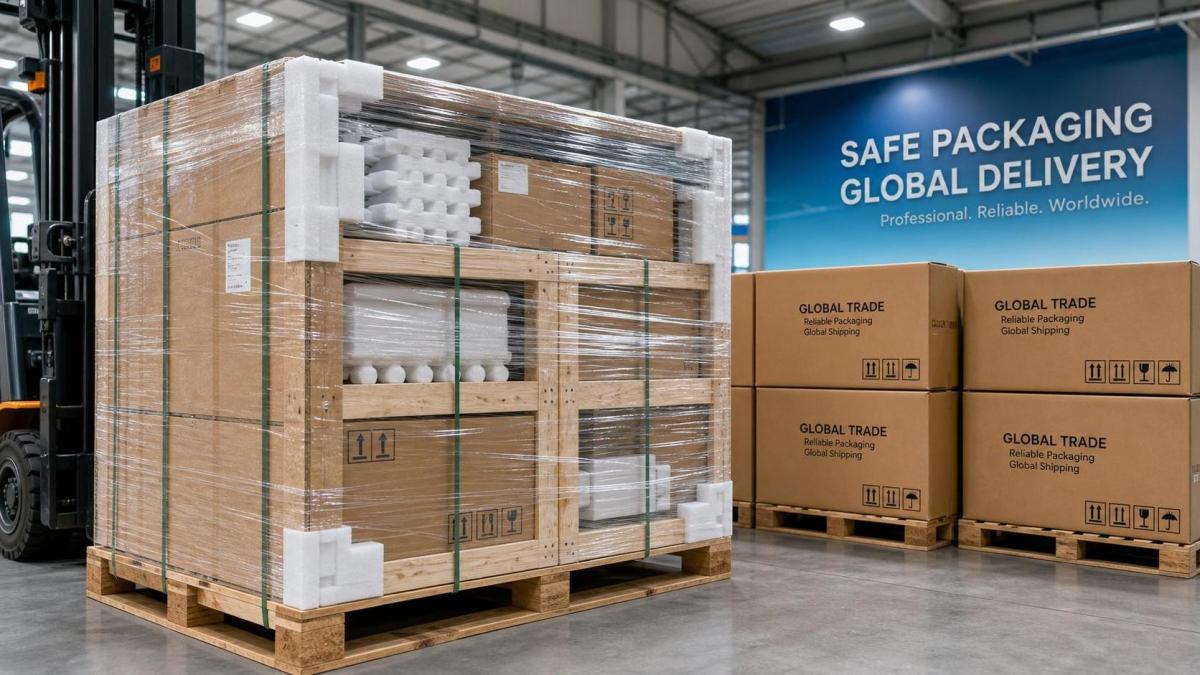
Choosing industrial packaging for logistics starts with a simple fact. A strong box alone does not guarantee safe delivery.
The real decision sits at the intersection of load profile, transit risk, and handling method. Miss one factor, and damage costs rise fast.
This is why industrial packaging for logistics must be selected as a system, not as a standalone material purchase.
In practice, the best packaging choice balances protection, cube efficiency, labor time, equipment compatibility, and total landed cost.
That balance matters even more when shipments move through mixed channels, long distances, and several handling points.
For industrial operations, industrial packaging for logistics should support repeatable performance under real distribution conditions, not ideal warehouse assumptions.
Start with the Load, Not the Box
The first step is defining what the package must carry. Weight alone is not enough.
You need to understand size, center of gravity, surface sensitivity, rigidity, and whether the product can support stacking pressure.
A dense metal component behaves very differently from flat-pack furniture panels, printed cartons, or high-value machine parts.
This also affects the right industrial packaging for logistics. The same outer dimensions may require very different board grades or internal supports.
Questions that define load requirements
- Is the product static or does it shift during transit?
- Can corners, edges, or protrusions puncture the pack?
- Does the load need blocking, bracing, or cushioning?
- Will units be stacked in storage or during linehaul?
- Is moisture absorption a performance concern?
Once these answers are clear, material selection becomes more rational. Corrugated, wood crates, foam inserts, edge protection, and stretch wrap each solve different load problems.
For example, corrugated solutions work well when compression, printability, and volume efficiency matter. Wood structures make more sense for concentrated weight or export abuse.
Map the Real Transit Risk
From recent logistics patterns, the bigger signal is variability. Packages now move through more nodes, tighter delivery windows, and less predictable environmental conditions.
That means industrial packaging for logistics should be matched to route reality, not just product value.
Transit risk usually comes from five sources: drops, vibration, compression, climate, and handling inconsistency.
How transit profile changes packaging decisions
- Parcel networks need stronger edge crush and better impact control.
- LTL freight often needs pallet stability and fork protection.
- Ocean shipping needs humidity control and long-duration stacking resistance.
- Cross-border routes may require compliance labels and export-grade wood treatment.
- High-touch distribution needs tamper evidence and easier inspection access.
A low-fragility product can still fail if vibration loosens parts. A rigid item can still be rejected if moisture ruins labeling or barcodes.
This is where industrial packaging for logistics becomes a risk management tool. The package must absorb predictable abuse without overbuilding every shipment.
In real operations, route segmentation helps. Domestic pallet freight, export containers, and e-commerce fulfillment rarely need the same packaging architecture.
Choose Packaging Around the Handling Method
Handling method is often underestimated. Yet it directly shapes damage risk, labor efficiency, and pack consistency.
Manual lifting, conveyor sorting, clamp truck movement, forklift entry, and robotic palletizing all place different stresses on the same package.
So industrial packaging for logistics should be designed for the way operators and machines actually touch it.
Typical handling-driven design choices
- Forklift handling may require skid bases, fork windows, or reinforced bottoms.
- Clamp handling needs panel strength and sidewall integrity.
- Automated lines need stable dimensions and reliable case geometry.
- Manual picking benefits from ergonomic weight limits and easy-open features.
- Returnable systems need durable closures and fast inspection visibility.
This also explains why packaging failure sometimes appears random. The material may be adequate, but the handling interface is wrong.
A well-specified industrial packaging for logistics solution reduces that mismatch. It aligns pack structure with touchpoints across the full movement cycle.
Build the Selection Matrix
At this stage, a selection matrix is more useful than broad packaging debates.
List packaging options against load severity, transit exposure, handling method, sustainability target, and cost per shipped unit.
That creates a practical evaluation framework for industrial packaging for logistics and helps avoid decisions based only on unit material price.
A matrix also helps compare one-way and returnable formats. In some flows, reusable packaging wins. In others, it creates reverse logistics cost and asset loss.
Match Material Strategy to Business Reality
Not every operation needs the heaviest solution. More material is not always better industrial packaging for logistics.
What matters is fit for the supply chain, the product mix, and the packaging equipment already in place.
For corrugated-heavy operations, board construction, flute profile, print requirements, and die-cut complexity should be evaluated together.
This is especially relevant in packaging environments connected to high-speed board lines, offset printing, die-cutting, and folder-gluer automation.
In those settings, packaging choice is not only about protection. It also affects line efficiency, waste, color presentation, and conversion consistency.
Useful material selection rules
- Use corrugated when volume, branding, and automation matter most.
- Use wood when load concentration and export durability dominate.
- Use engineered inserts when movement inside the pack creates hidden damage.
- Use hybrid systems when one material cannot meet risk and cost targets alone.
The best industrial packaging for logistics often comes from combining materials intelligently, rather than forcing one format to solve every issue.
Test Before Standardizing
A specification looks solid on paper until the first damaged shipment proves otherwise.
That is why industrial packaging for logistics should be validated through testing before full rollout.
Testing does not need to be excessive. It needs to reflect actual failure modes.
A practical validation sequence
- Run drop, compression, and vibration tests on representative loads.
- Check pallet stability after wrapping and fork entry.
- Verify barcode readability and labeling after transit simulation.
- Measure pack-out time and labor consistency on the floor.
- Track claims, damage photos, and failure locations by route.
These results turn packaging discussions into data-backed decisions. They also make future redesigns faster and less political.
A Clear Decision Path
A reliable industrial packaging for logistics strategy follows a clear order. Define the load. Map the route. Understand handling. Compare options. Test what matters.
This approach reduces avoidable damage, protects operational flow, and supports scalable logistics planning across changing channels.
In day-to-day business, the strongest choice is rarely the most expensive pack. It is the one designed around actual distribution conditions.
When industrial packaging for logistics is selected with that discipline, packaging stops being a cost debate and starts becoming a performance advantage.
Related News
Get weekly intelligence in your inbox.
No noise. No sponsored content. Pure intelligence.
