
How to Choose High Speed Paper Converting Equipment for Short Runs vs Mass Production
How to Choose High Speed Paper Converting Equipment for Short Runs vs Mass Production
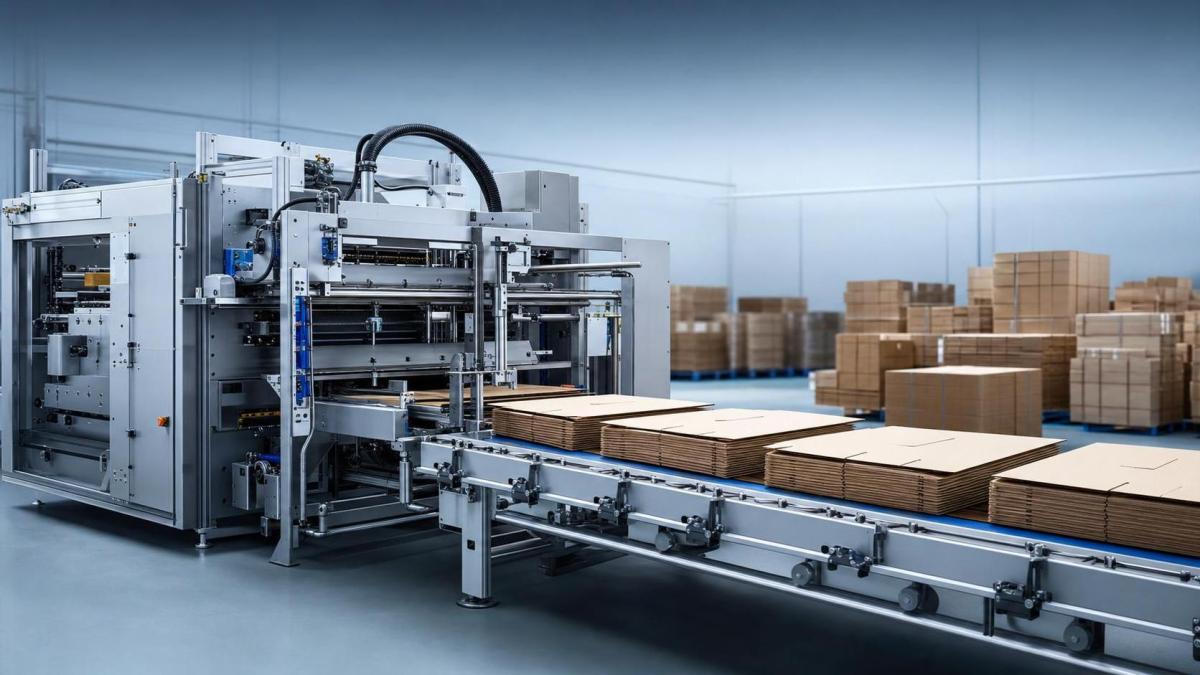
Choosing high speed paper converting equipment for short runs versus mass production requires more than comparing top-speed numbers.
Real performance depends on setup time, waste rate, automation depth, and how steadily the line holds quality at speed.
In practice, the right decision starts with one question.
Are you buying output capacity, or are you buying response speed?
That distinction shapes the best high speed paper converting equipment strategy far more than the brochure headline ever will.
Short-run converters need agility, fast job switches, and low startup waste.
Mass-production plants need stable throughput, repeatability, and predictable cost per thousand sheets or cartons.
This guide breaks down how to evaluate high speed paper converting equipment with those realities in mind.
Start With Production Profile, Not Rated Speed
A machine rated for very high speed can still underperform in a short-run environment.
The reason is simple.
Short runs spend a larger share of time on setup, wash-up, tooling change, registration checks, and approval cycles.
For that reason, technical evaluation should begin with job mix data.
- Average order size
- Daily SKU count
- Substrate range
- Tooling changes per shift
- Color or print variation frequency
- Required delivery window
If jobs change every hour, high speed paper converting equipment must minimize non-productive time.
If the same format runs all day, top-end mechanical stability becomes more valuable.
This is where many buying mistakes begin.
A plant buys for maximum speed, then discovers its actual bottleneck is changeover time.
What Short-Run Operations Should Prioritize
Short-run converting rewards flexibility more than raw line speed.
The best high speed paper converting equipment for this model usually has several traits.
- Fast recipe recall for repeat jobs
- Servo-driven adjustment points
- Quick-lock tooling systems
- Automatic registration correction
- Low startup waste control
- Operator-friendly interfaces
A slightly slower machine can produce more saleable output per shift if it changes jobs in minutes instead of hours.
That also reduces operator dependence, which matters when skilled labor is limited.
Another key point is substrate versatility.
Short-run work often shifts across board grades, sheet sizes, flute types, coatings, or specialty packaging formats.
High speed paper converting equipment in this segment should maintain registration and glue accuracy across those changes.
If it needs repeated manual tuning, the flexibility advantage quickly disappears.
What Mass Production Lines Should Prioritize
Mass production follows a different logic.
Here, the mission is sustained output with minimal unplanned stops.
For large-volume plants, high speed paper converting equipment should be evaluated around runtime stability.
- Maximum stable speed, not peak speed
- Feeding consistency at high load
- Thermal stability during long shifts
- Wear resistance on high-cycle parts
- Inline inspection and rejection systems
- Predictive maintenance capability
In high-volume packaging, a small speed loss is often acceptable.
A hidden quality drift is not.
That is why evaluators should ask for data on defect rates across full-shift operation.
Glue consistency, fold accuracy, die-cut cleanliness, and register repeatability matter more than nameplate speed claims.
A mass-production line also benefits more from advanced material handling.
Automatic pre-feeding, stack transfer, counting, bundling, and palletizing remove downstream bottlenecks.
Without them, high speed paper converting equipment can outrun the rest of the plant and create imbalance.
The Five Technical Factors That Drive the Decision
Whether the plant runs short jobs or large volumes, five factors usually decide the result.
1. Changeover Time
Measure total changeover, not only mechanical adjustment time.
Include wash-up, tooling swap, recipe loading, registration approval, and first-pass sellable output.
2. Waste During Startup and Running
High speed paper converting equipment must be judged by usable output, not gross throughput.
Even a small waste increase can erase margin on repeat work.
3. Accuracy at Operating Speed
Ask for tolerance performance at actual running speed.
Registration, folding, die-cut alignment, and gluing precision must remain stable under load.
4. Automation and Data Integration
MES connectivity, job data recall, remote diagnostics, and production analytics now influence total equipment value.
This is especially relevant for plants moving toward Industry 4.0 workflows.
5. Serviceability and Parts Support
The best high speed paper converting equipment still loses value if critical parts have long lead times.
Check spare parts policy, remote support response, and local technician availability before approval.
A Practical Comparison Framework
A simple scorecard helps compare high speed paper converting equipment across different production models.
This kind of framework keeps the discussion grounded in production reality.
It also prevents purchasing teams from overweighting one impressive specification.
Questions to Ask Equipment Suppliers
Supplier discussions should move beyond catalog language.
Use direct questions that expose real operating behavior.
- What is the verified changeover time between two typical jobs?
- What waste percentage should be expected during startup?
- At what speed are tolerance guarantees valid?
- Which adjustments are automatic and which remain manual?
- What data interfaces support MES or ERP integration?
- Which parts fail most often under three-shift production?
- Can the line handle future substrate or format expansion?
The strongest suppliers will answer with measured data, reference cases, and test results.
That is a much better signal than generic claims about flexibility or high efficiency.
Common Selection Mistakes to Avoid
Several mistakes appear again and again in paper converting investment decisions.
- Buying oversized high speed paper converting equipment for a low-volume, high-mix business
- Ignoring feeder, stacker, and downstream constraints
- Using peak speed instead of stable net output in ROI models
- Underestimating training needs and operator skill gaps
- Failing to compare waste cost across substrates and job types
From recent market shifts, one signal is especially clear.
Converters now need both efficiency and flexibility.
That means the best investment is often the machine with the best operating balance, not the most extreme specification.
Final Decision: Match Capability to Business Direction
The right high speed paper converting equipment should fit today’s workload and tomorrow’s business model.
For short runs, prioritize agility, automation, and low waste during frequent changeovers.
For mass production, prioritize stable throughput, durability, inspection control, and integrated material flow.
In both cases, insist on tested data, realistic job simulations, and total operating economics.
That approach leads to a better equipment decision, lower production risk, and a stronger path to scalable converting performance.
Related News
Get weekly intelligence in your inbox.
No noise. No sponsored content. Pure intelligence.
