
Panel Edge Banders for Industrial Use: What to Compare Before You Buy
Panel Edge Banders for Industrial Use: What to Compare Before You Buy
Choosing panel edge banders industrial buyers can rely on requires more than comparing price tags.
A low upfront quote can hide unstable bonding, frequent stoppages, and expensive rework.
For factories serving furniture, cabinetry, and custom interiors, edge sealing affects appearance, durability, emissions control, and delivery speed.
That is why panel edge banders industrial comparisons should focus on process fit, not only machine size.
The right decision usually comes from matching bonding technology, automation, line balance, and maintenance strategy with real production targets.
Start With Production Reality, Not Brochure Specs
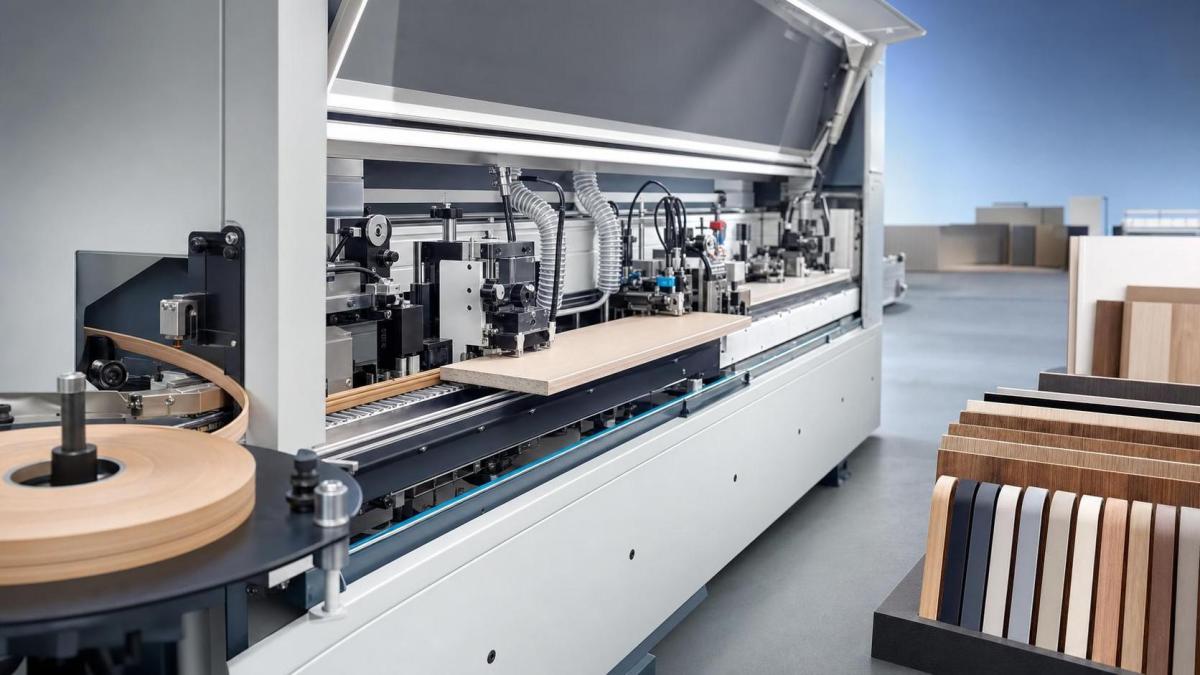
Before reviewing brands, define what the machine must handle every shift.
This sounds basic, but it is where many panel edge banders industrial projects drift off course.
A line built for mixed custom orders needs different priorities than a line producing standard cabinet panels all day.
In practical terms, compare these variables first:
- Daily and peak panel volume
- Panel thickness range
- Edge material types, including PVC, ABS, veneer, acrylic, or melamine
- Small batch changeover frequency
- Required edge appearance for premium furniture finishes
- Emission, cleaning, and environmental expectations
Once these inputs are clear, comparing panel edge banders industrial suppliers becomes far more objective.
Compare Bonding Technology First
Bonding technology shapes seam quality, moisture resistance, cleaning effort, and total operating cost.
This is often the most important checkpoint when evaluating panel edge banders industrial equipment.
EVA hot melt
EVA remains common because it is affordable and easy to source.
It works well for standard furniture production with moderate appearance requirements.
The tradeoff is visible glue lines and lower resistance to heat and moisture.
PUR hot melt
PUR delivers stronger bonding and cleaner visual results.
It is a strong fit for kitchens, bathrooms, and premium whole-house customization.
However, PUR demands stricter cleaning discipline and more careful glue management.
Laser or near-zero seam systems
These systems target the premium end of panel edge banders industrial selection.
They reduce glue line visibility and improve consistency on high-end decorative panels.
The investment is higher, so the business case must be tied to finish quality and brand positioning.
A simple question helps here: will customers pay for the visual upgrade and durability gain?
Feed Speed Matters, but Stable Quality Matters More
High feed speed looks impressive, yet speed without stability creates scrap and missed deadlines.
When comparing panel edge banders industrial models, ask how performance changes at real operating speed.
Some machines perform well in showroom demos but lose edge quality during full-shift production.
Check whether the line maintains pressure balance, glue application consistency, trimming accuracy, and corner finishing at target throughput.
Also verify acceleration and deceleration behavior if your orders include mixed panel sizes.
In many factories, real efficiency comes from fewer interruptions, not from the highest nominal meters per minute.
Inspect Finished Edge Quality Like an End User Would
The finished panel tells the truth faster than any sales sheet.
A proper panel edge banders industrial review should include sample evaluation under normal lighting and close inspection.
Look for visible glue lines, edge lift, chatter marks, burn marks, poor corner rounding, and color mismatch.
Touch also matters.
Run a hand across the edge transition and corners.
Premium furniture buyers notice tiny defects quickly, especially on glossy or dark surfaces.
Request trial samples using your own boards and edge tapes.
That gives a more reliable basis for panel edge banders industrial comparison than generic demonstration parts.
Evaluate Automation Around Changeovers and Labor
Labor pressure is rising across furniture manufacturing, and that changes buying logic.
The stronger signal today is not just output capacity.
It is how easily panel edge banders industrial systems keep output stable with fewer skilled operators.
Useful automation features include:
- Automatic thickness adjustment
- Recipe storage for repeat jobs
- Quick glue pot change or dual glue systems
- Servo-controlled trimming units
- Barcode or MES integration
- Fault diagnostics with clear operator prompts
For custom production, automation often protects margin more than raw speed does.
Shorter setup times can transform machine utilization across an entire shift.
Do Not Underestimate Maintenance and Consumables
A machine that looks efficient on day one can become expensive if maintenance is slow or inconsistent.
This is one of the most overlooked parts of panel edge banders industrial procurement.
Ask for a realistic maintenance schedule, not only a brochure checklist.
You need to understand glue cleaning frequency, tooling replacement cycles, lubrication points, dust extraction sensitivity, and spare part lead times.
Two machines with similar purchase prices can have very different lifecycle costs.
Focus on these cost drivers:
- Glue consumption per square meter
- Compressed air and power demand
- Tool wear and replacement cost
- Downtime during cleaning or changeovers
- Remote service availability
In actual operations, service response can matter as much as machine design.
Check Compliance, Safety, and Integration Readiness
Buying panel edge banders industrial equipment is also a compliance and systems decision.
Depending on the market, machine safety standards, electrical specifications, dust control, and adhesive handling rules may affect installation approval.
It also helps to confirm whether the machine can connect smoothly with upstream CNC cutting and downstream sorting or packaging.
That matters even more for factories moving toward digital production management.
A modern panel edge banders industrial investment should support traceability, recipe control, and data visibility over time.
Use a Side-by-Side Comparison Before Final Selection
At the final stage, a simple scorecard prevents emotional decisions.
It keeps panel edge banders industrial selection tied to measurable business value.
This framework makes panel edge banders industrial buying discussions clearer across production, maintenance, and finance teams.
Final Buying View
The best panel edge banders industrial choice is rarely the cheapest or the fastest on paper.
It is the one that fits your board mix, finish target, labor model, and maintenance capacity with the least friction.
From recent market shifts, the clearest trend is toward cleaner seams, faster changeovers, and stronger digital integration.
That also means buying decisions should be based on long-term production discipline, not short-term pricing alone.
Ask for live trials, review lifecycle costs, and compare service readiness before signing.
That approach usually leads to a smarter panel edge banders industrial investment and more reliable panel production over time.
Related News
Get weekly intelligence in your inbox.
No noise. No sponsored content. Pure intelligence.
