
Precision Woodworking Tools Price Guide: Specs, Materials, and Cost Differences
Precision woodworking tools price is no longer a narrow equipment question. It sits at the intersection of machining accuracy, material performance, labor efficiency, and production strategy. In furniture, custom panel processing, and connected packaging environments, the real price difference often comes from what a tool prevents: scrap, downtime, rework, unstable finishes, and missed delivery windows.
That is why a price guide needs more than a catalog view. Spindle tolerance, carbide grade, coating technology, balancing quality, automation compatibility, and maintenance cycles all shape cost. For operations tracking ROI carefully, the useful comparison is not cheap versus expensive, but low entry cost versus stable output over time.
Why pricing has become a strategic topic
Across PWFS-covered sectors, precision defines competitiveness. Corrugated lines depend on repeatability. Offset presses depend on registration. Die-cutting systems depend on dynamic control. CNC woodworking depends on clean, fast, predictable cutting.
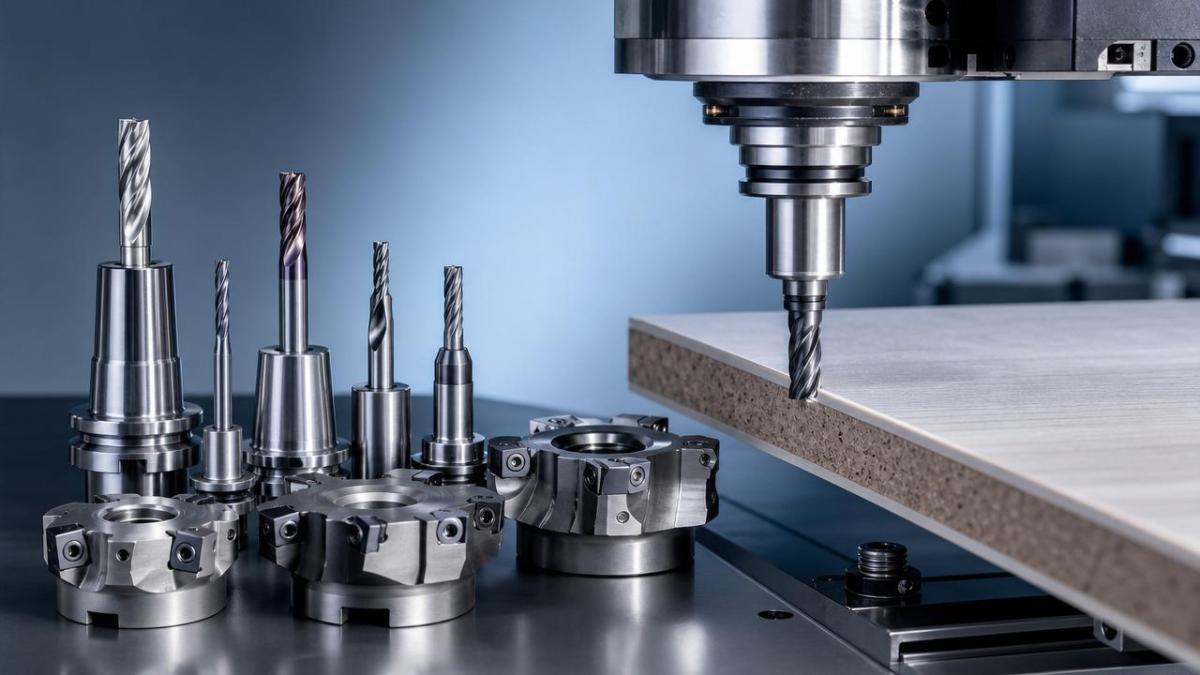
In woodworking, tools are the smallest visible component in a much larger production chain, yet they influence the entire result. A router bit that dulls early can disrupt nesting quality. A poorly balanced cutter can reduce spindle life. A low-grade edge-processing tool can raise adhesive defects downstream.
This is especially relevant where whole-house customization, short production runs, and fast order turnover are common. Under these conditions, precision woodworking tools price becomes a decision about consistency under pressure, not just a line item in a budget.
What the price of a precision tool really includes
The market often treats tooling as a simple consumable. In practice, the price reflects a bundle of engineering choices. Some are visible in the specification sheet. Others appear only after months of production.
Core cost layers
- Geometry design, including cutting angle, flute count, and chip evacuation behavior.
- Substrate material, such as solid carbide, HSS, PCD, or inserted knife structures.
- Manufacturing precision, including concentricity, dynamic balancing, and grinding accuracy.
- Surface treatment, such as wear-resistant coatings for heat and resin management.
- Service life, regrinding potential, and compatibility with automated production cells.
A lower quoted price may exclude the hidden cost of frequent changeovers, unstable dimensional control, and higher operator intervention. A higher quote may include longer life, tighter tolerances, and fewer disruptions per shift.
Specifications that move price up or down
When comparing precision woodworking tools price, specifications should be read as performance signals. Several parameters have direct cost impact.
In actual use, these details matter most in high-speed CNC routers and nested-based manufacturing. They matter even more when MES-driven production expects stable output with minimal manual correction.
Material choices and their cost differences
Tool material is one of the clearest reasons two similar-looking products carry very different prices. The right comparison depends on board type, batch size, finish expectations, and line speed.
Common material categories
- HSS offers lower upfront cost and works for lighter duty or less abrasive materials.
- Solid carbide is widely used for MDF, particleboard, plywood, and melamine panels.
- PCD tools cost much more initially but can outperform carbide in long production runs.
- Insert tooling reduces replacement waste because only the cutting edge is changed.
For laminated and abrasive engineered boards, lower-grade tools often create a false economy. Chipping, heat buildup, and rapid wear can erase any saving quickly. In contrast, premium carbide or PCD usually supports cleaner edges and more stable cycle planning.
This is where precision woodworking tools price should be reviewed beside material mix. A shop processing natural wood, veneer, MDF, and compact laminate will rarely get the best result from one universal low-cost option.
Automation changes the economics
As woodworking equipment becomes more connected, tooling value changes. A tool is no longer judged only by cut quality. It is also judged by how well it fits automated scheduling, tool libraries, and predictive maintenance routines.
PWFS often tracks this same pattern across print and converting equipment. High-speed systems create value when every component supports repeatability. The logic applies equally to routers, edge banders, and drilling units in furniture production.
A tool that lasts longer and behaves predictably reduces unplanned stops. That can matter more than a lower initial invoice, especially where production promises short lead times and mixed-order manufacturing.
Signals of better lifecycle value
- Stable edge quality across long shifts.
- Lower spindle load and vibration.
- Longer intervals between tool changes.
- Repeatable performance after regrinding.
- Reliable data for planned maintenance and stock control.
Typical buying scenarios and budget logic
Not every operation should buy the most expensive tooling. The better approach is to align the precision woodworking tools price with the production model.
Short-run customization
Flexibility matters more than absolute life. Tools need clean cuts across changing shapes, fast setup, and dependable performance on mixed panel types.
High-volume standard production
Lifecycle cost dominates. Premium carbide, PCD, and balancing quality often justify their price through fewer stoppages and steadier output.
Quality-sensitive surface finishing
Edge integrity, tear-out control, and dimensional stability matter more than basic cut completion. Here, a cheaper tool can create expensive secondary work.
How to evaluate quotes without oversimplifying
A good quote comparison should move beyond unit price. It should connect tooling cost to the production environment that will carry it.
- Check expected cutting meters, not just purchase price.
- Ask whether the tool is optimized for MDF, plywood, melamine, or composite panels.
- Review tolerance and balancing data for high-speed applications.
- Include regrinding policy, lead time, and tool management support.
- Estimate the cost of scrap, edge defects, and machine idle time.
This approach makes precision woodworking tools price easier to judge in financial terms. It converts a technical comparison into a clearer model of operating risk and production value.
A practical next step for better decisions
The most useful starting point is a simple internal map: material types processed, target finish level, machine speed, changeover frequency, and current tool life. Once these are visible, price differences become easier to interpret.
From there, compare tooling on total production impact, not catalog appearance. In many cases, the best precision woodworking tools price is the one that protects output stability across the full workflow, from CNC cutting to edging, assembly, and delivery.
For organizations following broader paper, print, and furniture system trends, the same principle holds everywhere: precision earns its value when it supports repeatable quality at industrial speed. That is the lens worth using before the next quote is approved.
Related News
Get weekly intelligence in your inbox.
No noise. No sponsored content. Pure intelligence.
