
Industrial Woodworking Machinery Exporter Checklist: Certifications, Lead Times, and After-Sales Support
Industrial Woodworking Machinery Exporter Checklist: Certifications, Lead Times, and After-Sales Support
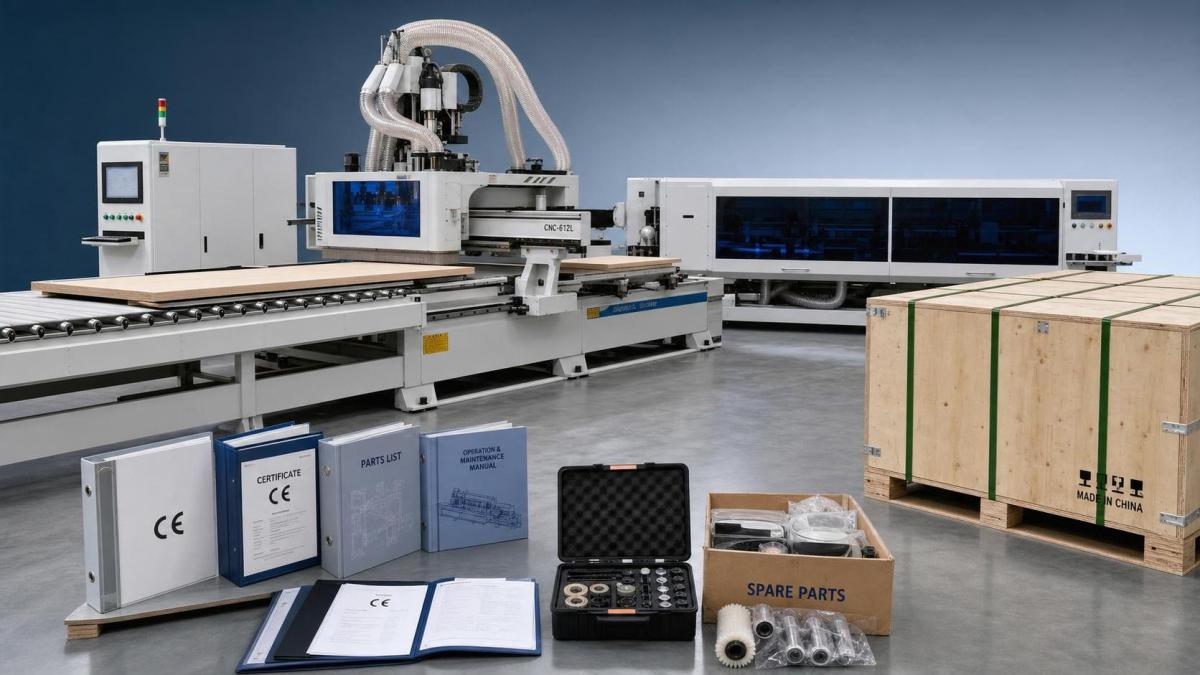
Choosing the right industrial woodworking machinery exporter can decide whether a project runs smoothly or turns into months of delays, claims, and hidden costs.
In real purchasing work, machine price is only one part of the decision. Compliance, delivery timing, installation support, spare parts, and operator training matter just as much.
That is why any industrial woodworking machinery exporter should be evaluated through a practical checklist, not a polished brochure or a single video call.
For panel processing, CNC routing, drilling, nesting, sanding, and edge banding lines, three areas usually reveal the real supplier strength: certifications, lead times, and after-sales support.
When these three areas are checked carefully, buyers reduce project risk and protect long-term output, especially in fast-moving furniture and custom woodworking operations.
Why Exporter Screening Matters More Than Machine Specs Alone
A machine can look impressive on paper and still become a procurement problem after shipment. The weak point is often not the core structure, but the exporter’s execution.
An experienced industrial woodworking machinery exporter understands customs paperwork, electrical standards, documentation, shipping coordination, and final commissioning expectations in the destination market.
A weaker supplier may offer a lower quote, yet miss compliance details, underestimate production time, or disappear when service problems appear after installation.
More importantly, woodworking factories depend on uptime. A delayed spindle, control issue, or edge banding fault can disrupt output, labor planning, and delivery commitments downstream.
Checklist Part 1: Certifications That Actually Matter
The first check is not simply whether the exporter says “certified.” The real question is whether the certificates fit the destination market, machine category, and application environment.
A reliable industrial woodworking machinery exporter should provide compliance documents early, ideally before contract signing and well before production is completed.
Core documents to request
- CE documentation for EU-bound equipment
- UL or equivalent electrical compliance references when required
- ISO 9001 quality management certification
- Electrical drawings, wiring diagrams, and component brand lists
- Safety guarding and emergency stop descriptions
- User manuals, maintenance manuals, and spare parts catalogs
- Test reports for dust extraction, noise, or guarding where applicable
From a cost perspective, missing certification can trigger expensive rework after arrival. That includes replacing electrical cabinets, changing sensors, or adding guarding at the local site.
A serious industrial woodworking machinery exporter will also name the actual component brands used. This matters because imported drives, PLCs, and motors affect both compliance and serviceability.
In practice, ask for sample documents from previous exports to the same region. That is often more useful than a generic promise that “all standards can be met.”
Questions that expose risk quickly
- Which markets has this exact machine model already entered?
- Can the exporter share serial-number-based examples?
- Are manuals available in the language required by the local team?
- Who is responsible if customs or inspectors reject the documentation?
If the answers are vague, the risk is real. A capable industrial woodworking machinery exporter should respond with documents, references, and clear ownership of compliance tasks.
Checklist Part 2: Lead Times Beyond the Quoted Number
Lead time is rarely just “45 days” or “90 days.” For capital equipment, the true timeline includes engineering confirmation, component sourcing, assembly, testing, packing, shipping, customs, and startup.
A dependable industrial woodworking machinery exporter breaks lead time into stages. That level of detail helps buyers align installation plans, utility preparation, and production launch targets.
Ask for a stage-by-stage schedule
Recent supply chain shifts make this even more important. Imported control parts, servo systems, and premium spindles can extend production timelines without much warning.
That also means the shortest quotation is not always the safest one. Some exporters quote aggressively, then revise schedules after deposit payment.
A trustworthy industrial woodworking machinery exporter should explain which parts are standard stock, which are customized, and which items are the critical path.
Lead time checkpoints worth adding to the contract
- Approved technical specification date
- Progress report frequency with photos or videos
- Factory acceptance test date and checklist
- Shipment readiness definition
- Delay penalty or remedy mechanism
These details turn a quoted delivery promise into a manageable project schedule. That is especially useful when multiple machines must arrive in sequence.
Checklist Part 3: After-Sales Support Is Where Total Cost Shows Up
After-sales support is often treated as a soft topic during sourcing. In reality, it is one of the hardest cost drivers over the machine’s operating life.
A competitive industrial woodworking machinery exporter should define support terms clearly before payment terms are finalized.
This includes installation scope, remote diagnostics, on-site service availability, response time, spare parts stock, software backup, and training responsibilities.
Minimum support points to verify
- Warranty period and exclusions
- Remote support hours and channels
- Engineer dispatch time for critical failures
- Recommended spare parts package with pricing
- Operator and maintenance training plan
- Software restore process and backup files
- Local partner or regional service presence
For CNC lines and edge banders, downtime can become expensive very quickly. Even a small issue can halt output if no one can diagnose the machine remotely.
That is why the best industrial woodworking machinery exporter usually provides both service structure and service evidence, such as ticket records, spare parts lead times, or reference customers.
One useful test is simple: ask how a spindle alarm, servo error, or glue unit fault would be handled within the first 24 hours.
The answer should include people, steps, timing, and likely parts. If it stays vague, post-sale support will probably be reactive and slow.
A Practical Scorecard for Comparing Suppliers
When comparing offers, it helps to score each industrial woodworking machinery exporter against the same criteria. This keeps the decision grounded and easier to justify internally.
- Compliance readiness: documents, component traceability, market experience
- Lead time realism: schedule detail, risk disclosure, testing plan
- Service depth: response time, spare parts, training, remote support
- Commercial clarity: payment terms, penalties, warranty language
- Technical fit: output target, tolerance, software integration, material range
This method works especially well for custom equipment, where different suppliers may quote very different machine structures for a similar stated capacity.
A lower initial price may still lose when support, certification gaps, and schedule uncertainty are included in the total procurement cost.
Final Takeaway
The right industrial woodworking machinery exporter is not simply the one with the cheapest quotation or the fastest first response.
The stronger choice is the supplier that can prove compliance, explain lead times honestly, and support the machine long after shipment.
When reviewing shortlisted suppliers, use a checklist, ask for evidence, and turn vague promises into written obligations.
That approach reduces avoidable risk and gives the project a better chance of hitting its cost, schedule, and output goals.
Before placing the order, request a full document pack, a milestone schedule, and a written service plan. Those three items reveal the real quality of any industrial woodworking machinery exporter.
Related News
Get weekly intelligence in your inbox.
No noise. No sponsored content. Pure intelligence.
