
Corrugated Box Production Lines for Shipping Boxes: Layout, Capacity, and ROI Factors
Corrugated Box Production Lines for Shipping Boxes: Layout, Capacity, and ROI Factors
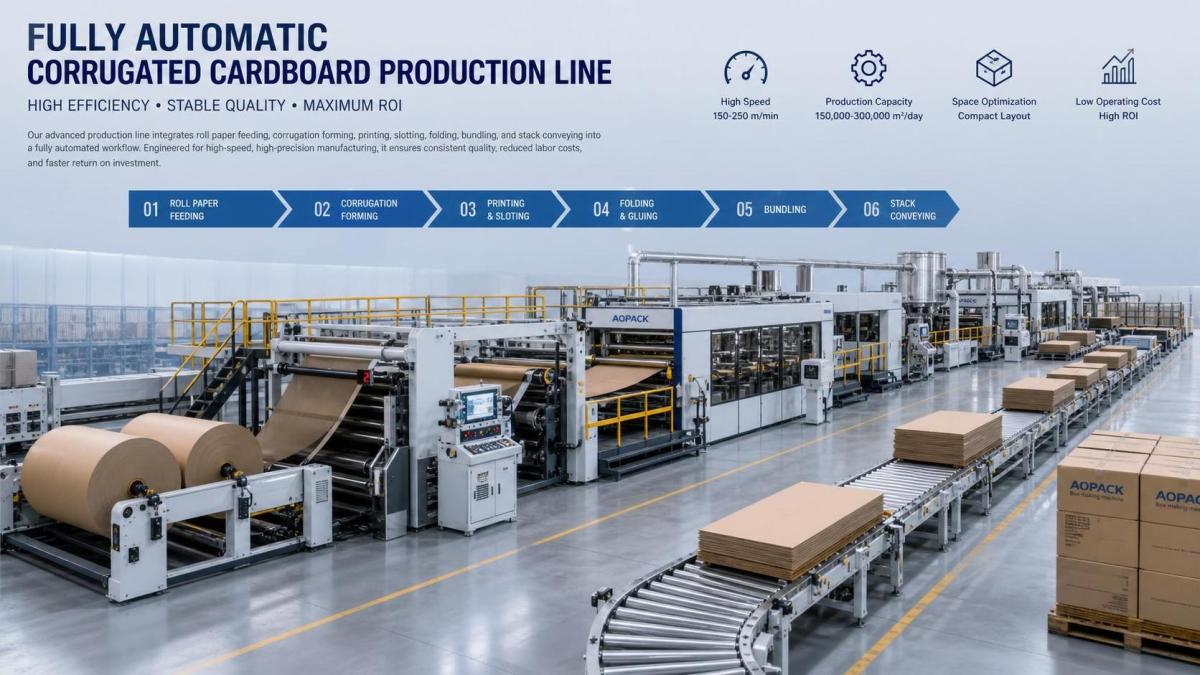
For decision-makers evaluating corrugated box production lines for shipping boxes, the real challenge is not just buying equipment.
It is about matching plant layout, output goals, labor structure, and capital return to real order behavior.
That matters even more now, because e-commerce keeps pushing faster delivery, smaller batches, and wider box size variation.
In practical terms, a strong corrugated box production line for shipping boxes should reduce conversion cost without creating hidden bottlenecks.
It should also support future automation, stable board quality, and flexible scheduling under seasonal volume swings.
From the PWFS perspective, the best investment decisions connect machine physics, workflow logic, and commercial payback in one model.
Start with the shipping box mix, not the machine brochure
Many buyers begin with speed claims.
That is usually the wrong starting point for corrugated box production lines for shipping boxes.
A better first step is mapping your actual box portfolio.
Look at regular slotted containers, die-cut mailers, multi-depth boxes, and heavy-duty transport cases separately.
Then review flute mix, board grades, print requirements, order frequency, and average run length.
This reveals whether you need a high-speed standard line, a more flexible converting setup, or a hybrid model.
It also prevents overinvestment in width, print stations, or automation features that rarely create value in daily production.
- Track monthly order count by box type.
- Separate peak season demand from baseline demand.
- Measure changeover frequency and downtime causes.
- Define target waste rates for board, ink, and adhesive.
Layout determines whether capacity is real or theoretical
A common mistake is treating layout as a later engineering detail.
In reality, layout decides whether corrugated box production lines for shipping boxes can reach stable output.
Material flow should be straight, visible, and easy to control.
Paper roll storage, corrugator feeding, sheet transfer, printing, slotting, folding, bundling, and dispatch should follow one logic.
When forklifts cross operator paths or finished stacks wait too long, output drops fast.
The layout should also leave room for maintenance access, future modules, and buffer zones between high-speed sections.
Key layout points to review
- Corrugator length and steam system location.
- Distance between sheet output and converting machines.
- Finished goods staging near shipping docks.
- Scrap evacuation and baling routes.
- Power, compressed air, and glue supply access.
In plants serving e-commerce clients, shorter internal travel often brings better returns than adding nominal machine speed.
Capacity planning should follow sellable output
Nameplate speed is easy to market.
Sellable output is what matters for corrugated box production lines for shipping boxes.
A line rated at high speed may still underperform if order sizes are short and changeovers are frequent.
That is why capacity planning should combine three views: hourly throughput, shift-level uptime, and monthly good-box yield.
The useful question is simple.
How many compliant shipping boxes can the line produce, pack, and dispatch without overtime pressure?
Capacity drivers that change the answer
- Flute change frequency.
- Print complexity and color count.
- Die-cut versus slotted box ratio.
- Order batching discipline.
- Operator skill and maintenance response time.
A realistic model usually applies efficiency factors instead of assuming perfect uptime.
That gives a more credible purchase case and avoids capacity gaps after installation.
Automation level should match labor risk and order volatility
More automation is not always better.
The right question is where automation removes recurring cost or recurring instability.
For corrugated box production lines for shipping boxes, automatic splicing, recipe setting, stack transfer, bundling, and palletizing often create clear value.
They reduce dependence on scarce labor and improve repeatability across shifts.
At the same time, highly variable order structures may still require selective manual flexibility in converting areas.
This is where many projects become unbalanced.
The corrugator is modern, but downstream handling remains slow, manual, and error-prone.
ROI depends on more than equipment price
The purchase price is only the visible part of the decision.
A serious ROI model for corrugated box production lines for shipping boxes should include total delivered economics.
That means utilities, glue consumption, board waste, spare parts, floor space, labor, training, and financing cost.
It should also measure upside.
Can the line support better box quality, more demanding customers, and shorter lead times that win new contracts?
That commercial upside often changes the payback story.
A practical ROI checklist
- Define baseline cost per thousand boxes.
- Estimate post-installation waste reduction.
- Model labor savings by shift and by function.
- Include maintenance contracts and spare inventory.
- Stress-test the model against low-demand months.
When this analysis is done well, the investment debate becomes much clearer and less emotional.
Supplier evaluation should focus on operating reality
Machine specifications matter, but supplier capability matters just as much.
For corrugated box production lines for shipping boxes, weak commissioning support can delay benefits for months.
Ask suppliers for reference plants with a similar order profile, not just a similar machine model.
Review spare parts availability, remote diagnostics, response times, and local service depth.
Also check whether their controls can connect with MES, ERP, and production reporting systems.
That integration is increasingly important for plants managing SKU complexity and customer traceability.
- Request actual uptime data after commissioning.
- Review training scope for operators and maintenance teams.
- Confirm guaranteed performance terms in writing.
- Check board quality consistency at target speed.
A better buying decision comes from system thinking
The strongest corrugated box production lines for shipping boxes are not simply the fastest or the most automated.
They are the lines designed around product mix, plant flow, labor reality, and long-term margin goals.
From recent market shifts, the clearer signal is this.
Shipping box demand will keep changing in volume, size range, and delivery expectations.
That means layout flexibility, measurable capacity, and disciplined ROI modeling should lead the procurement process.
A useful next move is to build a line-selection scorecard.
Compare each option against throughput, footprint, labor savings, waste reduction, service support, and expected payback.
That approach turns corrugated box production lines for shipping boxes from a capital expense discussion into a strategic manufacturing decision.
Related News
Get weekly intelligence in your inbox.
No noise. No sponsored content. Pure intelligence.
