
How to Improve CNC Furniture Production Efficiency: Key Bottlenecks and Machine Choices
How to Improve CNC Furniture Production Efficiency: Key Bottlenecks and Machine Choices
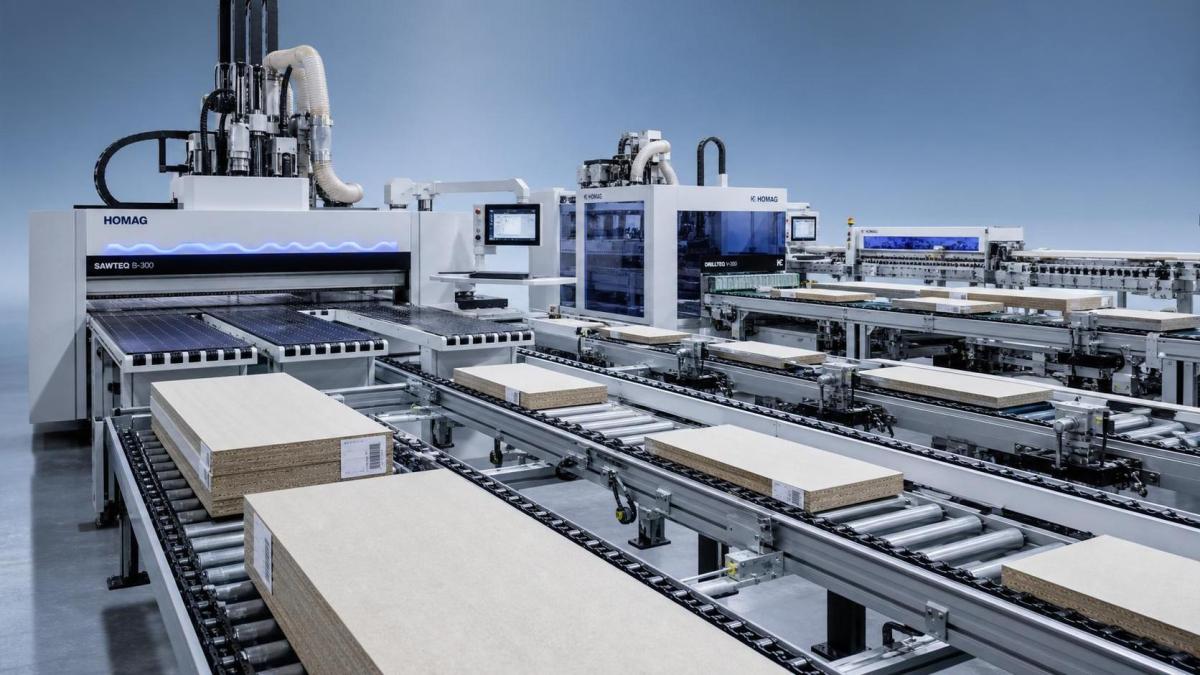
Achieving CNC furniture production high efficiency is no longer about adding a faster spindle alone.
The bigger gains usually come from fixing hidden delays between design, cutting, drilling, labeling, edging, and material flow.
In whole-house customization, one weak link can slow the entire line and erase the value of advanced CNC equipment.
That is why CNC furniture production high efficiency must be treated as a system decision, not a single machine purchase.
From recent project trends, the strongest performers are improving data flow, reducing board handling, and matching machine capability to order structure.
The result is better throughput, fewer remakes, steadier lead times, and more reliable customization at scale.
Where CNC Furniture Production Efficiency Usually Breaks Down
Many factories assume low output starts at the router.
In practice, CNC furniture production high efficiency often breaks earlier, especially at the handoff from office data to workshop execution.
1. Design-to-machine data transfer
If CAD, CAM, and production codes are not aligned, operators spend time correcting files, renaming parts, or rebuilding programs.
That creates waiting time before cutting even begins.
2. Nesting that looks efficient but is not
A high material yield does not always mean high throughput.
Overly complex nests can increase tool changes, cutting travel, and sorting difficulty after unloading.
3. Drilling and routing imbalance
A machine may cut fast but pause too often for vertical or horizontal drilling.
This is common in cabinet lines with dense hardware requirements.
4. Edge processing becoming the hidden constraint
When routing output increases, edge banding often becomes the real bottleneck.
Boards queue up, labels get mixed, and finished parts wait for the next station.
5. Manual sorting and internal logistics
Even strong CNC furniture production high efficiency will collapse if workers search for parts, move stacks twice, or confirm labels by hand.
Shop-floor movement is often where time quietly disappears.
How to Diagnose the Real Constraint Before Buying Equipment
Before comparing machine models, map the process by minutes, not assumptions.
This simple step prevents expensive overbuying and supports CNC furniture production high efficiency with better accuracy.
- Measure actual cycle time for loading, cutting, drilling, unloading, sorting, edging, and rework.
- Separate machine running time from operator waiting time.
- Track remakes by cause, such as wrong labels, chip-out, hole deviation, or edge mismatch.
- Check peak order mix, not only average volume.
- Review how many parts require special drilling, grooves, angles, or mixed materials.
In actual projects, the most useful metric is not spindle speed.
It is the number of qualified parts completed per shift, with traceable data and no downstream waiting.
That is the operating definition of CNC furniture production high efficiency that matters commercially.
Machine Choices That Actually Improve Throughput
Machine selection should follow order structure, board type, and automation level.
The right choice for CNC furniture production high efficiency is rarely the biggest machine on paper.
Single table nesting router
This works for smaller factories, pilot lines, or variable job shops.
It keeps investment controlled, but loading and unloading can limit daily capacity.
Dual table or auto-loading nesting line
This is often the first serious upgrade for CNC furniture production high efficiency.
It reduces idle time between boards and creates a more stable shift rhythm.
CNC machining center with strong drilling package
For panel furniture with many connectors, cams, and shelf pins, drilling capacity matters as much as routing speed.
A balanced machine avoids repeated repositioning and supports better one-pass processing.
5-axis CNC woodworking router
This suits complex shaped components, curved panels, and premium customization.
It can unlock flexibility, but only delivers CNC furniture production high efficiency when the order mix justifies its capability.
Integrated labeling and scanning systems
This choice is frequently underestimated.
Yet traceable part identity is central to CNC furniture production high efficiency, especially in mixed-batch production.
Why Edge Banding and Material Flow Must Be Planned Together
A faster router can create a slower factory if edge capacity does not rise with it.
This is one of the clearest signals in modern CNC furniture production high efficiency projects.
When selecting CNC machines, also review edge bander speed, glue technology, buffer design, and return logistics.
Laser or PUR edge solutions may support quality goals, but flow design still determines final output.
More importantly, parts should move through cutting, edging, and sorting with minimal rehandling.
A good line removes confusion before it removes labor.
A Practical Comparison Table for Machine Decisions
This comparison helps connect machine choices with actual operating goals.
That keeps CNC furniture production high efficiency grounded in business reality.
Digital Coordination Is Now Part of the Machine Choice
Machine performance is now tied to software connectivity.
For CNC furniture production high efficiency, MES links, barcode logic, production scheduling, and order traceability are no longer optional extras.
They reduce missed parts, support mixed-order batching, and improve delivery confidence.
This is especially important for manufacturers serving customized residential projects with short lead times.
In that environment, CNC furniture production high efficiency depends on every board being processed correctly the first time.
A Realistic Upgrade Path for Higher Efficiency
The smartest path is usually staged, not dramatic.
- Standardize data from design to machine output.
- Improve nesting rules for both yield and downstream sorting.
- Upgrade loading, labeling, and scanning before adding pure speed.
- Balance routing capacity with edge banding and internal logistics.
- Add advanced CNC capability only where order complexity truly needs it.
This sequence usually delivers more stable gains than a single high-profile machine purchase.
It also lowers implementation risk while building CNC furniture production high efficiency step by step.
Final Takeaway
CNC furniture production high efficiency comes from system balance, not isolated machine speed.
The key is to identify the true bottleneck, match machine type to product mix, and connect every process with reliable data.
When routing, drilling, edging, and logistics move as one coordinated flow, productivity improves without sacrificing customization.
That is the practical route to CNC furniture production high efficiency in today’s competitive furniture manufacturing environment.
Related News
Get weekly intelligence in your inbox.
No noise. No sponsored content. Pure intelligence.
