
How to Evaluate an Industrial Cutting Systems Manufacturer for Accuracy and Service Support
Choosing an industrial cutting systems manufacturer is rarely a narrow equipment decision. In packaging, printing, and woodworking, cutting accuracy shapes product quality, while service support protects uptime, waste control, and delivery commitments.
That is why a serious evaluation has to look beyond catalog speeds and tool libraries. The stronger question is whether the manufacturer can sustain precision in real production, integrate with automation, and respond when output starts drifting.
Across the PWFS landscape, that question matters even more. Corrugated lines, die-cutters, offset workflows, CNC routers, and edge processing systems all depend on repeatable cutting behavior under pressure, heat, speed, and changing material conditions.
Why Accuracy and Support Now Carry More Weight
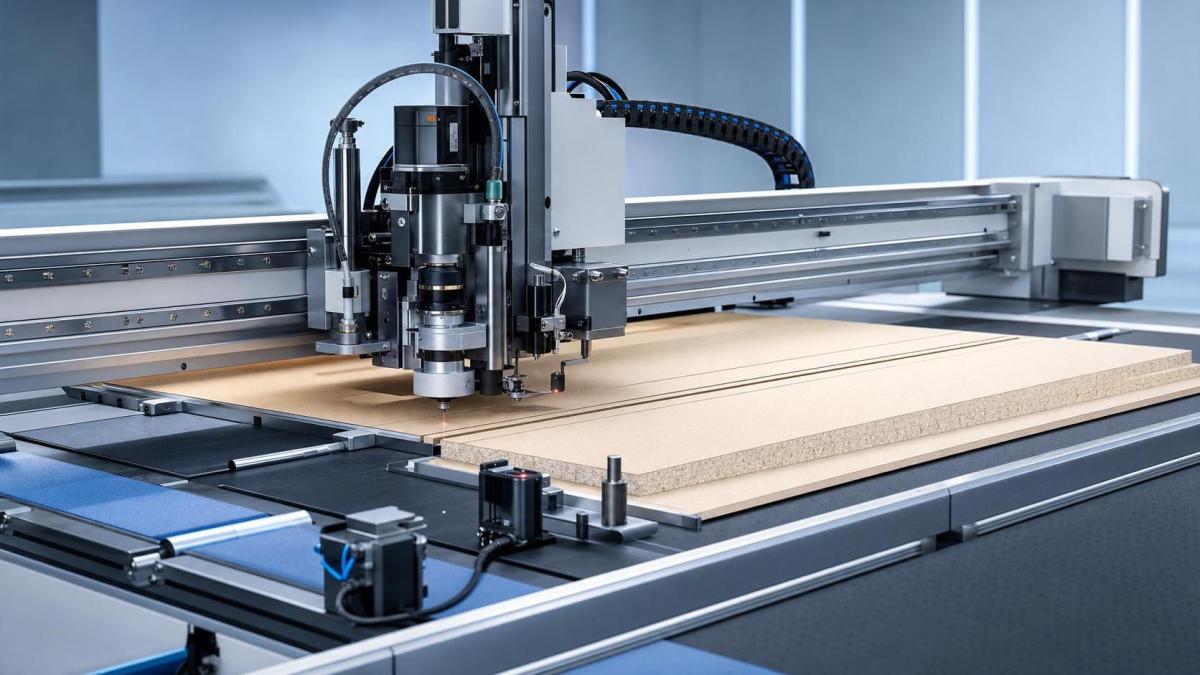
Industrial cutting has become more exposed to market volatility. Shorter lead times, customized orders, material variability, and labor constraints leave less room for unstable equipment or slow service chains.
In corrugated converting, a slight cut deviation can affect folding geometry, gluing consistency, and case strength. In offset packaging, misaligned cutting can destroy otherwise perfect color registration. In woodworking, small tolerance errors can multiply during drilling, routing, and edge banding.
An industrial cutting systems manufacturer is therefore judged by two linked capabilities. One is the machine’s ability to hold tolerance. The other is the supplier’s ability to keep that performance stable over time.
What a Strong Manufacturer Evaluation Really Covers
A useful evaluation starts with performance under production conditions, not showroom conditions. Accuracy should be treated as a system result, shaped by mechanics, software, motion control, tooling, sensing, and operator interaction.
That means the industrial cutting systems manufacturer should be reviewed across four connected layers: machine architecture, process control, service capability, and business fit.
Mechanical and motion foundations
Frame rigidity, drive system stability, spindle or cutting head quality, vibration management, and thermal control all influence repeatability. Published tolerance figures matter less if they are not tied to material type, speed, and shift duration.
Ask whether the manufacturer validates accuracy during continuous runs. A machine that holds position for ten samples may still drift during long production cycles.
Software and control logic
Modern cutting performance depends heavily on control software. Toolpath optimization, compensation routines, nesting logic, servo tuning, vision alignment, and diagnostics all affect final cut quality.
This is especially relevant in flexible packaging conversion and custom furniture workflows, where order sizes change often and program transitions must stay efficient.
Service responsiveness
A capable industrial cutting systems manufacturer should provide response structures, not vague promises. Remote diagnostics, spare parts planning, commissioning depth, preventive maintenance schedules, and escalation paths should be clear before purchase.
In practice, service quality shows up when tolerances widen unexpectedly, sensors fail, a control update causes instability, or local operators cannot isolate the root cause.
Where Accuracy Problems Usually Begin
Many buyers focus on nominal precision and miss the reasons accuracy deteriorates. That creates a gap between acceptance testing and daily production reality.
This is where a credible industrial cutting systems manufacturer separates itself. The better suppliers can show how they control these variables, not merely acknowledge them.
Different Production Environments Need Different Proof
Evaluation criteria should reflect the production environment. Accuracy in one segment does not automatically translate to another.
Packaging and converting
For die-cutting, folder-gluer support, and corrugated conversion, focus on registration stability, crease-to-cut alignment, waste rates, makeready time, and performance at commercial speed.
If the line connects with high-precision offset printing, ask how the cutting system preserves the visual value created upstream. A fast cutter that damages print alignment erases margin.
CNC woodworking and furniture systems
For routers and related finishing systems, accuracy must be assessed alongside drilling consistency, edge readiness, tool change speed, dust extraction compatibility, and CAD-to-machine translation quality.
PWFS tracks this closely because whole-house customization depends on flexible, code-driven manufacturing. Small dimensional errors quickly surface during assembly, edge banding, or on-site installation.
High-mix automated plants
Where order switching is frequent, the industrial cutting systems manufacturer should prove digital readiness. That includes recipe control, MES connectivity, barcode workflows, traceability, and stable program transfer.
Accuracy in high-mix production is not only about the machine stopping at the right coordinate. It is also about the right file, right tool, right material, and right sequence reaching the machine every time.
Questions That Reveal Service Quality
Support often looks similar in brochures. The differences appear when questions become specific and operational.
- How is accuracy verified during installation, and what baseline report is delivered?
- What is the normal response time for remote troubleshooting and on-site service?
- Which parts are stocked locally, regionally, and only at headquarters?
- How are software patches validated before deployment to production equipment?
- What operator and maintenance training is included beyond machine startup?
- Can the manufacturer provide case histories involving drift, vibration, or integration failures?
- How are preventive maintenance intervals tied to workload, not just calendar time?
A serious industrial cutting systems manufacturer usually answers with procedures, data, and named responsibilities. Weak suppliers tend to answer with general assurances.
How to Compare Suppliers Without Being Misled
The safest comparison method is to build a weighted scorecard. Technical precision should be one category, but not the only one.
Include measured accuracy, speed under load, software openness, integration support, local service structure, training depth, spare parts risk, and total cost over several years.
It also helps to request evidence from applications similar to your own. A supplier strong in flat corrugated conversion may not be equally strong in multi-axis woodworking or high-speed carton geometry.
When possible, witness production samples with real materials, real file complexity, and realistic shift conditions. That is usually more useful than polished trial pieces.
A Practical Next Step
A good evaluation of an industrial cutting systems manufacturer ends with a narrower, better-informed shortlist. By that stage, the goal is not to admire machine features. It is to reduce operational uncertainty.
Start with the jobs where dimensional error, downtime, or service delay causes the most damage. Then map those pain points against machine architecture, control capability, and support commitments.
In sectors covered by PWFS, from corrugated packaging to custom furniture systems, the most reliable decisions come from connecting micron-level performance with broader production realities. That approach makes supplier comparison clearer, and investment outcomes more defensible.
Related News
Get weekly intelligence in your inbox.
No noise. No sponsored content. Pure intelligence.
