Paper and Wood Production Systems Explained: Key Process Stages, Inputs, and Output Goals
Why do paper and wood production systems matter so much today?
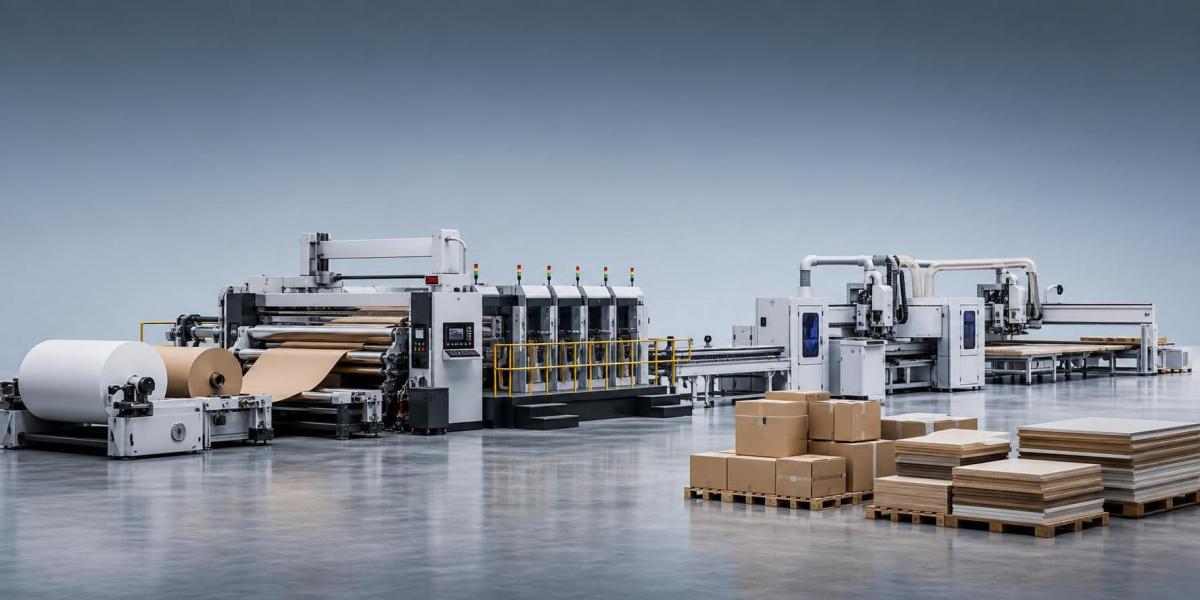
Paper and wood production systems sit behind two everyday needs: shipping protection and interior living space.
They convert paper rolls, inks, boards, adhesives, and digital files into corrugated packaging, printed cartons, furniture parts, and finished panels.
That sounds simple, but the production logic is not.
A corrugated board line relies on heat, pressure, moisture balance, and glue control.
An offset press depends on micron-level registration, ink stability, and consistent substrate behavior.
A CNC router reads design data directly and turns panels into precise components.
An edge bander closes the loop by sealing exposed sides for appearance, durability, and emission control.
This is why paper and wood production systems are often discussed together.
Both industries are moving toward faster changeovers, higher yield, tighter automation, and lower waste.
PWFS follows this intersection closely because packaging demand and custom furniture demand now evolve under similar pressure.
The common question is no longer only how to make more.
It is how to make more varieties, with less downtime, while keeping quality measurable.
What are the main stages inside modern paper and wood production systems?
A useful way to understand paper and wood production systems is to follow the material flow.
Most lines can be read as a sequence of preparation, transformation, finishing, and verification.
For paper-based production
- Raw paper conditioning and unwinding.
- Corrugation, heating, gluing, and board formation.
- Sheet handling, printing, die-cutting, folding, and gluing.
- Stacking, inspection, and shipment preparation.
In corrugated lines, the first quality battle is often moisture and temperature control.
If that balance drifts, board strength, flatness, and glue bonding start to suffer.
Later, offset presses or post-print systems add the visual layer.
Then die-cutters and folder-gluers turn flat sheets into functional three-dimensional packaging.
For wood-based production
- Panel selection, storage, and cutting plan generation.
- CNC cutting, drilling, grooving, and shaping.
- Edge banding, surface finishing, sorting, and labeling.
- Assembly preparation and final quality checks.
Here, the digital link matters as much as the machine itself.
A flawed CAD file, weak nesting logic, or poor toolpath setting can waste material before cutting even starts.
That is why advanced paper and wood production systems increasingly depend on MES connectivity and data discipline.
Which inputs actually drive quality, speed, and output goals?
People often focus on machine size or advertised speed.
In practice, output goals are shaped by a wider set of inputs.
The table shows why paper and wood production systems should never be judged by headline speed alone.
A press rated for 15,000 sheets per hour means little if registration drifts.
A five-axis router also loses value when chips are not evacuated well and edges burn.
The stronger benchmark is stable output under real production conditions.
That includes setup time, usable yield, rework rate, and consistency across different jobs.
How do packaging lines and furniture lines differ, and where do they overlap?
They serve different end products, yet their manufacturing pressures are becoming surprisingly similar.
Packaging systems are usually optimized for speed, print impact, and geometric conversion.
Furniture component systems are usually optimized for customization, drilling accuracy, and surface integrity.
Still, both need reliable digital job transfer, defect reduction, and flexible scheduling.
That overlap explains why PWFS places corrugated lines, presses, folder-gluers, CNC routers, and edge banders in one intelligence frame.
The shared theme is industrial transformation from material handling to data-driven execution.
A simple comparison helps
- Corrugated board lines focus on compression strength and board stability.
- Offset presses focus on visual precision and color repeatability.
- Die-cutters and folder-gluers focus on shape accuracy and folding speed.
- CNC woodworking routers focus on dimensional accuracy and flexible pattern execution.
- Edge banders focus on finish, sealing, and environmental performance.
In other words, the output goals differ, but the production discipline is closely related.
What are the most common mistakes when evaluating paper and wood production systems?
One common mistake is treating all automation as equal.
Some systems automate motion well but still depend on manual corrections between steps.
Another mistake is ignoring compliance and material traceability until late in the process.
That matters for FSC sourcing, food-contact inks, and indoor emission expectations.
PWFS often highlights this point because performance is no longer judged only by output volume.
It is also judged by whether output can pass market rules without costly rework.
A third mistake is overlooking the physics of the process.
High-speed die-cutting creates dynamic stress.
Woodworking tools create heat and chip loads that affect finish quality.
When those basics are ignored, “high speed” often becomes unstable speed.
Warning signs worth noticing
- Frequent small stops that never appear in headline capacity figures.
- Large material loss during job changeovers.
- Strong output on standard jobs, but weak performance on short runs or custom work.
- Poor linkage between design data, shopfloor execution, and traceability records.
When comparing systems, what should the next evaluation step look like?
The most practical next step is to define the output goal before comparing equipment categories.
That goal may be box compression strength, color consistency, carton forming speed, panel customization rate, or edge sealing durability.
Once the goal is clear, the comparison becomes more disciplined.
A useful shortlist usually includes these checks:
- Match the machine to job mix, not only to peak volume.
- Check how quickly the line recovers after changeovers and interruptions.
- Review data connectivity from design, order entry, and MES to machine execution.
- Verify consumable compatibility, maintenance rhythm, and operator dependency.
- Compare usable yield, not theoretical capacity.
This is where paper and wood production systems should be viewed as operational ecosystems.
The best result usually comes from balancing precision, flexibility, compliance, and line stability together.
If the goal is deeper understanding, start by mapping process stages, critical inputs, and measurable output targets on one page.
That simple exercise makes it easier to compare corrugated, printing, converting, routing, and edge banding systems without losing the bigger production picture.
Related News
Get weekly intelligence in your inbox.
No noise. No sponsored content. Pure intelligence.
