
How to Evaluate a Precision Woodworking Tools Factory for Tolerance, Capacity, and QC
Why does a precision woodworking tools factory need more than a price check?
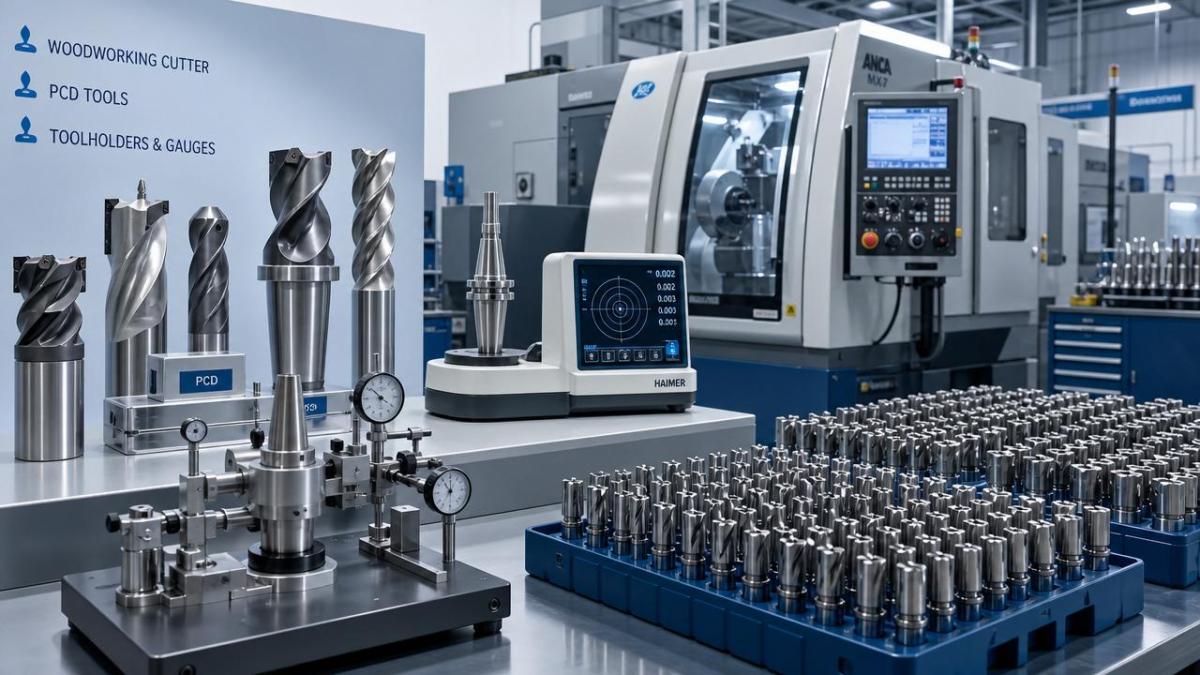
A low quote can look attractive at sample stage.
The bigger question is whether the factory can hold tolerance, repeat batches, and manage defects when volume rises.
That is why evaluating a precision woodworking tools factory starts with process evidence, not just commercial terms.
In practice, tool performance affects panel cutting quality, edge finish, spindle load, dust control, and downstream assembly speed.
A small variation in geometry can create chip-out, burn marks, shorter tool life, or unstable cuts on CNC routers.
This matters even more in flexible manufacturing.
PWFS often tracks how woodworking equipment, packaging lines, and automated finishing systems depend on the same discipline: precision under speed.
The same logic behind micron-level print registration also applies to woodworking tool balance, runout control, and repeatable machining.
So when reviewing a precision woodworking tools factory, think in three layers.
First, can it make the tool correctly?
Second, can it make enough of them on time?
Third, can it prove quality consistently instead of promising it verbally?
What tolerance indicators actually tell you a factory is precise?
Many suppliers say they are precise.
Fewer can define precision in measurable terms.
For a precision woodworking tools factory, the useful conversation begins with drawings, tolerances, and inspection methods.
Ask for tolerance control on diameter, flute profile, cutting edge symmetry, shank concentricity, brazing position, and coating thickness where relevant.
Runout deserves special attention.
If runout is unstable, tool wear becomes uneven and finished parts become harder to control.
This is especially important for nesting tools, compression bits, PCD tools, and custom profile cutters.
It also helps to ask how the factory measures these values.
A serious precision woodworking tools factory should be comfortable discussing tool presetters, profile projectors, CMMs, balancing equipment, and calibrated gauges.
More importantly, it should connect measurement to use case.
For example, tools for solid wood doors, MDF cabinets, laminated boards, and honeycomb panels do not fail in the same way.
The table below helps separate useful claims from vague ones.
A factory that understands tolerance should also explain where tighter control adds value and where it only raises cost.
That balance is often a better sign than exaggerated claims.
How can you tell whether production capacity is real or just stated on paper?
Capacity is not only monthly output.
It is the ability to maintain schedule, tool geometry, and stable supply across mixed orders.
A precision woodworking tools factory serving custom furniture lines often handles standard items and engineered specials at the same time.
That complexity exposes weak planning quickly.
A useful check is to ask for production flow rather than headline numbers.
Where are blanks prepared?
How are grinding, brazing, coating, balancing, and final inspection scheduled?
Which steps are in-house, and which are outsourced?
Outsourcing is not automatically a problem.
The risk appears when outsourced steps are poorly controlled or become lead-time bottlenecks.
Another practical method is to compare standard lead time, rush lead time, and remake lead time.
If all three answers sound identical, the number may be scripted.
Factories with real planning discipline usually distinguish normal load from peak load.
PWFS has observed similar patterns in corrugated, print, and die-cutting equipment.
The most reliable plants are not always the largest.
They are the ones with visible process rhythm, MES visibility, and controlled handoffs between machining and inspection.
- Check order mix, not just total monthly pieces.
- Confirm bottlenecks in coating, brazing, or custom grinding.
- Ask how urgent replacements are prioritized.
- Review on-time delivery data for at least three recent months.
If a precision woodworking tools factory can support engineering changes without losing delivery control, capacity is likely genuine.
What should a dependable QC system look like before volume orders begin?
A dependable QC system is visible before there is a problem.
It should not appear only after a complaint.
In a precision woodworking tools factory, good QC covers incoming materials, in-process control, final inspection, and corrective feedback.
Start with material traceability.
Can the factory identify carbide grade, steel source, brazing material, and coating batch?
That matters when tool life suddenly shifts between lots.
Then review in-process checks.
A strong factory does not wait until finished goods to discover geometry drift.
It checks critical stages such as blank prep, flute grinding, edge formation, brazing stability, and post-coating dimensions.
Final inspection should include both dimensions and functional risk points.
For example, edge sharpness, weld integrity, balance, labeling accuracy, and packaging protection all affect delivered quality.
Need a quick litmus test?
Ask how nonconforming tools are isolated and how root causes are closed.
If the answer stops at sorting or replacement, the QC loop is incomplete.
The better answer includes recordkeeping, analysis, and process correction.
A short QC review list
- Incoming material certificates and lot traceability
- Defined control plan for critical dimensions
- Calibration records for inspection equipment
- Documented NCR and corrective action process
- Retention of first article or golden sample records
This is where a precision woodworking tools factory becomes easier to compare objectively.
QC maturity usually predicts long-term cost better than the opening quote does.
Where do buyers misjudge cost when comparing suppliers?
The most common mistake is treating unit price as total cost.
With a precision woodworking tools factory, hidden costs often sit in downtime, shorter life, unstable finish quality, and frequent emergency replacements.
A slightly higher tool price may be cheaper if it delivers longer cutting life and fewer rejects.
There is also the cost of inconsistency.
When one batch cuts cleanly and the next creates edge tear-out, production teams start adjusting feeds, speeds, and nesting strategies unnecessarily.
That wastes machine time and complicates standardization.
Another overlooked issue is regrinding or reordering support.
If the factory cannot keep geometry consistent across resharpening cycles, initial savings disappear quickly.
More careful comparisons usually include these questions:
- What is the expected tool life by material type?
- How stable is performance across repeat lots?
- What replacement policy applies to verified defects?
- Can the factory support design optimization for cutting efficiency?
A precision woodworking tools factory that shares test data, usage guidance, and failure analysis often brings more value than one that competes only on headline price.
What is the smartest way to qualify a precision woodworking tools factory before scaling orders?
A practical qualification process usually works better than long theoretical checklists.
Start with a clear drawing package and application description.
Include workpiece material, spindle speed range, target finish, life expectations, and any critical failure history.
Then request first article samples with inspection reports.
The best comparison is not sample appearance alone.
It is sample performance under real cutting conditions.
After that, move to a pilot order large enough to test repeatability.
This stage reveals whether the precision woodworking tools factory can maintain tolerance, packaging control, and delivery rhythm across a realistic batch.
If possible, audit the site or conduct a structured remote review.
Pay attention to machine condition, work-in-progress control, inspection records, and engineering communication quality.
That last point matters more than it seems.
Factories that explain trade-offs clearly tend to handle custom requirements better later.
In sectors followed by PWFS, from offset presses to CNC woodworking systems, durable supply relationships usually start with measurable standards and shared process language.
The same principle applies here.
Before expanding annual volume, confirm the specification baseline, pilot data, correction process, and reorder consistency plan.
That approach reduces supply risk without turning qualification into bureaucracy.
In the end, choosing a precision woodworking tools factory is a matter of evidence.
Tolerance proves machining capability.
Capacity proves delivery resilience.
QC proves that good results can repeat, not just appear once.
A sensible next step is to build a comparison sheet around these three areas, test one pilot order, and score each supplier on facts instead of promises.
That usually leads to better cost control, fewer surprises, and a more reliable long-term sourcing decision.
Related News
Get weekly intelligence in your inbox.
No noise. No sponsored content. Pure intelligence.
