
Woodworking Automation Systems Manufacturer Comparison: What to Check Before Requesting a Quote
Woodworking automation systems manufacturer comparison starts before the quote
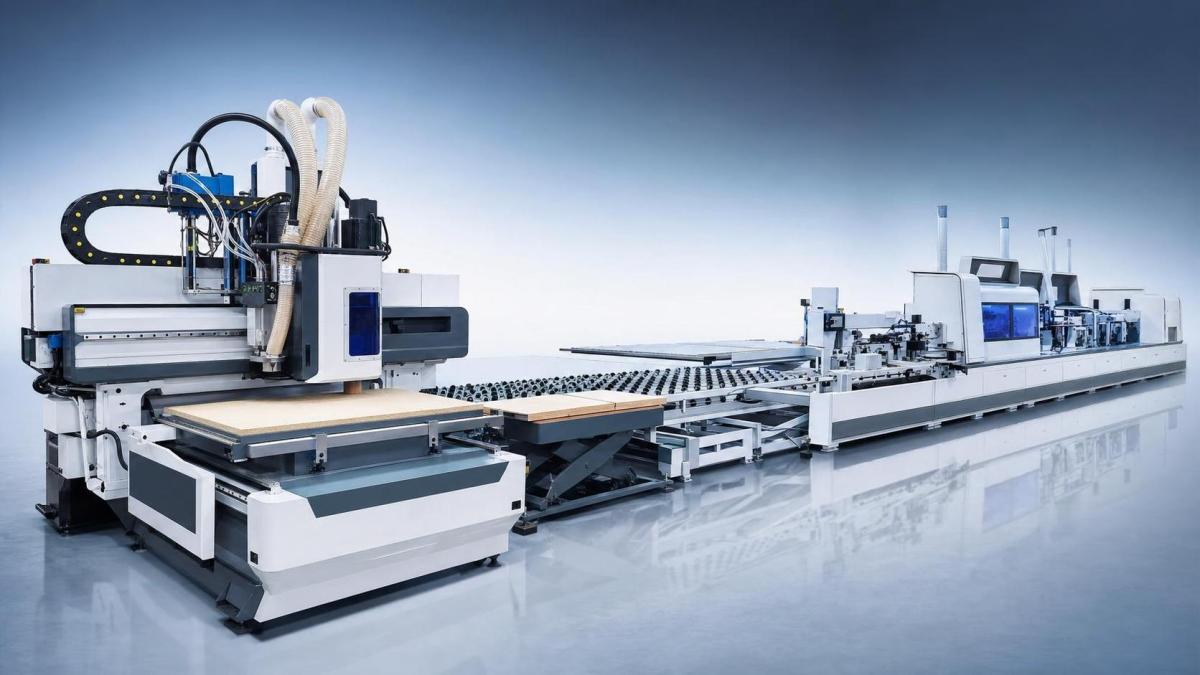
A quote can look competitive and still hide the wrong fit.
When comparing a woodworking automation systems manufacturer, the bigger question is operational alignment, not headline price.
In real factories, cutting accuracy, software flow, spare parts response, and uptime discipline decide profitability far more than a discount.
This matters even more in furniture and panel processing, where batch size is shrinking and customization is becoming normal.
PWFS follows this shift closely across CNC woodworking routers, edge banders, digital production links, and adjacent print and packaging automation.
That broader view is useful because woodworking automation rarely works as a single machine decision.
It sits inside a larger manufacturing chain shaped by design data, material flow, compliance, and delivery speed.
What should a woodworking automation systems manufacturer actually be able to deliver?
The best answer is simple: repeatable output under daily production pressure.
A capable woodworking automation systems manufacturer should prove more than machine specs on paper.
It should show how the line handles panel loading, drilling, routing, nesting, labeling, edge preparation, and data transfer without constant manual correction.
For custom furniture production, software matters almost as much as mechanics.
If CAD, CAM, MES, and barcode logic do not connect smoothly, automation becomes isolated equipment rather than a working system.
In practice, three capabilities separate serious suppliers from sellers of standalone hardware:
- Stable machining precision across shifts, tool wear, and different board materials.
- Software compatibility with existing design and production platforms.
- Service infrastructure for commissioning, training, diagnostics, and spare parts.
If one of these is weak, the quote comparison is already incomplete.
Which technical checks matter most before asking for pricing?
This is where many buyers move too quickly.
A woodworking automation systems manufacturer can offer an attractive machine list, yet fail on core operating details.
Before requesting a quote, confirm the technical checkpoints below.
The more customized the production model, the more valuable these questions become.
That is why PWFS often frames woodworking systems together with broader automation logic seen in packaging lines.
In both sectors, stable speed only matters when quality stays inside tolerance.
How do you compare manufacturers when each one claims high automation?
Marketing language is rarely enough here.
A practical comparison of any woodworking automation systems manufacturer should focus on production evidence, engineering depth, and implementation discipline.
One useful method is to compare by operating scenario rather than brochure category.
If the factory runs high-mix custom furniture
Ask for proof of fast recipe changes, label tracking, and short-batch nesting performance.
A slower machine with better data flow may outperform a faster one in this setting.
If the focus is volume panel processing
Look harder at loading automation, cycle consistency, chip extraction, and shift-level uptime.
Here, mechanical rigidity and maintenance access often matter more than interface design.
If expansion is likely within two years
Check whether the woodworking automation systems manufacturer supports modular growth.
That includes extra workstations, robotics, edge processing links, and MES-level scheduling upgrades.
The strongest suppliers can explain this roadmap clearly, with interface logic and upgrade limits stated early.
Where do hidden costs usually appear after installation?
Most hidden costs are not hidden at all.
They were simply not examined before the quote request.
A woodworking automation systems manufacturer should be evaluated on total cost of ownership, not delivered machine value alone.
- Tool consumption may be higher than promised on laminated boards or dense materials.
- Dust extraction upgrades may be needed for actual cutting intensity.
- Electrical, air, and floor preparation can add major project cost.
- Operator training may take longer when software logic is complex.
- Imported spares can create expensive waiting time if local stock is thin.
For panel furniture plants, edge quality can create another hidden expense.
If cut accuracy and edge banding alignment are inconsistent, downstream assembly slows immediately.
PWFS pays attention to this same chain effect across print, die-cutting, and woodworking.
One unstable process step can weaken the economics of the whole line.
What should be included in the RFQ so the quote is actually useful?
A weak RFQ produces attractive but incomparable offers.
To compare any woodworking automation systems manufacturer fairly, define the operating context in enough detail.
That does not mean writing a long document.
It means giving the supplier the right variables.
- Main product types, board materials, thickness range, and daily batch structure.
- Required processes such as nesting, drilling, grooving, labeling, edge preparation, or cell integration.
- Current software stack and expected data exchange format.
- Target output per shift, acceptable tolerance, and staffing assumptions.
- Factory constraints including footprint, utilities, dust handling, and expansion plans.
Also request separate pricing for installation, training, consumables, remote support, and recommended spare parts.
This makes the manufacturer comparison more honest from the beginning.
A supplier confident in system design usually welcomes that level of detail.
So how do you decide which manufacturer deserves the next step?
The best woodworking automation systems manufacturer is the one that fits the factory’s real production logic and future path.
That decision should rest on evidence, not presentation quality.
Look for a supplier that can connect CNC accuracy, automation software, service readiness, and expansion planning into one credible proposal.
In broader industrial terms, this is exactly where PWFS adds perspective.
Its coverage of woodworking, packaging, print precision, and flexible manufacturing highlights one consistent lesson.
The winning system is rarely the cheapest machine.
It is the system that holds tolerance, keeps data moving, and supports production under change.
Before sending an RFQ, organize process needs, define measurable targets, and compare suppliers against the same technical checklist.
That step alone usually improves quote quality, shortens evaluation time, and reduces implementation risk later.
Related News
Get weekly intelligence in your inbox.
No noise. No sponsored content. Pure intelligence.
