
What to Compare When Evaluating a Die-Cutting Machines Supplier for Carton Production
What to Compare When Evaluating a Die-Cutting Machines Supplier for Carton Production
Choosing the right die-cutting machines supplier can directly affect carton quality, production speed, tooling flexibility, and long-term operating costs.
For business evaluation, the decision goes far beyond initial price.
It requires a close comparison of precision, uptime, automation, service response, and carton application experience.
A capable die-cutting machines supplier should support stable output today and lower risk over the machine's full lifecycle.
This guide breaks down the factors that matter most when comparing suppliers for carton production.
Start with Carton Production Fit
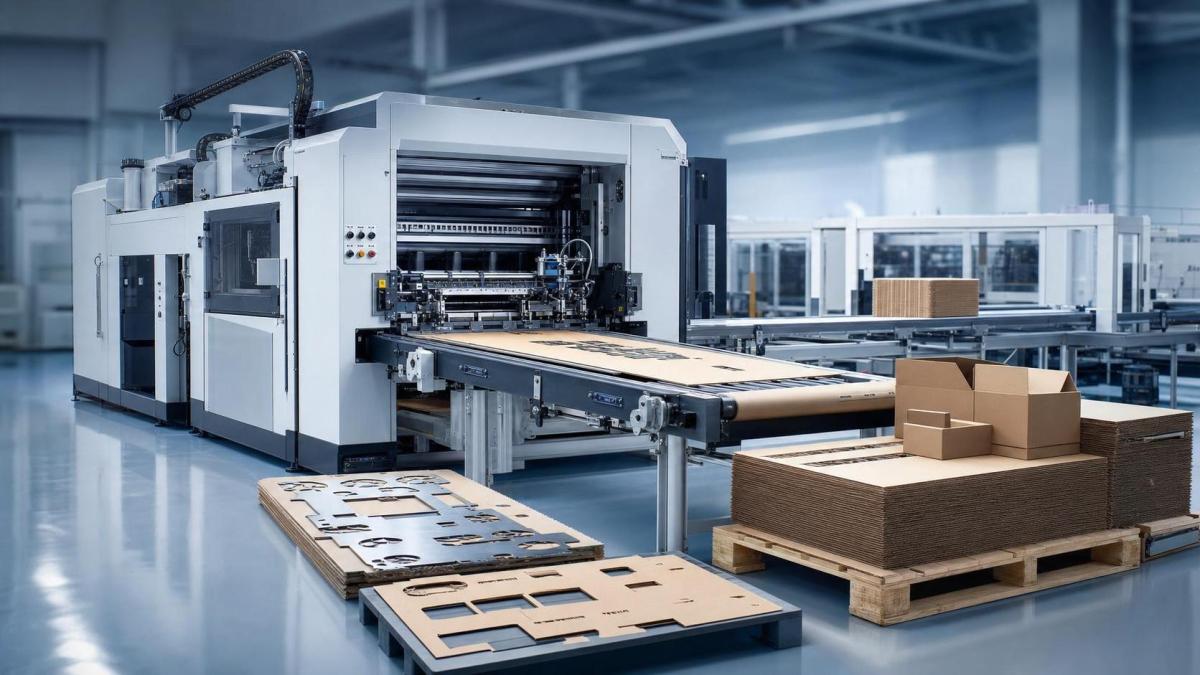
Not every die-cutting machines supplier is equally strong in carton work.
Some suppliers are better known for folding cartons, while others focus on corrugated converting or mixed-format packaging lines.
That difference matters because board type, flute profile, sheet size, and output targets shape the right machine configuration.
In practical terms, start by matching the supplier's reference projects with your own carton range.
Ask whether the die-cutting machines supplier has delivered lines for regular slotted cartons, retail-ready packaging, e-commerce shippers, or heavy-duty corrugated formats.
Also compare their experience with short runs, frequent changeovers, and high-volume repetitive jobs.
A supplier that understands your exact carton mix usually gives better advice on machine width, pressure range, feeder design, stripping, and waste removal.
Questions to ask early
- What carton board grades and flute types have you processed successfully?
- What is the proven speed range for jobs similar to ours?
- How often do your carton customers change tooling each shift?
- Which downstream systems integrate best with your machine?
Compare Precision, Registration, and Cutting Consistency
Carton production depends on repeatable accuracy.
If cutting depth drifts or registration shifts, waste rises fast.
That is why a die-cutting machines supplier should provide measurable performance data, not broad claims.
Focus on sheet alignment, pressure uniformity, crease quality, and repeatability over long runs.
A strong die-cutting machines supplier will explain how the feeder, gripper system, and platen mechanics protect precision at production speed.
More importantly, they should show results from real carton plants.
Look for sample blanks, inspection reports, and customer references where box geometry must stay tight.
This becomes even more critical for cartons with print-to-cut alignment requirements.
What to compare side by side
Look Beyond Rated Speed to Real Throughput
Brochure speed is rarely the whole story.
A die-cutting machines supplier may promote a high maximum speed, yet actual carton output depends on setup time, stoppages, and waste rates.
This is where practical comparison becomes more useful than headline numbers.
Ask for net productivity on typical carton jobs.
Compare average uptime, makeready duration, blank separation reliability, and speed losses during long shifts.
A better die-cutting machines supplier will discuss throughput honestly, including where the machine slows down and why.
That transparency usually signals stronger engineering discipline.
Operational indicators worth checking
- Average cartons produced per hour on jobs like yours
- Makeready time for repeat and new orders
- Waste percentage during startup and steady production
- Frequency of jams, misfeeds, and emergency stops
- Labor needed to hold stable performance
Evaluate Automation, Changeover, and Data Capability
Recent market changes have made flexibility more valuable.
Carton plants now handle more SKU variation, shorter runs, and tighter delivery windows.
That means the right die-cutting machines supplier should offer more than basic mechanical performance.
Compare automation functions that reduce setup effort and operator dependency.
Examples include automatic pressure setting, job memory, non-stop feeder systems, quick-lock frames, and inline inspection support.
Also ask whether the die-cutting machines supplier supports MES connectivity, production dashboards, and remote diagnostics.
These features may not decide the purchase alone, but they strongly influence long-term efficiency.
In real operations, better data often leads to faster troubleshooting and more stable carton quality.
Check Service Depth, Spare Parts, and Supplier Responsiveness
A die-cutting machines supplier is really a long-term operating partner.
When a critical machine stops, the quality of after-sales support becomes visible immediately.
This is especially true in carton production with tight delivery commitments.
Compare response time commitments, local technician coverage, spare parts stock, and remote service tools.
A reliable die-cutting machines supplier should also provide structured operator training and preventive maintenance guidance.
Do not rely only on sales promises.
Request service KPIs, parts delivery standards, and references from customers in your region.
It is also worth asking how the supplier handles obsolete parts, software updates, and machine upgrades after several years.
Service comparison checklist
- Guaranteed response time for breakdowns
- Availability of local or regional engineers
- Critical spare parts list and lead times
- Training plan for operators and maintenance staff
- Remote troubleshooting and software support scope
Compare Total Cost, Not Just Purchase Price
Price matters, but it rarely tells the full investment story.
A lower-priced die-cutting machines supplier can become more expensive through downtime, waste, tooling limits, or heavy maintenance needs.
For carton production, total cost should include energy use, operator requirement, spare parts consumption, planned maintenance, and efficiency losses.
Also factor in installation, commissioning, board trial support, and future expansion compatibility.
A disciplined die-cutting machines supplier will help build a realistic cost model instead of protecting only the quote value.
That conversation usually reveals how confident the supplier is in long-term performance.
Use Trials, References, and Risk Scoring Before Final Selection
Before choosing a die-cutting machines supplier, validate the claims in a structured way.
Run production trials using your own carton specifications whenever possible.
Visit installed sites that match your throughput level and application complexity.
Then score each die-cutting machines supplier against the same criteria.
A simple weighted matrix can make the final decision much clearer.
Include technical fit, proven uptime, changeover efficiency, service strength, and total cost of ownership.
This approach reduces the chance of overvaluing presentation quality or underestimating operating risk.
In the end, the best die-cutting machines supplier is the one that fits your carton business model with the fewest hidden compromises.
A practical final decision path
- Define your carton mix, speed target, and quality thresholds.
- Shortlist each die-cutting machines supplier with relevant carton references.
- Request measurable data, not only brochures and presentations.
- Run trials and speak with current users.
- Score technical, operational, and service risk before signing.
A careful comparison process usually leads to a stronger investment decision.
When evaluating a die-cutting machines supplier, the most useful question is simple.
Which supplier can keep carton quality high, output stable, and support dependable for years, not just at handover?
Related News
Get weekly intelligence in your inbox.
No noise. No sponsored content. Pure intelligence.
