
Carton Sealing Ecommerce Packaging Machinery: Which Types Fit High-Volume Fulfillment
Carton sealing choices start with fulfillment reality
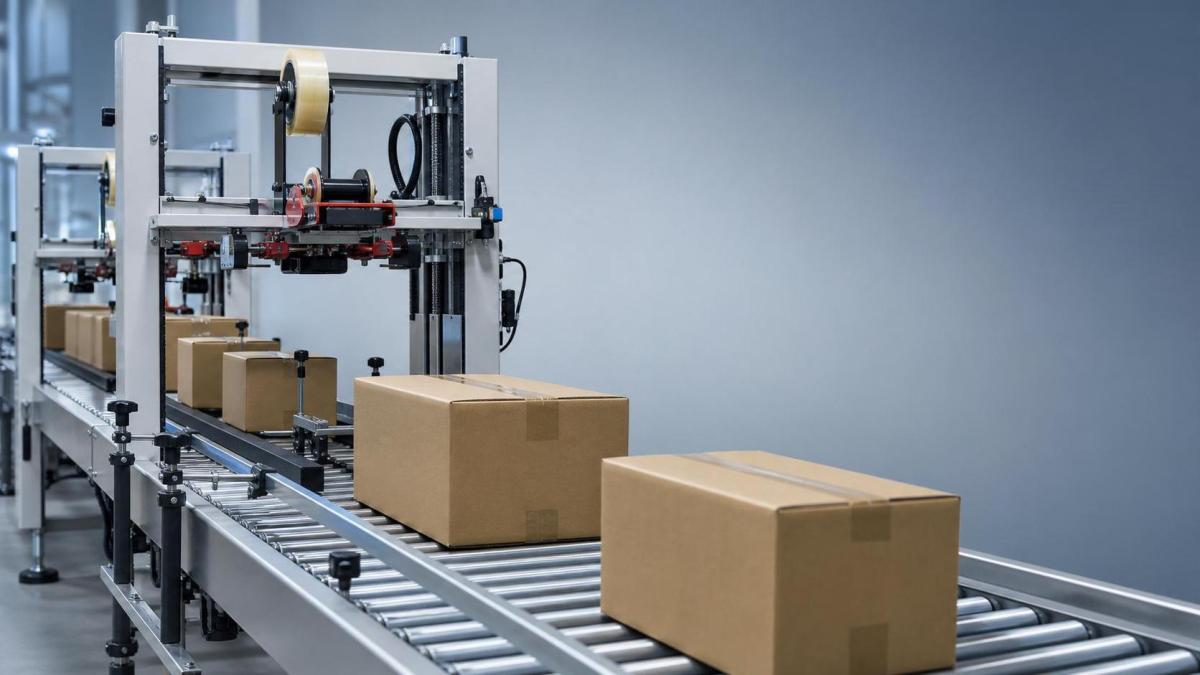
High-volume shipping rarely fails because tape cannot close a box.
It fails when carton sealing ecommerce packaging machinery does not match carton flow, operator rhythm, or upstream box quality.
In fast-moving fulfillment, sealing is the last mechanical checkpoint before parcels enter a carrier network.
A weak decision here shows up later as rework, burst seams, wasted tape, or unstable throughput.
That is why carton sealing ecommerce packaging machinery should be assessed as part of a broader packaging system.
PWFS often tracks this wider chain, from corrugated board lines to die-cutting, folding, gluing, printing accuracy, and automation control.
The sealing stage sits downstream, yet its stability depends on what happened earlier.
Carton squareness, flap consistency, board compression strength, print coating, and line synchronization all matter.
In practice, the right machine type depends less on nameplate speed than on order mix.
Operations shipping one carton size all day behave very differently from sites processing thousands of SKU-driven size changes.
Why similar sites still need different carton sealing ecommerce packaging machinery
Two facilities may both ship 30,000 parcels daily and still need very different sealing setups.
The first difference is carton variability.
If box dimensions change every few minutes, manual adjustment becomes a hidden bottleneck.
The second difference is product behavior inside the box.
Light apparel, dense electronics, and mixed home goods place different stress on top and bottom seals.
The third difference is line architecture.
Standalone pack stations need forgiving machines, while conveyorized cells need timing accuracy and communication with scanners, weighers, and labelers.
A fourth factor is packaging source quality.
When corrugated supply comes from stable board lines and precise converting, sealing can run faster with fewer jams.
When box geometry varies, even advanced carton sealing ecommerce packaging machinery will spend more time correcting bad inputs.
Uniform carton flow usually favors semi-automatic or fixed-format automatic sealers
Some fulfillment centers are high volume but operationally simple.
They run limited carton sizes, stable shifts, and predictable pick profiles.
Here, semi-automatic side-belt sealers or fixed-format automatic top-and-bottom sealers often fit best.
The main reason is not only cost.
It is mechanical simplicity, easier tape head maintenance, and better uptime under repetitive conditions.
This type of carton sealing ecommerce packaging machinery works well when operators can fold flaps consistently before infeed.
It also suits kitted products, subscription boxes, and replenishment shipments where carton dimensions stay controlled.
The judgment point is whether changeover time is truly negligible.
If size changes happen more than expected, a lower-priced machine can become the more expensive choice over a quarter.
Mixed-SKU fulfillment needs automatic random case sealing
More common in e-commerce is the mixed-carton environment.
Box heights vary, widths fluctuate, and outbound surges follow promotions rather than neat schedules.
In this setting, random case sealers usually outperform fixed-format machines.
They automatically adjust to carton dimensions and reduce manual intervention between runs.
That matters when one minute of line stoppage affects several downstream stations.
The better question is not whether automation is needed.
It is whether the sensing and adjustment system remains accurate with partially filled boxes, overhanging dunnage, or tall flaps.
Good carton sealing ecommerce packaging machinery in this segment needs stable infeed control, reliable top head travel, and fast recovery after irregular cartons.
Where print-rich boxes are used, coating and surface finish should also be checked because tape adhesion can shift.
The decision points change when parcel presentation matters
Brand-sensitive e-commerce often uses high-quality offset printed or laminated outer cartons.
In these lines, seal appearance matters almost as much as bond strength.
Misaligned tape, wrinkling, or aggressive compression can reduce presentation value and trigger returns.
This is where sealing should be linked back to upstream print and converting precision, a connection PWFS regularly emphasizes.
Integrated lines demand more than a fast sealer
When carton sealing ecommerce packaging machinery is placed inside a larger automated line, integration becomes the real filter.
A sealer may meet speed targets in isolation and still underperform once connected to case erectors, weigh scales, print-and-apply units, and sortation.
The critical points are usually simple but easy to miss:
- infeed gap control between cartons
- signal exchange with line PLC or MES
- tape head replacement time during peak shifts
- jam clearance access without stopping adjacent modules
- height and width limits during future carton redesigns
Sites planning multi-year automation should check these interfaces before comparing maximum cartons per minute.
A machine with modest rated speed but cleaner integration often delivers higher weekly output.
Different operating conditions change the best machine type
The table below captures where carton sealing ecommerce packaging machinery choices typically diverge.
This comparison is more useful than treating all automatic sealers as equivalent.
Where teams often misread carton sealing ecommerce packaging machinery needs
A common mistake is focusing on theoretical speed and ignoring carton behavior.
If flaps do not present cleanly, extra speed only creates faster stoppages.
Another mistake is underestimating tape head service frequency.
Consumable access, blade wear, and operator visibility affect daily output more than spec sheets suggest.
Many sites also buy for the current carton range only.
That becomes risky when right-sizing programs, new corrugated formats, or sustainability targets change box dimensions.
There is also a supply-side issue.
If upstream corrugated quality drifts, sealing consistency drops and the sealer gets blamed for defects it did not create.
PWFS tracks this interaction closely because board formation, die-cut tolerance, and final sealing are operationally linked.
A practical way to narrow the right fit
A better selection process starts with observed shipping patterns, not with brochures.
- Map actual carton sizes by weekly volume, not by catalog count.
- Separate steady flow periods from campaign peaks.
- Check whether flaps arrive manually folded, automatically folded, or inconsistently presented.
- Review board quality, print finish, and adhesive compatibility.
- Test recovery time after the worst likely carton, not the best one.
- Estimate maintenance interruption costs alongside equipment price.
That process usually clarifies whether basic automation is enough or whether advanced random adjustment is justified.
For high-volume fulfillment, the right carton sealing ecommerce packaging machinery is the one that stays stable as packaging conditions shift.
Before moving forward, define carton variation limits, integration points, maintenance windows, and acceptable seal appearance.
Once those conditions are explicit, comparing machine types becomes faster, more technical, and far less speculative.
Related News
Get weekly intelligence in your inbox.
No noise. No sponsored content. Pure intelligence.
